

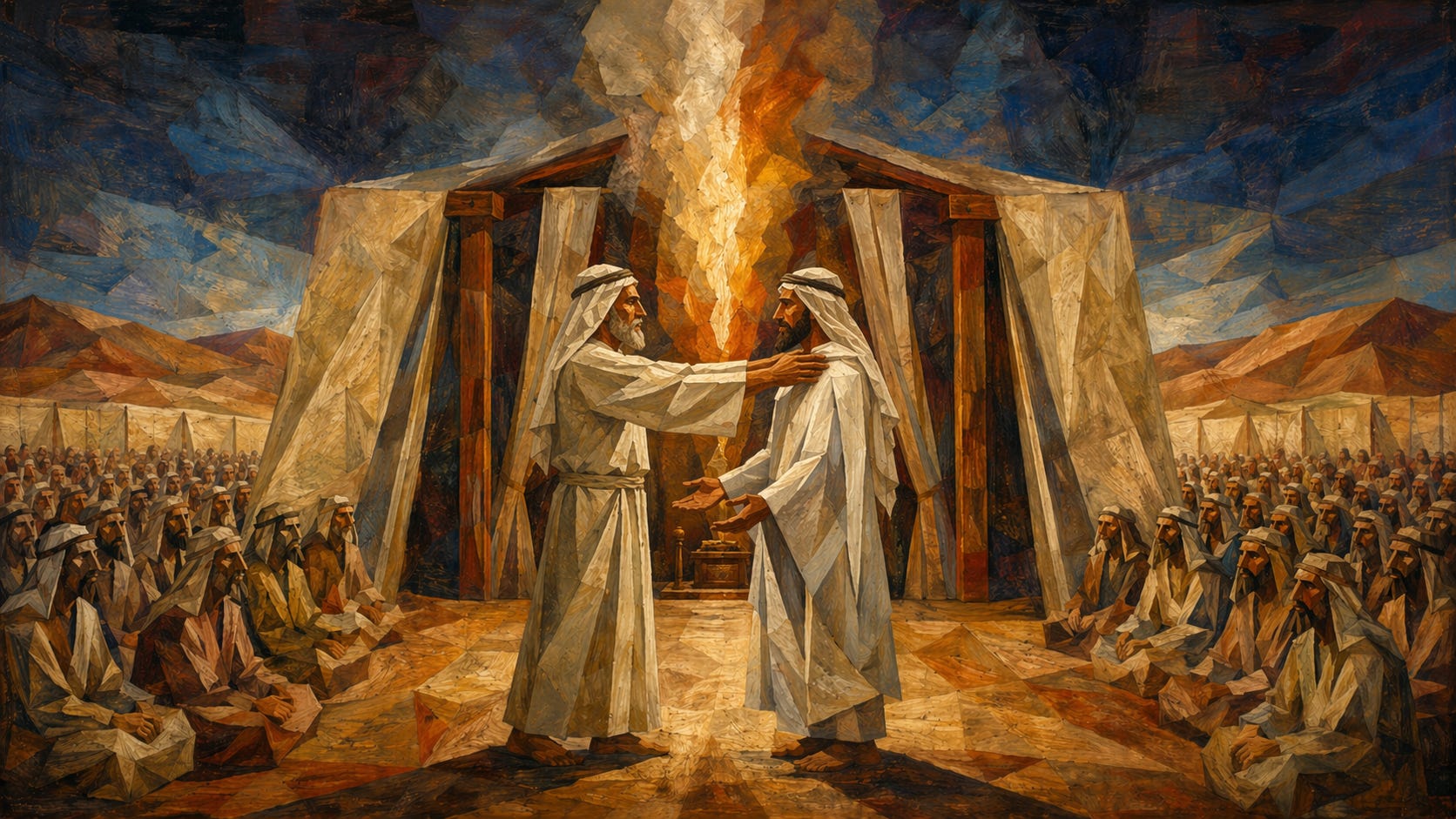
Our Parsha starts on the eighth day.
Without knowing anything else — without looking at a single commentary, without reading any other verses — we can already know two things from that fact alone.
First, there were seven days before this.
Second, the number eight carries weight. It always carries weight in the Torah.
And if we want to begin to understand our Parsha, then we need to start by understanding these two facts.
What were these seven days about?
And why specifically did this “dedication” happen on the eighth day?
And that is going to take us on a journey.
A journey that will take us back to Sefer Shemos — to the time that Moshe Rabbeinu was with Hashem, on Har Sinai, getting the Torah.
And it will then continue to the beginning of Sefer Vayikra — to the moment when Hashem called out to Moshe.
And it will venture again until last week’s Parsha — and the various “Torot” that Aharon and his sons were given.
And then, it will end up here — the very verse that sent us on this journey in the first place.
And along the way, we’ll take a detour to one of our favorite destinations — Gan Eden.
And we’ll even get to the Sneh (again).
Or, put otherwise — buckle up. We’re going for a ride.
Back to the Mountain
We are once again on the mountain.
Well, truth be told, we are at the foot of the mountain. Moshe Rabbeinu is on the mountain itself, receiving the blueprints and the plan for the Mishkan.
First topic, funding.
Second topic, the essential “kelim” — the Aron HaKadosh, the Shulchan and the Menorah.
Third topic, the structure of the Mishkan — the tents, the beams, the courtyard and more.
And then, our topic... Well, almost.
First, for some reason, we need to take a couple of lines to talk about oil. Olive oil in particular. For the Menorah if you want to be really exact:
וְאַתָּ֞ה תְּצַוֶּ֣ה ׀ אֶת־בְּנֵ֣י יִשְׂרָאֵ֗ל וְיִקְח֨וּ אֵלֶ֜יךָ שֶׁ֣מֶן זַ֥יִת זָ֛ךְ וכו׳
And you shall command the children of Israel, that they bring to you pure olive oil...
Now this is strange. Not the topic itself. But the placement. We just had a whole section about the Menorah. Why not mention the oil then, when it was relevant?
Why wait and (seemingly) randomly insert it here — between the courtyard and the clothing?
I don’t know, but I have an idea.
And it has nothing to do with the courtyard.
And nothing to do with the candles.
And probably nothing to do with the clothing either.
But it does have something to do with the man who wears those clothing. I.e., Aharon.
You see, until now, the Mishkan was about “things”.
Holy things.
Beautiful things.
Important things.
But things nonetheless.
But now, we are going to transition into people.
Holy people.
Beautiful people.
Important people.
The Kohanim with their honorable and magnificent clothing (לְכָב֖וֹד וּלְתִפְאָֽרֶת).
And so, we hold off on the oil because it is Aharon and his sons who will be the ones who will be lighting the Menorah. And, as such, they will be the ones who will set up the Menorah — oil and all.
And so, we mention the oil which enables us to mention Aharon, which enables us to transition to the people of the Mishkan:
וְאַתָּ֞ה תְּצַוֶּ֣ה ׀ אֶת־בְּנֵ֣י יִשְׂרָאֵ֗ל וְיִקְח֨וּ אֵלֶ֜יךָ שֶׁ֣מֶן זַ֥יִת זָ֛ךְ כָּתִ֖ית לַמָּא֑וֹר לְהַעֲלֹ֥ת נֵ֖ר תָּמִֽיד׃ בְּאֹ֣הֶל מוֹעֵד֩ מִח֨וּץ לַפָּרֹ֜כֶת אֲשֶׁ֣ר עַל־הָעֵדֻ֗ת יַעֲרֹךְ֩ אֹת֨וֹ אַהֲרֹ֧ן וּבָנָ֛יו מֵעֶ֥רֶב עַד־בֹּ֖קֶר לִפְנֵ֣י יְהֹוָ֑ה חֻקַּ֤ת עוֹלָם֙ לְדֹ֣רֹתָ֔ם מֵאֵ֖ת בְּנֵ֥י יִשְׂרָאֵֽל׃
And you shall command the children of Israel, that they bring to you pure olive oil, beaten, for the light — to cause the lamp to burn always. In the Tent of Meeting, outside the curtain which is before the Testimony, Aharon and his sons shall arrange it from evening to morning before Hashem — a statute forever, for their generations, from the children of Israel.
Now, we may not find this particularly interesting, but perhaps that just indicates a certain lack of sensitivity we have to the issue.
Who says that a Mishkan has to have Kohanim.
Who says that anyone has to be in charge.
Who says it can’t be more “democratic”?
Evidently, G-d.
And that is interesting.
Why?
Good question (I think).
And we’ll have to wait for a good day for (hopefully) a good answer.
For now, though, let’s just note this as a fact.
There needs to be someone who is in charge.
Someone who does the avoda.
And that someone is not Moshe. The man on the mountain will not be the man of the Mishkan.
He can bring us out of Egypt.
He can bring down the manna.
He can bring down the Torah.
But he can’t offer up the korbanot.
Or can he?
Let’s find out.
Coming Closer
וְאַתָּ֡ה הַקְרֵ֣ב אֵלֶ֩יךָ֩ אֶת־אַהֲרֹ֨ן אָחִ֜יךָ וְאֶת־בָּנָ֣יו אִתּ֗וֹ מִתּ֛וֹךְ בְּנֵ֥י יִשְׂרָאֵ֖ל לְכַהֲנוֹ־לִ֑י
And you, bring close to you Aharon your brother, and his sons with him, from among the children of Israel, to serve as a Kohen to Me.
And you.
Such an interesting phrase. I know, you may not think so. But let me see if I can change your mind.
Let’s go back again — to topic number two.
Remember topic number one. That was the funding. That required a conversation (it’s never easy to get money):
דַּבֵּר֙ אֶל־בְּנֵ֣י יִשְׂרָאֵ֔ל וְיִקְחוּ־לִ֖י תְּרוּמָ֑ה
Speak to the children of Israel, and they shall take for Me a contribution.
But once you have the money, it’s time to get to work.
The Aron:
וְעָשׂ֥וּ אֲר֖וֹן
And they shall make an Ark.
The covering on the Aron:
וְעָשִׂ֥יתָ כַפֹּ֖רֶת
And you shall make a covering.
The Shulchan:
וְעָשִׂ֥יתָ שֻׁלְחָ֖ן
And you shall make a table.
Do, do, do.
They will make the Aron. You will make the covering. You will make the Shulchan.
And I could go on.
The Menorah. The Yerios (tent coverings). The beams. Any and everything related to the structure of the Mishkan is about doing.
Check it out.
See whether or not I’m right.
And then we get to the oil.
וְאַתָּ֞ה תְּצַוֶּ֣ה
And you shall command.
That seemingly out of place command.
And you will command...
Who (you might ask) is you. You is Moshe.
That is, G-d is speaking to Moshe. And G-d is emphasizing that “you” — i.e., Moshe — will be the one to command the Jewish people to bring the oil that Aharon (and his sons) will set up in the Menorah in the Mishkan.
And then “you” returns again:
וְאַתָּ֡ה הַקְרֵ֣ב אֵלֶ֩יךָ֩ אֶת־אַהֲרֹ֨ן אָחִ֜יךָ וְאֶת־בָּנָ֣יו אִתּ֗וֹ מִתּ֛וֹךְ בְּנֵ֥י יִשְׂרָאֵ֖ל
And you, bring close to you Aharon your brother, and his sons with him, from among the children of Israel.
And here you has a job. To bring Aharon (and his sons who are with him) close to you from within the midst of the Jewish people.
I know, it’s a bit confusing. We’ll break it down in just a moment.
But for now, let’s note that as soon as you comes, you also seems to go.
In fact, he leaves the moment there is something to do again.
For example, making the Ephod:
וְעָשׂ֖וּ אֶת־הָאֵפֹ֑ד
And they shall make the Ephod.
Or the Mishbetzos Zehav:
וְעָשִׂ֥יתָ מִשְׁבְּצֹ֖ת זָהָֽב
And you shall make settings of gold.
The Choshen Mishpat:
וְעָשִׂ֜יתָ חֹ֤שֶׁן מִשְׁפָּט֙
And you shall make a Breastplate of Judgment.
And more.
The Mishkan has to be made.
The clothing has to be made.
But Aharon and his sons have to be brought close. Because right now they are not close.
Right now they are distant. Like the rest of the nation. But Moshe has to bring them out from within the midst of the people and close to him.
him, with a lower case h.
Not Him with a capital H.
Did you notice that?
Moshe is not bringing Aharon closer to G-d.
Moshe is bringing Aharon closer to Moshe.
Aharon, Therefore Moshe
Let’s take a closer look.
Moshe is supposed to bring Aharon close to him.
How?
Evidently through clothing:
וְאַתָּ֡ה הַקְרֵ֣ב אֵלֶ֩יךָ֩ אֶת־אַהֲרֹ֨ן אָחִ֜יךָ וְאֶת־בָּנָ֣יו אִתּ֗וֹ מִתּ֛וֹךְ בְּנֵ֥י יִשְׂרָאֵ֖ל לְכַהֲנוֹ־לִ֑י אַהֲרֹ֕ן נָדָ֧ב וַאֲבִיה֛וּא אֶלְעָזָ֥ר וְאִיתָמָ֖ר בְּנֵ֥י אַהֲרֹֽן׃ וְעָשִׂ֥יתָ בִגְדֵי־קֹ֖דֶשׁ לְאַהֲרֹ֣ן אָחִ֑יךָ
And you, bring close to you Aharon your brother, and his sons with him, from among the children of Israel, to serve as a Kohen to Me — Aharon, Nadav and Avihu, Elazar and Itamar, the sons of Aharon. And you shall make holy garments for Aharon your brother.
And therefore he will have to speak to the wise of heart:
וְאַתָּ֗ה תְּדַבֵּר֙ אֶל־כׇּל־חַכְמֵי־לֵ֔ב אֲשֶׁ֥ר מִלֵּאתִ֖יו ר֣וּחַ חׇכְמָ֑ה וְעָשׂ֞וּ אֶת־בִּגְדֵ֧י אַהֲרֹ֛ן לְקַדְּשׁ֖וֹ לְכַהֲנוֹ־לִֽי׃
And you shall speak to all the wise of heart, whom I have filled with a spirit of wisdom, and they shall make the garments of Aharon, to sanctify him, to serve as a Kohen to Me.
And look, there’s that word again: you (וְאַתָּ֗ה).
There is something specific here about Moshe. And it has nothing to do with the information that Moshe has and it seems to have everything to do with Aharon.
In other words, it’s not that Moshe knows about the oil and therefore he has to command the Jewish people.
Or he knows about the clothing and therefore he has to speak to the wise of heart.
Because Moshe also is the one who knows about the donations and the Aron HaKadosh and the Menorah and more — and yet, G-d doesn’t emphasize Moshe’s personhood in regards to any of that.
Nope.
Only when Aharon is involved does G-d focus on Moshe.
Aharon sets up the candles.
Therefore you (Moshe) have to command the Jewish people.
Moshe has to make holy clothes for Aharon.
Therefore you (Moshe) have to speak to the wise of heart.
And Moshe has to bring Aharon close to him.
Therefore you (Moshe) have to bring Aharon close to you.
Moshe and Aharon.
The brothers who spoke to Paro.
The brothers who did the signs, wonders and plagues.
The brothers who G-d gave the first Commandment of the Torah to:
וַיֹּ֤אמֶר יְהֹוָה֙ אֶל־מֹשֶׁ֣ה וְאֶֽל־אַהֲרֹ֔ן בְּאֶ֥רֶץ מִצְרַ֖יִם לֵאמֹֽר׃ הַחֹ֧דֶשׁ הַזֶּ֛ה לָכֶ֖ם רֹ֣אשׁ חֳדָשִׁ֑ים
And Hashem said to Moshe and to Aharon in the land of Egypt, saying: This month shall be for you the head of the months.
Two brothers who seem so very close. And yet, G-d tells us, it’s not so.
Somehow or other Aharon is far away. He is distant — from Moshe.
And it is Moshe’s job to bring him close.
Evidently Moshe — and only Moshe — can bridge that gap.
And therefore: and you (וְאַתָּ֡ה).
After the Clothes
With this present distance and future closeness now established, G-d can now return to the business of making clothes.
And so, as He did with the Mishkan itself, G-d informs Moshe of all the different types of clothes that must be made.
And no sooner has G-d finished that He adds an interesting addition. Not only does Moshe need to commission clothes for Aharon, but he also needs to dress him in those clothes:
וְהִלְבַּשְׁתָּ֤ אֹתָם֙ אֶת־אַהֲרֹ֣ן אָחִ֔יךָ וְאֶת־בָּנָ֖יו אִתּ֑וֹ וּמָשַׁחְתָּ֨ אֹתָ֜ם וּמִלֵּאתָ֧ אֶת־יָדָ֛ם וְקִדַּשְׁתָּ֥ אֹתָ֖ם וְכִהֲנ֥וּ לִֽי׃
And you shall dress them — Aharon your brother and his sons with him — and you shall anoint them, and you shall fill their hands, and you shall sanctify them, and they shall serve as Kohanim to Me.
Indeed, it’s more than that.
Moshe needs to dress Aharon (and his sons).
And he has to anoint them with oil. And he has to fill their hands.
And he has to sanctify them.
So that they (Aharon and his sons) can serve G-d.
A striking parallel to the beginning of this parsha.
You, Moshe, speak to the wise of heart, to make the clothes of Aharon to make him holy so he can serve me:
וְאַתָּ֗ה תְּדַבֵּר֙ אֶל־כׇּל־חַכְמֵי־לֵ֔ב אֲשֶׁ֥ר מִלֵּאתִ֖יו ר֣וּחַ חׇכְמָ֑ה וְעָשׂ֞וּ אֶת־בִּגְדֵ֧י אַהֲרֹ֛ן לְקַדְּשׁ֖וֹ לְכַהֲנוֹ־לִֽי׃
And you shall speak to all the wise of heart, whom I have filled with a spirit of wisdom, and they shall make the garments of Aharon, to sanctify him, to serve as a Kohen to Me.
Similar, with variations and additions.
Dressing Aharon — a variation. Anointing with oil — an addition. “Filling their hands” — an addition.
So Moshe needs to have clothes made for Aharon.
And he needs to dress Aharon in those clothes.
And he needs to annoint Aharon.
And “fill his hands”.
This is quite a bit of focus on Moshe for a section that presumably is about Aharon.
But, to tell you the truth, there is something else that Moshe has to do. He has to make them (Aharon and his sons) holy.
Beyond Clothes
Some orientation is in order.
We are talking about creating a Mishkan. A Mishkan is a place where G-d’s presence can dwell among us, the Jewish people:
וְעָ֥שׂוּ לִ֖י מִקְדָּ֑שׁ וְשָׁכַנְתִּ֖י בְּתוֹכָֽם׃
And they shall make for Me a sanctuary, and I shall dwell among them.
In order to make a Mishkan, you need the structure — as we have just mentioned.
And you need the kohanim — as we just mentioned.
And the kohanim, need special clothing — again, as we have just mentioned.
And that is where we stand right now — at the end of chapter 28 of Sefer Shemos.
G-d has told Moshe to gather together all the material that we need to build a Mishkan — the beginning of Chapter 25.
He has informed him of all elements he must build to have the physical building of the Mishkan — the rest of chapter 25 through (almost) the end of chapter 27.
He mention the need for the oil for the Menorah — the very end of chapter 27.
And then he has detailed all the clothes that must be made for Aharon and his sons in order that they can minister to G-d in the Mishkan (chapter 28).
But evidently, the clothes are not enough.
There also has to be some sort of sanctifying process for Aharon and his sons.
And thus we reach the beginning of chapter 29:
וְזֶ֨ה הַדָּבָ֜ר אֲשֶֽׁר־תַּעֲשֶׂ֥ה לָהֶ֛ם לְקַדֵּ֥שׁ אֹתָ֖ם לְכַהֵ֣ן לִ֑י
And this is the thing that you shall do for them, to sanctify them, to serve as Kohanim to Me.
We are back to doing. But this is a different type of doing. Here (as we shall see) nothing is being made.
First act: take the requisite animals.
One young bull. Two rams. Unblemished.
וְזֶ֨ה הַדָּבָ֜ר אֲשֶֽׁר־תַּעֲשֶׂ֥ה לָהֶ֛ם לְקַדֵּ֥שׁ אֹתָ֖ם לְכַהֵ֣ן לִ֑י לְ֠קַ֠ח פַּ֣ר אֶחָ֧ד בֶּן־בָּקָ֛ר וְאֵילִ֥ם שְׁנַ֖יִם תְּמִימִֽם
And this is the thing that you shall do for them, to sanctify them, to serve as Kohanim to Me: take one young bull and two rams, unblemished.
Now, here is my question. Who has to take these animals?
Moshe.
I don’t know if Moshe has to buy these animals (although perhaps he does). But it certainly seems that he physically has to take them.
And it’s not just these animals. He (Moshe) also has to take Matzos:
וְלֶ֣חֶם מַצּ֗וֹת וְחַלֹּ֤ת מַצֹּת֙ בְּלוּלֹ֣ת בַּשֶּׁ֔מֶן וּרְקִיקֵ֥י מַצּ֖וֹת מְשֻׁחִ֣ים בַּשָּׁ֑מֶן סֹ֥לֶת חִטִּ֖ים תַּעֲשֶׂ֥ה אֹתָֽם׃
And unleavened bread, and unleavened cakes mixed with oil, and unleavened wafers anointed with oil — of fine wheat flour you shall make them.
And then Moshe has to take the Matzos (which he has placed in a basket) and bring them... and the bull... and the two rams... and Aharon... and his sons...
to the entrance to the Ohel Moed:
וְנָתַתָּ֤ אוֹתָם֙ עַל־סַ֣ל אֶחָ֔ד וְהִקְרַבְתָּ֥ אֹתָ֖ם בַּסָּ֑ל וְאֶ֨ת־הַפָּ֔ר וְאֵ֖ת שְׁנֵ֥י הָאֵילִֽם׃ וְאֶת־אַהֲרֹ֤ן וְאֶת־בָּנָיו֙ תַּקְרִ֔יב אֶל־פֶּ֖תַח אֹ֣הֶל מוֹעֵ֑ד
And you shall place them on one basket, and you shall bring them close in the basket — along with the bull and the two rams. And Aharon and his sons you shall bring close to the entrance of the Tent of Meeting.
And it is there — at the entrance to the Ohel Moed — that Moshe will actually dress Aharon and his sons.
In the holy clothes. That Moshe asked the men of wisdom to make. For Aharon. And for his sons.
And then, with Aharon and his sons dressed, comes the first sacrifice.
But note — who is doing what.
Moshe brings the bull close:
וְהִקְרַבְתָּ֙ אֶת־הַפָּ֔ר לִפְנֵ֖י אֹ֣הֶל מוֹעֵ֑ד
And you shall bring the bull close, before the Tent of Meeting.
Aharon (and his sons) lean their hands on the head of the bull:
וְסָמַ֨ךְ אַהֲרֹ֧ן וּבָנָ֛יו אֶת־יְדֵיהֶ֖ם עַל־רֹ֥אשׁ הַפָּֽר
And Aharon and his sons shall lean their hands on the head of the bull.
Then Moshe shechts the bull:
וְשָׁחַטְתָּ֥ אֶת־הַפָּ֖ר לִפְנֵ֣י יְהֹוָ֑ה פֶּ֖תַח אֹ֥הֶל מוֹעֵֽד
And you shall slaughter the bull before Hashem, at the entrance of the Tent of Meeting.
And Moshe takes the blood:
וְלָֽקַחְתָּ֙ מִדַּ֣ם הַפָּ֔ר
And you shall take from the blood of the bull.
And Moshe places it on the corners of the altar:
וְנָתַתָּ֛ה עַל־קַרְנֹ֥ת הַמִּזְבֵּ֖חַ בְּאֶצְבָּעֶ֑ךָ
And you shall place it on the horns of the altar with your finger.
And I could go on.
Every step of the way, it is Moshe who is doing the avoda. All that Aharon and his sons do is smicha — leaning their hands on the head of the bull (and later on the ram).
And this dynamic, it’s familiar. Let’s fast forward, to the beginning of Sefer Vayikra.
There Moshe is told to speak to the Jewish people and explain to them the laws of the korbanot.
First things first, the olah.
Bring it to the entrance of the Ohel Moed. Then do smicha — lean your hands on the head of the animal.
Then shecht it.
And then...
Well, then you are done.
You have done all that you can do.
At this point, Aharon and his sons take over.
They take the blood and throw it on the altar.
They skin the animal. They cut it up into its pieces. And they burn those pieces on the altar.
And as it is with the olah, so too it is with the shelamim. And the chatas.
And the asham.
From the blood on, it’s Aharon and his sons.
But that is in Sefer Vayikra. Evidently after Aharon and his sons have been made holy.
But here, in Sefer Shemos, we are told of a time before Aharon and his sons have been made holy.
And at that time, Aharon and his sons are like everyone else. They can do smicha. They can lay their hands on the head of the animals.
But the actual avoda.
The sprinkling or throwing the blood on the altar. And the burning of the meats and fats.
That they do not do. That Moshe does.
And so I wonder, who here is the Kohen? And who is, well, just like everyone else?
Back to the Sneh
We will take a slight detour — a detour from a detour. It won’t be our last one.
Moshe is at the Sneh. G-d has revealed Himself to him and let him know that He (the Creator Himself) will be taking the Jewish people out of Egypt.
“All”, He needs is for Moshe to go to Paro and He (G-d) will take care of the rest.
But Moshe is not so sure.
“Who am I that I will go to Paro”? “Or that I will take the Jewish people out of Egypt”?
Don’t worry, says Hashem. I’ll be with you.
And so it goes on. Moshe has a question. Or a doubt. Or a concern.
And time after time, Hashem answers him.
Until we come to the last “issue”.
“I’m not a very good speaker”.
Loose translation.
“Don’t worry about it. Just go with My flow”.
Even looser.
And now, the conversation should be over.
All the questions have been answered. All the doubts have been dispelled. It will work out.
And yet, Moshe has one more line. Not a question. Not a concern. Rather, seemingly, a flat out refusal to do the will of the Divine:
וַיֹּ֖אמֶר בִּ֣י אֲדֹנָ֑י שְֽׁלַֽח־נָ֖א בְּיַד־תִּשְׁלָֽח׃
And he said: Please, my Lord — send, I pray, by the hand of whomever You will send.
And with this, G-d gets angry — with Moshe:
וַיִּֽחַר־אַ֨ף יְהֹוָ֜ה בְּמֹשֶׁ֗ה
And the anger of Hashem burned against Moshe.
And in this anger, he seemingly makes a change:
וַיֹּ֙אמֶר֙ הֲלֹ֨א אַהֲרֹ֤ן אָחִ֙יךָ֙ הַלֵּוִ֔י יָדַ֕עְתִּי כִּֽי־דַבֵּ֥ר יְדַבֵּ֖ר ה֑וּא וְגַ֤ם הִנֵּה־הוּא֙ יֹצֵ֣א לִקְרָאתֶ֔ךָ וְרָאֲךָ֖ וְשָׂמַ֥ח בְּלִבּֽוֹ
And He said: Is there not Aharon your brother, the Levite? I know that he will surely speak. And also, behold, he goes out to meet you — and when he sees you, he will rejoice in his heart.
It is here that we need to pause and ask a question.
What would have happened if Moshe had not asked this last question?
Would Aharon have gone with Moshe to Paro. Or would Moshe have gone by himself?
Would Aharon have thrown his staff down before Paro and his necromancers? Or would Moshe have done it by himself?
Would Aharon have helped bring down some of the plagues? Or would Moshe have done it all by himself?
It’s not clear.
But it does seem possible that the answer to all of the above is no — and yes.
No, Aharon would not have been involved. And yes, Moshe would have done it all by himself.
With that in mind, let’s ask one more question.
If Moshe had not asked this last question, would Aharon have been the Kohen? Or would Moshe have been the Kohen — and only Moshe?
Let us note the following Midrash:
מַה חֲרוֹן אַף הָיָה שָׁם, שֶׁנִּטְלָה כְּהֻנָּה מִמּשֶׁה וְנִתְּנָה לְאַהֲרֹן. אָמְרוּ רַבּוֹתֵינוּ זִכְרוֹנָם לִבְרָכָה: הֲלֹא אַהֲרֹן אָחִיךָ הַלֵּוִי, וְכִי מֵאַחַר שֶׁאָמַר: אָחִיךָ, אֵינִי יוֹדֵעַ שֶׁהוּא לֵוִי, אֶלָּא אָמַר לוֹ רָאוּי הָיִיתָ לִהְיוֹת כֹּהֵן וְהוּא לֵוִי, וּלְפִי שֶׁאַתָּה מְסָרֵב עַל דְּבָרַי, תִּהְיֶה אַתָּה לֵוִי וְהוּא כֹהֵן
What was the anger there? That the kehunah was taken from Moshe and given to Aharon.
Our Rabbis of blessed memory said:
“Is there not Aharon your brother the Levite”...Once He said “your brother,” do I not already know that he is a Levite
Rather, He said to him: You were fitting to be a Kohen and he a Levi. But since you are resisting My word — you will be the Levi and he will be the Kohen.
It seems that anger in the Chumash, certainly divine anger, is not an indication of an emotional response. No, if the Chumash says that G-d was angry with Moshe, it means that G-d did something to Moshe. The type of “something” that expresses anger.
And so we wonder, what could that something be.
Well, let’s look at the context.
Context #1: G-d brings in Aharon to the picture. Until now, there was no mention of Aharon. But now, G-d is angry (with Moshe) and in His “angry” response, He references Aharon.
And so, it is with regards to Aharon that the Midrash looks for an indication of the Divine wrath.
Context #2: The parsha we have been studying. The one about Aharon and the clothes and the bull and the rams.
What did we see there.
We saw Moshe as the Kohen.
That, says the Midrash, is how it was supposed to be. Moshe was supposed to be the Kohen.
But somehow, for some reason — this last question changed things. How (and why), we don’t know. That’s not our focus right now.
All that we need is the fact that there was a change. And according to the Midrash (based on the context), that change related to the kehunah itself.
Moshe — you were going to be the Kohen. But no more. Now, that will be Aharon’s job.
But there is one problem. The fact is that Aharon is not a Kohen.
The fact is that Moshe is the Kohen.
This isn’t just a status or a title. It’s a reality.
Moshe, in his being, is the Kohen.
He is the one who can do the job. He is the one able to do the Divine service.
And Aharon, in his being, is not the Kohen.
At this moment, he cannot do the job. At this moment, he is not able to do the Divine service.
In short, he is far away.
That is, far away from the “level” of Moshe.
And it is Moshe’s job to bring him close.
And for that, we need clothes. Special clothes. Clothes that will make Aharon holy. That is, when Moshe dresses him in those clothes.
But first things first, we have to find the clothes.
Back to the Garden
I have mentioned it before — and others (greater than me) have mentioned it before me.
The Mishkan is the garden. It’s not literally the garden.
But it’s the same type of place as the garden.
It’s the place where man and G-d meet.
Where we live life together.
Where G-d brings us the animals and we give them their names.
And in that act, man comes to a level of self-discovery that he did not have before.
My partner is not here.
No matter how loyal the dog. No matter how loving the cat. No matter how graceful the swan.
They are not me. And I am not them.
My deeper fulfillment is not to be found there.
And so G-d, upon seeing that we were ready, gave us the greatest gift of them all — the gift of relationship. Of true and deep and meaningful relationship.
Bone of my bone. Flesh of my flesh.
The Divine fire itself:
איש and אשה.
Fire (אש) and the name of G-d (which I will not spell -- but it’s in the remaining letters).
Fire — as in the torch of fire that went through the parts. Fire — as in the fire that came down on Har Sinai. Fire — as in the fire that lead us by night.
And fire — in all its other Divine forms.
There, in that relationship of bone of my bone and flesh of my flesh, was a Divine and holy passion.
And so, there was no need for clothes:
וַיִּֽהְי֤וּ שְׁנֵיהֶם֙ עֲרוּמִּ֔ים הָֽאָדָ֖ם וְאִשְׁתּ֑וֹ וְלֹ֖א יִתְבֹּשָֽׁשׁוּ׃
And the two of them were naked — the man and his wife — and they were not ashamed.
No shame. No embarrassment.
In short, unlike us — who either feel embarrassment, or else conjure up a non-holy passion to overcome that embarrassment.
But why? Why are we today embarrassed and not back then?
I have a guess. Actually, I have two guesses, but only one is worked out enough to share today.
And that guess is based off of a guess as to what embarrassment is.
It’s not vulnerability — although that is part of it.
Rather, it is fear.
Fear of the other. Fear of derision or ridicule or abandonment.
Can I be myself in front of you? Can I truly and utterly be myself in front of you? If I am — if I am laid bare — will you still see me?
Will you still connect to me? Care for me? Relate to me?
If I know — truly know — that you will be there, then I have nothing to fear. And I will feel no shame, because there will be nothing to be ashamed of.
I am as I am and do not pretend otherwise. You are the same. And we are together.
And so, they were naked and not ashamed.
But then came the nachash — who is more transparent (read “naked” — ערום) then any other creature.
You have it wrong, he said.
It is not relationships that you really seek, but power.
You want to be god-like — deciding what is good and bad.
You want to be self-focused — seeing how lustful the tree can be.
You don’t want to see the other as the other is. You don’t want to relate to the other, as they are. No, you want to see the other in terms of what they can be for you.
That is what you want?
Consume that. Live that. Be that.
And then — they knew that they were naked.
They knew that the other could see them as they really were — and that they were no longer safe.
And so, they covered up.
Covering up is not clothes.
It’s simply protection.
And then they heard. And then they hid. And then they denied. And then G-d punished.
And then...
Then What
And then, man gave a name to his wife. Chava — because she was the mother of all.
Then man saw. He saw a quality in his wife that was not within him. A quality that he appreciated and recognized.
And then...
And then G-d made for man clothes. Special types of clothes. Clothes that are quite familar:
וַיַּ֩עַשׂ֩ יְהֹוָ֨ה אֱלֹהִ֜ים לְאָדָ֧ם וּלְאִשְׁתּ֛וֹ כׇּתְנ֥וֹת ע֖וֹר
And Hashem Elokim made for the man and his wife garments of skin.
Look at the Hebrew: כׇּתְנ֥וֹת
What an interesting word.
The wise men, filled with spirit. What type of clothes are they to make for Aharon and his sons?
I’ll mention one of the eight (of the Kohen Gadol): וּכְתֹ֥נֶת
Don’t worry about the translation. Worry about the Hebrew root: כ-ת-נ (Kaf-Tav-Nun).
It’s the same root. The same word (read: concept) as the type of clothes that G-d made for Adam and Chava.
That is part of the clothes of Aharon — the Kohen Gadol.
But what about for Aharon’s sons? The regular Kohanim?
וְלִבְנֵ֤י אַהֲרֹן֙ תַּעֲשֶׂ֣ה כֻתֳּנֹ֔ת
And for the sons of Aharon you shall make tunics.
There it is again. The same word. The same root. The same concept.
But there is more.
Because what does G-d do after he makes these clothes for Adam and Chava?
He dresses them:
וַיַּ֩עַשׂ֩ יְהֹוָ֨ה אֱלֹהִ֜ים לְאָדָ֧ם וּלְאִשְׁתּ֛וֹ כׇּתְנ֥וֹת ע֖וֹר וַיַּלְבִּשֵֽׁם
And Hashem Elokim made for the man and his wife garments of skin, and He clothed them.
Just like Moshe dresses Aharon.
Putting it All Together (so far)
Time to take stock again.
Noteworthy point #1: Adam, it seems, was a Kohen. That, at least, is one opinion found in the Yalkut Shimoni:
דָּבָר אַחֵר, מַה כְּתִיב לְמַעְלָה “וַיַּעַשׁ ה’ אֱלֹהִים כָּתְנוֹת עוֹר וַיַּלְבִּישֵׁם”, מְלַמֵּד שֶׁעָשָׂה לוֹ הַקָּדוֹשׁ בָּרוּךְ הוּא בִּגְדֵי כְּהֻנָּה
Another interpretation: What is written above? “And Hashem Elokim made garments of skin and clothed them” — this teaches that the Holy One, Blessed be He, made him priestly garments (bigdei kehunah), as it says (Daniel 10:5) “And behold, a man clothed in linen,” and it is written (Vayikra 16:4) “A holy linen tunic shall he wear” — from here you learn that the Kohen Gadol is like an angel, as it says (Malachi 2:7) “for he is a messenger of Hashem of hosts.”
Which is odd. One doesn’t usually think of directly disobeying G-d and sinning as a path to becoming a Kohen.
And yet, there it is. Assuming that these verses are in chronological order, G-d seems to be promoting Adam — post sin — to the position of a Kohen.
And He is doing so vis-a-vis clothes.
Noteworthy point #2: Moshe was a Kohen. And Aharon was not.
Now this is striking on a number of levels.
Level #1: Moshe wasn’t the first born. And at that time, it was the first born who were supposed to be the Kohanim.
Level #2: Aharon was the first born.
But Moshe loses that — by somehow or other angering G-d.
But we could also look at it the other way around. Aharon gains it by Moshe somehow or other angering G-d.
Slightly similar. Adam sins, becomes a Kohen. Moshe angers G-d, Aharon becomes a Kohen.
Noteworthy point #3: To become a Kohen one needs clothes.
Well, actually more than clothes. He needs to be dressed in those clothes.
Putting it all together. There seems to be some connection between sinning and becoming a Kohen. And that transformation is made by the right entitity dressing the right person in the right clothes.
Back to the Mishkan
So we’re back in the Mishkan. And we see a two-step process — between G-d, Moshe, and Aharon.
Step number one is the vision.
You, Moshe, have to take your brother Aharon and bring him close to you.
You have to raise him up to where you are.
You have to make him capable of doing what you can do.
You have to transform him into a Kohen.
Therefore, you’re going to have to make holy clothes. And you, Moshe, yourself are going to have to speak to those who have the ability to make those clothes.
It has to be sourced from you — because only you can transfer this to him. You have it. Aharon doesn’t yet have it. But you can raise him up.
Speak to them so they’ll make Aharon’s clothes, so that they can make Aharon holy, so that he can go and serve Me.
And so, part one is letting Moshe know the clothes he’s going to have to make — in order to transform Aharon into a Kohen Gadol, and his sons into regular Kohanim.
Once Moshe is given that vision and understanding, Hashem lets him know: he’s going to have to clothe them. He’s going to dress them in these clothes. And there’s a bit more. Once they’re dressed, you can then anoint them. And do something called filling their hands. Then you, Moshe, will make them holy. And then they can serve Me.
That’s part one: the vision, the general statement, the blueprint.
But then there’s part two: the procedure, the ceremony, the method.
I told you in a general way that you have to clothe them. But I have to tell you exactly how that is going to work.
You are going to serve as Kohen and do everything needed for the avodah. After that, you are going to take Aharon and his sons to the entranceway of the Ohel Moed.
They are not yet going inside.
You will have them go into a mikvah — v’rachatzta osam ba’mayim. And then, at the entranceway to the Ohel Moed, having surrounded themselves with the Waters of Torah (in all the ways that water represents Torah), you will dress them right there at the entranceway.
And the first garment noted in this procedure is the kesones — once again, the same type of garment that G-d dressed Adam in.
Then, after you dress them, you take the Shemen HaMishchah and pour it on their heads.
And then you (Moshe) will perform the avodah. And you will perform it for seven days.
Seven days.
Do you remember that number?
It was mentioned way back at the very beginning of this D’var Torah.
We are in Parshas Shmini, which starts out on the eighth day. And we noted that if there’s an eighth day, then there must be seven days before it.
We’ve just found our seven days.
For seven days, Moshe will take Aharon and his sons to the entranceway of the Ohel Moed.
For seven days he will clothe them, dress them in the clothing of the Kohanim.
And for seven days, he will do the avodah — and they will, for the most part, watch.
In Aharon’s Hands
It’s only for the most part. There is this interesting phrase. We’ve seen it already a couple of times.
Let’s go back to Parshas Tetzaveh, where G-d gives Moshe the general overview — where He tells him what all the clothes are going to look like, and then explains that he, Moshe, will clothe Aharon and his sons, and that afterwards he will anoint them with the Shemen HaMishchah. And then our interesting phrase: u’mileisa es yadam — “and you will fill their hands.” And then you, Moshe, will make them holy, and they will serve Me.
Now, there’s a machlokes Rashi-Ramban on the meaning of that phrase. I have not yet merited to go into that machlokes in any sort of depth or any sort of substantive way. But I have an idea that I want to share — not because I know it’s true, but so that we can consider whether or not it may be true.
So let us remember the sequence:
Dressing them in the clothes.
Anointing them with oil.
Filling their hands.
Making them holy.
In other words — is the phrase u’mileisa es yadam a state of being that exists as a consequence of dressing them and anointing them with the Shemen HaMishchah? Or is it another stage in the process, in the activity, in the actions of making Aharon and his sons Kohanim?
Let’s consider the second option right now — even though there may be some slight textual and other difficulties with it. We’ll try to do the best we can.
We are returning to chapter 29 — the chapter of the process, of the means by which we make Aharon and his sons into Kohanim, that seven-day process.
We’re told in verse 5 that you dress Aharon, and then we are told that afterwards you take the Shemen HaMishchah and pour it on his head. Then we’re told that he’s going to do the same thing with his sons. He’s going to dress them in kesonos — our familiar word by now — and the other clothes. But they don’t get the Shemen HaMishchah. They’re not the Kohen Gadol.
Then we have this phrase: u’mileisa yad Aharon v’yad banav — “and you shall fill the hand of Aharon and the hand of his sons.”
We split it up into two steps:
You do Aharon.
You do his sons.
Now we bring them back together. You might have brought them back together in the previous phrase — v’hayta lahem kehunah l’chukas olam — but I’m skipping that phrase for now.
What might it mean to fill their hands? Can we see anything in this chapter that indicates that we are filling their hands?
Well, let us look at the next couple of verses. Moshe is to take the bull, and Aharon and his sons are to lay their hands on the head of that bull.
Might it be possible to say that we are filling their hands with the head of the bull?
Perhaps. But perhaps that’s a bit of a stretch. Let’s see, though, if we can make it work.
We’ll start with a question.
In general, what does someone do when they lean their hands on the head of the bull?
They do vidui. That is, they confess their sins.
וּמַנִּיחַ שְׁתֵּי יָדָיו בֵּין שְׁתֵּי קַרְנָיו וּמִתְוַדֶּה עַל חַטָּאת עֲוֹן חַטָּאת וְעַל אָשָׁם עֲוֹן אָשָׁם. וְעַל הָעוֹלָה מִתְוַדֶּה עֲוֹן עֲשֵׂה וַעֲוֹן לֹא תַּעֲשֶׂה שֶׁנִּתַּק לַעֲשֵׂה:
And he places his two hands between its two horns and confesses.
On a chatas — the sin of the chatas.
On an asham — the sin of the asham.
And on an olah he confesses the sin of a positive commandment and the sin of a negative commandment that has been rectified by a positive commandment.
Three elements come together:
Hands (of the confessor). Head (of the animal). The confession itself.
What’s the connection? Don’t know yet. But I do know that Aharon himself has a very particular sin that he needs to atone for.
Let us note the first animal that Moshe brings:
פַּ֣ר אֶחָ֧ד בֶּן־בָּקָ֛ר
One bull, a son of the herd.
Why a bull? Why so young?
Rashi:
לְכַפֵּר עַל מַעֲשֵׂה הָעֵגֶל שֶׁהוּא פַּר:
To atone for the act of the Calf — which was [itself] a bull.
There it is again. Sin and kehunah. Seemingly going hand in hand again.
And can we note that this young bull was a sin offering — a korban chatas?
Let’s see what else we can find.
The first ram is similar to the bull — at least in terms of Aharon’s hands. Once again, the animal is brought to the entranceway of the Ohel Moed, and once again, Aharon and his sons lay their hands on the head of the animal.
Of course, it’s a different type of korban — a korban olah. For which one has to confess different types of sins.
But it’s the same pattern.
Hands. Head. Confession.
Now comes the second ram.
And once again, come the hands on the head.
But this time, things are a bit different.
We’ll start with the blood.
Moshe needs to take some of the blood and put it on Aharon’s right ear lobe.
And on his right thumb (of the hand — the Chumash’s words, not mine). And his right big toe:
וְעַל־תְּנ֨וּךְ אֹ֤זֶן בָּנָיו֙ הַיְמָנִ֔ית וְעַל־בֹּ֤הֶן יָדָם֙ הַיְמָנִ֔ית וְעַל־בֹּ֥הֶן רַגְלָ֖ם הַיְמָנִ֑ית
And on the right ear lobe of his sons, and on the right thumb of their hand, and on the right big toe of their foot.
Not (only) the hands. And not fully the hands.
So, not so sure. At the very least, let’s say that the hand is (somewhat) represented.
But we aren’t done yet.
Next comes the matzos. Those are brought in a basket. And Moshe takes out three Matzos from the basket and places them in the palms of Aharon’s hands.
It seems that these hands need to be full. Full with the head of the sacrificial animals.
And full with the matzos.
Perhaps even full of blood.
Is it a stretch?
I don’t know.
After all, these hands will be the hands that the Kohanim bless the nation with. See, for example, our parsha:
וַיִּשָּׂ֨א אַהֲרֹ֧ן אֶת־יָדָ֛ו אֶל־הָעָ֖ם וַֽיְבָרְכֵ֑ם
And Aharon lifted up his hands toward the people and blessed them.
And it is these same hands that the kohanim will wash on the way to the avodah:
וַיְדַבֵּ֥ר יְהֹוָ֖ה אֶל־מֹשֶׁ֥ה לֵּאמֹֽר׃ וְעָשִׂ֜יתָ כִּיּ֥וֹר נְחֹ֛שֶׁת וְכַנּ֥וֹ נְחֹ֖שֶׁת לְרׇחְצָ֑ה וְנָתַתָּ֣ אֹת֗וֹ בֵּֽין־אֹ֤הֶל מוֹעֵד֙ וּבֵ֣ין הַמִּזְבֵּ֔חַ וְנָתַתָּ֥ שָׁ֖מָּה מָֽיִם׃ וְרָחֲצ֛וּ אַהֲרֹ֥ן וּבָנָ֖יו מִמֶּ֑נּוּ אֶת־יְדֵיהֶ֖ם וְאֶת־רַגְלֵיהֶֽם׃ בְּבֹאָ֞ם אֶל־אֹ֧הֶל מוֹעֵ֛ד יִרְחֲצוּ־מַ֖יִם וְלֹ֣א יָמֻ֑תוּ א֣וֹ בְגִשְׁתָּ֤ם אֶל־הַמִּזְבֵּ֙חַ֙ לְשָׁרֵ֔ת לְהַקְטִ֥יר אִשֶּׁ֖ה לַֽיהֹוָֽה׃ וְרָחֲצ֛וּ יְדֵיהֶ֥ם וְרַגְלֵיהֶ֖ם וְלֹ֣א יָמֻ֑תוּ וְהָיְתָ֨ה לָהֶ֧ם חׇק־עוֹלָ֛ם ל֥וֹ וּלְזַרְע֖וֹ לְדֹרֹתָֽם׃
And Hashem spoke to Moshe, saying: You shall make a copper basin, and its base of copper, for washing. And you shall place it between the Tent of Meeting and the altar, and you shall put water there. And Aharon and his sons shall wash from it — their hands and their feet.
Death? That seems to be quite a serious consequence for not washing one’s hands (and feet).
But, of course, this is not just about the hands and the feet. It’s about entering into the Ohel Moed. It’s about approaching the Mizbeach. It’s about the service and the fire offering.
The fire offerings which we bring to the Ohel Moed will carry the confessions that we make with our hands...
They will be carried to the Mizbeach by the feet of the Kohanim.
And they will be placed on the Mizbeach by the hands of the Kohanim.
And it is those hands and those feet which need to be washed.
They need to have water poured upon them.
These aren’t just any hands and any feet. They are the hands and feet of fire offerings. Of sin and confession. Of the avodah of self-transformation.
But while we are focusing on these hands, let’s not forget the clothes.
After all, they seem connected.
Step #1: the clothes Step #2: the oil. Step #3: the hands.
It’s a process. There is a connection. I don’t know where step #2 fits in yet — but I do see a connection between step #1 and step #3.
Remember those clothes that HaKadosh Baruch Hu clothed Adam and Chava in?
Well, those clothes have a history — as told by Rav Moshe HaDarshan in Bereishis Rabati (on Bereishis 27:15).
The clothes begin with G-d. G-d dressed Adam and Chava in them. And Adam gave them to Shem (the first born son of Noach). And Shem gave them to Avraham. And Avraham to Yitzchak. And Yitzchak to Esav (his first born).
Because (as we mentioned above), these are the clothes of the Kohanim — of those who do the avodah.
And so, they belonged to Esav.
Except that Esav sold the bechorah to Yaakov.
And so the time came when Rivka dressed Yaakov in those clothes:
כשעמד יעקב ולקח הבכורה מן עשו אמר רבקה הואיל שלקח יעקב את הבכורה מיד עשו, בדין הוא שילבש הבגדים הללו, שנאמר ותקח רבקה את בגדי עשו בנה הגדול
When Yaakov arose and took the bechorah from Esav, Rivka said: ‘Since Yaakov has taken the bechorah from Esav’s hand, by right he should wear these garments’ — as it says, ‘And Rivka took the garments of Esav her elder son.’
And Yaakov went in with those clothes to Yitzchak.
And Yitzchak heard the voice. It was the voice of Yaakov.
But he wasn’t sure. So he felt the hands. They were the hands of Esav.
And so he proclaimed:
וַיֹּ֗אמֶר הַקֹּל֙ ק֣וֹל יַעֲקֹ֔ב וְהַיָּדַ֖יִם יְדֵ֥י עֵשָֽׂו׃
And he said: The voice is the voice of Yaakov — but the hands are the hands of Esav.
How can that be? How can the hands be the hands of Esav if the voice is the voice of Yaakov?
That can’t be.
Those are two opposites which cannot be reconciled.
The voice of truth, love and peace. The hands that deceive, fight and destroy.
Those aren’t the hands that we want. The words are the right words. The tone is the right tone.
But the hands — they need work. You can’t have a kohen with hands like that.
Just like you can’t have the material of war (iron) used to make the mizbeach.
So too you can’t have the hands which raise up the offerings onto the mizbeach be the hands that grasp the (iron) sword.
No, the hands of the kohen have to be a different type of hand.
And the job of Aharon and his sons are to create those hands.
Says HaKadosh Baruch Hu to Moshe: “Fill Aharon’s hands. Let him feel the head of that sacrifice. Let him recognize that, in some ways, it should be him upon that altar. Let him viscerally experience the temporal nature of his life. In so doing, let him confess and be honest about where he has come short and what he has done wrong.
“Let him take the food, the bread that came from the work of our brow — working the field day in, day out — which we are recognizing is gifted to us by G-d. Let him hold that in his hands and use those hands to wish all that is truly good for his fellow Jews.
“That, I’d like to suggest, is what it means to fill Aharon’s hands. Because one requirement of being a kohen is not just having the right clothes — it’s also having the right hands.”
Seven Days
So far, everything we have learned is vision. This, Hashem tells Moshe, is what you need to do.
But the time for doing has not happened yet.
And there will be a few hiccups along the way. For one, the Chet HaEgel.
Moshe will have to come down. And then he will have to go back up again.
But eventually, the time will come. He will gather together the Jewish people and tell them what they should do.
And they will begin to do. They’ll donate the money. Make the vessels. Build the structure. Make the clothes.
Everything will be ready.
Which means two things.
Thing #1: Moshe will have to set up the Mishkan.
Thing #2: Moshe will have to do the avodah (for seven days).
Sefer Shemos ends with Thing #1.
It starts in chapter 39. The Jewish people bring the Mishkan to Moshe:
וַיָּבִ֤יאוּ אֶת־הַמִּשְׁכָּן֙ אֶל־מֹשֶׁ֔ה אֶת־הָאֹ֖הֶל וְאֶת־כׇּל־כֵּלָ֑יו
And they brought the Mishkan to Moshe — the Tent and all its vessels.
And they also bring the clothes:
אֶת־בִּגְדֵ֥י הַשְּׂרָ֖ד לְשָׁרֵ֣ת בַּקֹּ֑דֶשׁ אֶת־בִּגְדֵ֤י הַקֹּ֙דֶשׁ֙ לְאַהֲרֹ֣ן הַכֹּהֵ֔ן וְאֶת־בִּגְדֵ֥י בָנָ֖יו לְכַהֵֽן
The woven garments for serving in the holy place; the holy garments for Aharon the Kohen, and the garments of his sons to serve as Kohanim.
And so now, everything is ready:
וַיַּ֨רְא מֹשֶׁ֜ה אֶת־כׇּל־הַמְּלָאכָ֗ה וְהִנֵּה֙ עָשׂ֣וּ אֹתָ֔הּ כַּאֲשֶׁ֛ר צִוָּ֥ה יְהֹוָ֖ה כֵּ֣ן עָשׂ֑וּ
And Moshe saw all the work — and behold, they had done it just as Hashem had commanded; so they had done.
And so now we can begin:
וַיְדַבֵּ֥ר יְהֹוָ֖ה אֶל־מֹשֶׁ֥ה לֵּאמֹֽר׃ בְּיוֹם־הַחֹ֥דֶשׁ הָרִאשׁ֖וֹן בְּאֶחָ֣ד לַחֹ֑דֶשׁ תָּקִ֕ים אֶת־מִשְׁכַּ֖ן אֹ֥הֶל מוֹעֵֽד׃
And Hashem spoke to Moshe, saying: On the day of the first month, on the first of the month, you shall erect the Mishkan of the Tent of Meeting.
Did you note the date?
Rosh Chodesh Nisan. One year to the day when Moshe and Aharon received the first Mitzvah — HaChodesh HaZeh Lachem.
On that day, Moshe is to set up the Mishkan — starting with the Aron HaKadosh:
וְשַׂמְתָּ֣ שָׁ֔ם אֵ֖ת אֲר֣וֹן הָעֵד֑וּת וְסַכֹּתָ֥ עַל־הָאָרֹ֖ן אֶת־הַפָּרֹֽכֶת
And you shall place there the Ark of Testimony, and you shall cover the Ark with the Parochet.
And on that day, Moshe is to cloth the Kohanim:
וְהִלְבַּשְׁתָּ֙ אֶֽת־אַהֲרֹ֔ן אֵ֖ת בִּגְדֵ֣י הַקֹּ֑דֶשׁ
And you shall dress Aharon in the holy garments.
And indeed, soon enough, Rosh Chodesh Nisan comes. And we are told the story of Moshe setting up the Mishkan:
וַיְהִ֞י בַּחֹ֧דֶשׁ הָרִאשׁ֛וֹן בַּשָּׁנָ֥ה הַשֵּׁנִ֖ית בְּאֶחָ֣ד לַחֹ֑דֶשׁ הוּקַ֖ם הַמִּשְׁכָּֽן׃ וַיָּ֨קֶם מֹשֶׁ֜ה אֶת־הַמִּשְׁכָּ֗ן
And it was in the first month, in the second year, on the first of the month — the Mishkan was erected. And Moshe erected the Mishkan.
Item by item, bit by bit, the Chumash tells the story of Moshe setting up the Mishkan.
The foundation.
The boards.
The tent.\
The aron. The shulchan. The menorah.
Including the kiyor — the basin from which Aharon and his sons wash their hands and feet.
And then, the story stops.
The structure, the vessels. Told in detail. Aharon and his clothes. Not a word.
That is, not in Sefer Shemos.
Sefer Shemos ends with the structure and skips the story of the clothes and the anointment and of “filling their hands”.
Of the seven days it has nothing to say.
Even though — according to Rashi — those days have already passed.
Let us return for just one moment to our Parsha. To the very first line — the line with which we started this D’var Torah:
וַֽיְהִי֙ בַּיּ֣וֹם הַשְּׁמִינִ֔י
And it was on the eighth day.
The eighth day. The eighth day of what? Rashi has an answer:
לַמִּלּוּאִים; הוּא רֹאשׁ חֹדֶשׁ נִיסָן שֶׁהוּקַם הַמִּשְׁכָּן בּוֹ בַיּוֹם וְנָטַל עֶשֶׂר עֲטָרוֹת הַשְּׁנוּיוֹת בְּסֵדֶר עוֹלָם:
Of the miluim. This is Rosh Chodesh Nisan, on which the Mishkan was erected on that very day, and which took the ten crowns enumerated in Seder Olam.
Rosh Chodesh Nisan.
The day the Mishkan was set up. The day upon which Sefer Shemos ends.
Which means that the seven days of the “fulfilling” — did you notice that that word is exactly same word used in the phrase “filling their hands”:
miluim — “fulfilling”
וּמִלֵּאתָ֧ אֶת־יָדָ֛ם — “and you will fill their hands.”
There is no chronological reason why that story can’t be told in Sefer Shemos.
Indeed, there is no literary reason why that story can’t be told in Sefer Shemos. After all, we have just gone through — step by step — setting up the physical structure of the Mishkan.
There is no reason why we can’t follow that up with the story of setting up the Kohanim of the Mishkan.
And yet — according to Rashi — we don’t.
That story does not belong in Sefer Shemos. Or, it belongs in Sefer VaYikra. Or perhaps both are true.
Either way, Sefer Shemos skips that story and ends with the cloud. The cloud that covers the Mishkan and with Moshe not being able to enter the Mishkan because of that cloud.
When did that happen?
On Rosh Chodesh Nisan?
That seems hard to believe. That is the eighth day.
That is the day when not just Moshe, but Aharon and his sons entered into the Mishkan.
It’s not impossible. I believe this is how the Ramban understands what happens.
I would like to make another suggestion. I would like to suggest that we need to go back to a time when the Mishkan was set up, but in which no one had yet entered.
After all, there is a tradition that Moshe erected and dismantled the Mishkan each of the seven days of the “fulfilling” (aka miluim).
Indeed, the Mishkan is made to be taken apart and put back together. In many ways it makes sense that this would be part of the seven days of preparation for the inauguration of the Mishkan.
As such, I would like to suggest that Sefer Shemos ends with the first day. Yes, it had just told the story of the eighth day. But that narrative related solely to the (final) setup of the Mishkan.
That is a Moshe story.
As such, it is told here in Sefer Shemos.
But there is another story of the eighth day — and that is the story of the avodah of the eighth day.
That is an Aharon and his sons story. A Kohanim story. Not a story of the man who will be transferring the kehunah (Moshe), but of the people who will receive the kehunah (Aharon and his sons).
And that story is told in Sefer Vayikra — also known as Torat Kohanim (the laws of the Kohanim).
But if we are going to tell the story of the Kohanim, we can’t begin on the eighth day. Their story doesn’t begin on the eighth day.
It begins on the first day. And that day has two stories.
One story is the story of Moshe (for the first time) setting up the Mishkan.
That story is not actually told. Only the story of Moshe setting up the Mishkan on the eighth day is narrated.
But it is referenced.
Right here, at the end of Sefer Shemos.
Moshe, for the first time, sets up the Mishkan. And a cloud covers it. And Moshe can’t enter.
Moshe, the original Kohen. Moshe, who is still Kohen. Moshe, the one who ascended (three times) to the heavens.
That Moshe cannot enter. No, he must wait — for a call (ויקרא).
The very call that will come to Moshe at the very beginning of Sefer VaYikra. But while it will come to Moshe, it won’t be for Moshe.
Rather, it will be for the Jewish people. And it will be for Aharon and his sons. And it will take place on the first of the seven days.
Why Aharon
It is starting to come together.
The first day is the first day of instruction. It is the first day of preparation. It is the first day of transferring the kehunah from Moshe to Aharon.
Step #1 on day #1 is to set up the Mishkan. That has been taken care of — in Sefer Shemos.
Step #2 is to teach the Jewish people what the Mishkan is for — and how to use it.
Of course, Aharon and his sons will have a role here.
They will bring the blood to the mizbeach. They will skin the olah. They will cut it up. They will place it on the mizbeach.
They will do all of this — and more.
But they will not be doing it for themselves. They will be doing it for everyone else.
And herein we can answer a question that we have left unasked (and unanswered) until now.
Why Aharon?
Why did he merit to be the Kohen?
I hear that Moshe lost the Kehunah. Something about his response at the Sneh indicated that Hashem needed someone else for this particular job.
And that man was Aharon.
But why? Why him?
For that, I would like to turn to the Malbim. But before I do, I’d like to take a moment and talk about math.
Wait, come back.\ It isn’t going to be that bad.
I promise.
There is a problem with math.
It’s perfect. Too perfect.
In math a line is straight. Perfectly straight. A circle is round. Perfectly round. And so it is with squares and triangles and everything else.
Everything is just right.
It’s beautiful. It’s elegant. It works.
But let’s be honest. It’s not really of this world.
We don’t live in a world of perfect lines and squares. Our angles aren’t truly right. Our circles aren’t truly round.
And this is a problem if you want to use math to build something. If you want to take it’s axioms and formulas and use them to build a bridge or a sky scraper or a car or anything else where math can be of use.
After all, when I turn the steering wheel, I want the car to turn. It doesn’t have to be perfect. But it does have to be good enough.
But that road, it’s not perfectly flat. That turn, not perfectly smooth.
And as it is with roads so it is with buildings and bridges and basically everything else.
And thus, the engineer needs to devise methods to deal with the chasm between the perfect world of math and the imperfect world of man.
That is, if he wants it to work.
And so he has tolerances and margins of error and other “tricks” that he uses to bring the perfect models of math down to the imperfect world that we inhabit.
As it is with math, so it is with the Torah.
G-d’s Torah is perfect.
It is elegant and beautiful and pure.
But we aren’t.
We have desires. We have fears. We have weaknesses.
And so, we sin. Sometimes purposefully. Oftentimes inadvertently or unwittingly.
And that is a problem.
That is, if we want to actually live the Torah.
And so, it’s not enough to bring the Torah down to man.
We also need to bring man up to the Torah.
Or, put otherwise.
Moshe is the man who can tell us what G-d wants. Aharon is the man who can help us actually live the way that G-d wants.
He is the one who can bring us up to the Torah.
Moshe’s Job
And so, G-d tells Moshe to bring Aharon close to him.
In one way, this is figurative.
You, Moshe, are on high.
You understand the Torah. You know how to do the avodah.
Aharon is not there — yet.
So teach him. Inspire him. Instill in him the holiness that already resides in you.
But in another way, this is quite literal.
Again, I’ll paraphrase the Malbim.
There will come a time when will we prepare for the day that we have all been waiting for — the eighth day.
That time will last for a period of seven days.
During that time, you Moshe, will do it all.
You will erect the Mishkan — and you will take it down. You will do the avodah — every bit of it.
And the nation will watch — from afar. But not so Aharon and his sons.
You will bring them close.
To the entrance of the Ohel Moed.
They will see that they are close. And so will the nation.
You will physically bring them closer to you.
But there’s more. You will dress them.
They will see that they are dressed. And so will the nation.
They will intellectually and emotionally feel closer.
All of this will take place in Chapter 8 of Sefer Vayikra.
Before that, it will be class time.
Moshe will teach everyone what they need to know about the Mishkan and the avodah.
Class will go on for seven chapters.
But once class is over, it will be time to bring Aharon and his sons close.
It will be time for chapter eight and the passing of the kehunah.
That is when the narrative of the transition of the kehunah will take place. What was dictated in Chapter 29 of Sefer Shemos will now be lived in Chapter 8 of Sefer Vayikra.
And when chapter 8 is done, we will have arrived at our Parsha — and the eighth day.
The day that we have been waiting for. But what is it that we have been waiting for?
What is so important about this moment?
This is the day we have been waiting for.
The question is — what is it that we have been waiting for.
The Garden (again)
We need to go back to the eighth day. The first, eighth day.
After the sin. After Adam and Chava were kicked out of the garden.
What we had lost was the relationship with G-d. The ability to live with Him — day in and day out.
And so we had options.
**Option #1: ** live life without G-d.
This is the option that Kayin and his descendants took.
**Option #2: ** Try to go back to the garden.
This is (I believe) what Noach was trying to do after the flood.
Option #3: Find a way to rebuild the essence of the garden, while dealing with the reality that we are not going back to the garden.
In other words, create a place where G-d and man can live together. And find a way to deal with sin.
There is no going back to the garden.
That path is closed.
But there is a way to go back to the relationship.
That path is open.
But we can’t pretend. When we are naked, we are ashamed. That’s our new reality.
And so, instead of going back to the garden, we build a Mishkan.
A modified version of Gan Eden. It has the properties of Gan Eden. There are keruvim. There is the Eitz HaChaim.
But it has something that was missing in the garden — a way of dealing with the issue of sin.
That is the mizbeach. That is the korbanot. And that is the kohanim.
The kohanim are the ones who enable us to relate not only to who we are, but who we want to be.
And not only who we want to be, but who we are.
The Kohanim are the ones who enable us to raise ourselves up — so that no matter what, we can live with G-d.
Even if the Mishkan (or the Beis HaMikdash) is destroyed.
Even if we can’t technically bring the korbanot, we can viscerally do so. It won’t be as effective. It won’t work as well.
But it will work.
It will enable us one way or the other to raise ourselves up and meet the Torah that Moshe has brought down.
This is why the kehunah passed to Aharon.
Aharon — and his sons — are the ones who excel at relating to the Am.
Moshe is the master of the Torah. He is the one who is able to bring it down and make sure that it stays down.
Aharon is the master of the souls. He is the one who is able to bring us up to the Torah and makes sure that we stay up.