
G-d Went to War
How the Makkos Expose Egypt, Strike Its Foundations, and Return Its Violence Upon It.

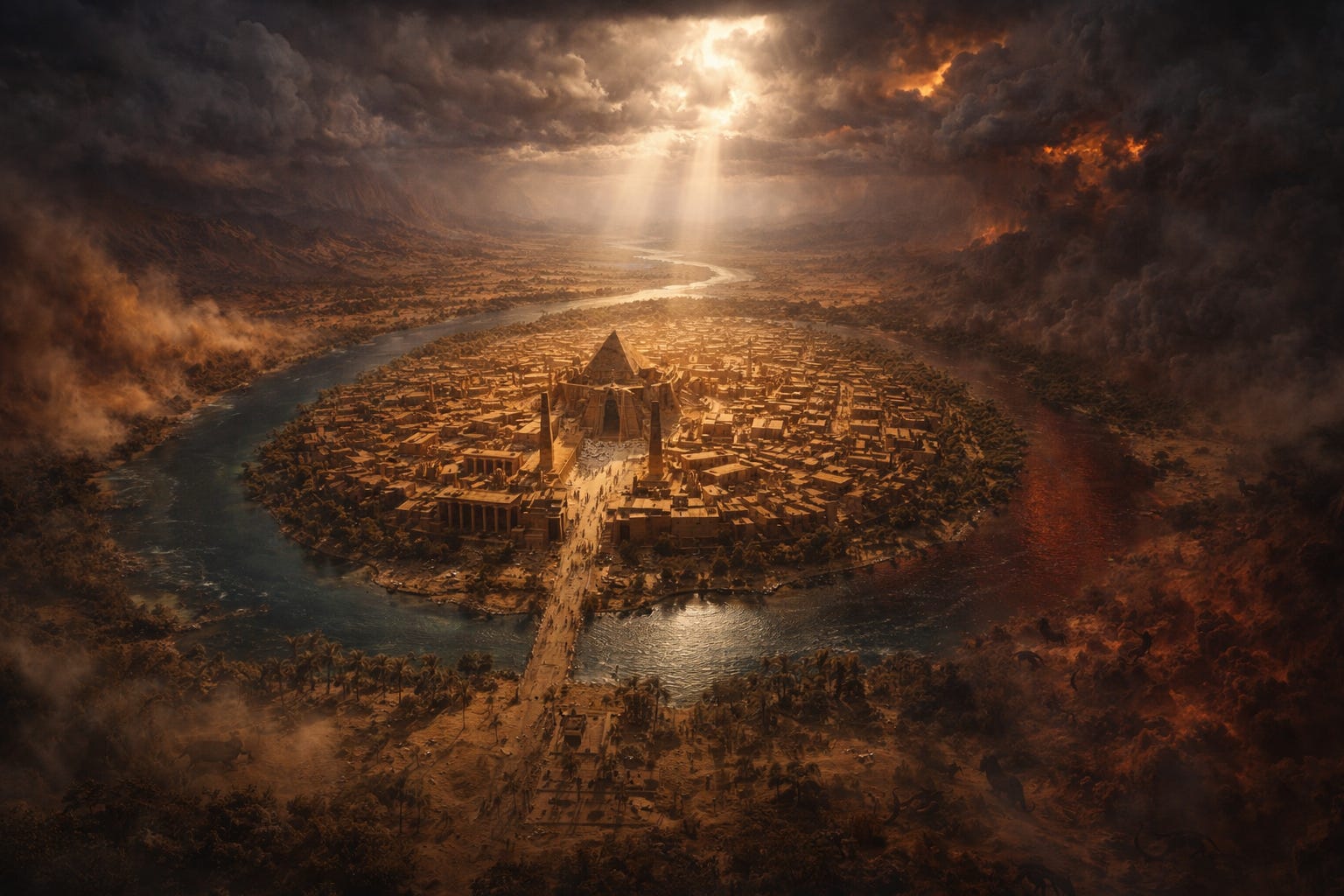
The Makkos as War
בְּטַכְסִיסֵי מִלְחֲמוֹת מְלָכִים בָּא עֲלֵיהֶם, כְּסֵדֶר מַלְכוּת כְּשֶׁצָּרָה עַל עִיר וכו׳
He [G-d] came upon them with the tactics of kings waging war, according to the protocol of a kingdom besieging a city...
— Rashi on Shemos 8:17 (based on the Tanchuma)
Rashi says something striking about the makkos: they are not just punishments. They are a war.
The Tanchuma lays out one strategic pattern behind that war, and Rashi points us toward it. That alone is worth careful study.
But perhaps there are other layers here as well.
Perhaps the war is not only a sequence of blows. Perhaps it is also a sequence of revelations. Perhaps each makah does not merely strike Egypt, but exposes something about Egypt — what it did, what it worshipped, what it relied on, what it thought it could hide.
That is what I want to explore.
My method is simple. I want to go through the makkos one by one, slowly, and pay attention to what each one seems to target, what language the Torah uses, what earlier scenes it echoes, and what larger pattern begins to emerge.
We do not need to force a perfect scheme from the start.
We can begin more modestly than that.
We can look carefully. We can make associations. We can test them. And then we can see what kind of war this really is.
Blood in the Water
The first makah is Dam. The Nile turns to blood.
What exactly is the point of that?
There are at least three different elements here, and each matters.
First: blood. Not just ruined water, but blood specifically. The substance itself is part of the message.
Second: water. Egypt’s water is struck, and with it Egypt’s ability to drink normally and live normally.
Third: the Ye’or — the Nile. Not just water in general, but Egypt’s great river in particular.
Those three things together create the opening blow.
Blood.
Water.
The Nile.
And once you put blood together with the Nile, one association presses itself forward almost immediately.
Go back to the beginning of Sefer Shemos:
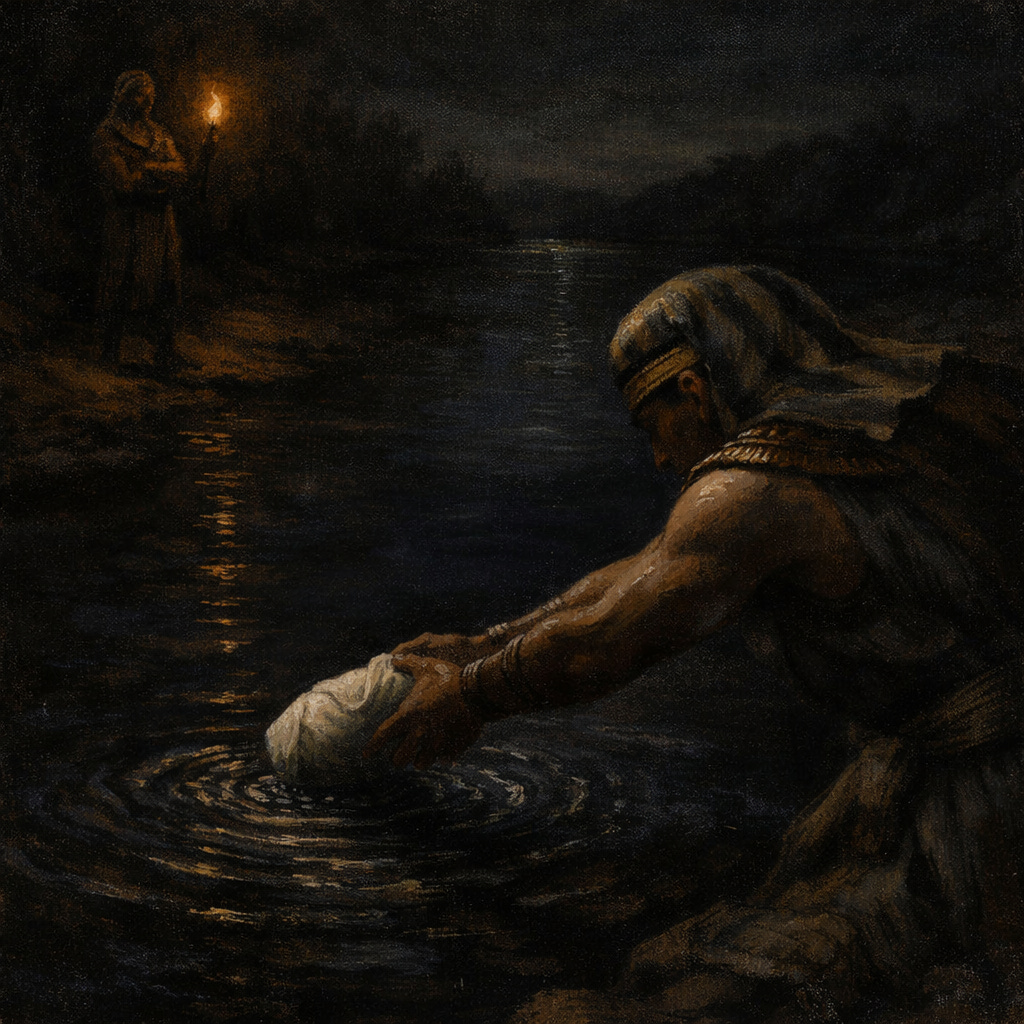
וַיְצַו פַּרְעֹה לְכׇל עַמּוֹ לֵאמֹר כׇּל הַבֵּן הַיִּלּוֹד הַיְאֹרָה תַּשְׁלִיכֻהוּ וְכׇל הַבַּת תְּחַיּוּן
Pharaoh commanded all his people, saying: “Every boy that is born, throw him into the Nile. Every girl, you shall let live.” (1:22)
That river is not just a river.
It is where Egypt tried to hide its violence.
The babies were drowned, not stabbed. No blood filled the streets. No battlefield remained behind. The murder disappeared beneath the water. It could be denied. It could be obscured. It could be made to look clean.
That is part of the point.
As the Ramban explains on the earlier policy of dealing with Israel בְּחָכְמָה, Egypt’s oppression was not only cruel. It was calculated. It was meant to be effective and deniable at once.
It happens at night.
It happens quietly.
It happens in a way that buries the evidence.
And now the Nile itself is turned into blood.
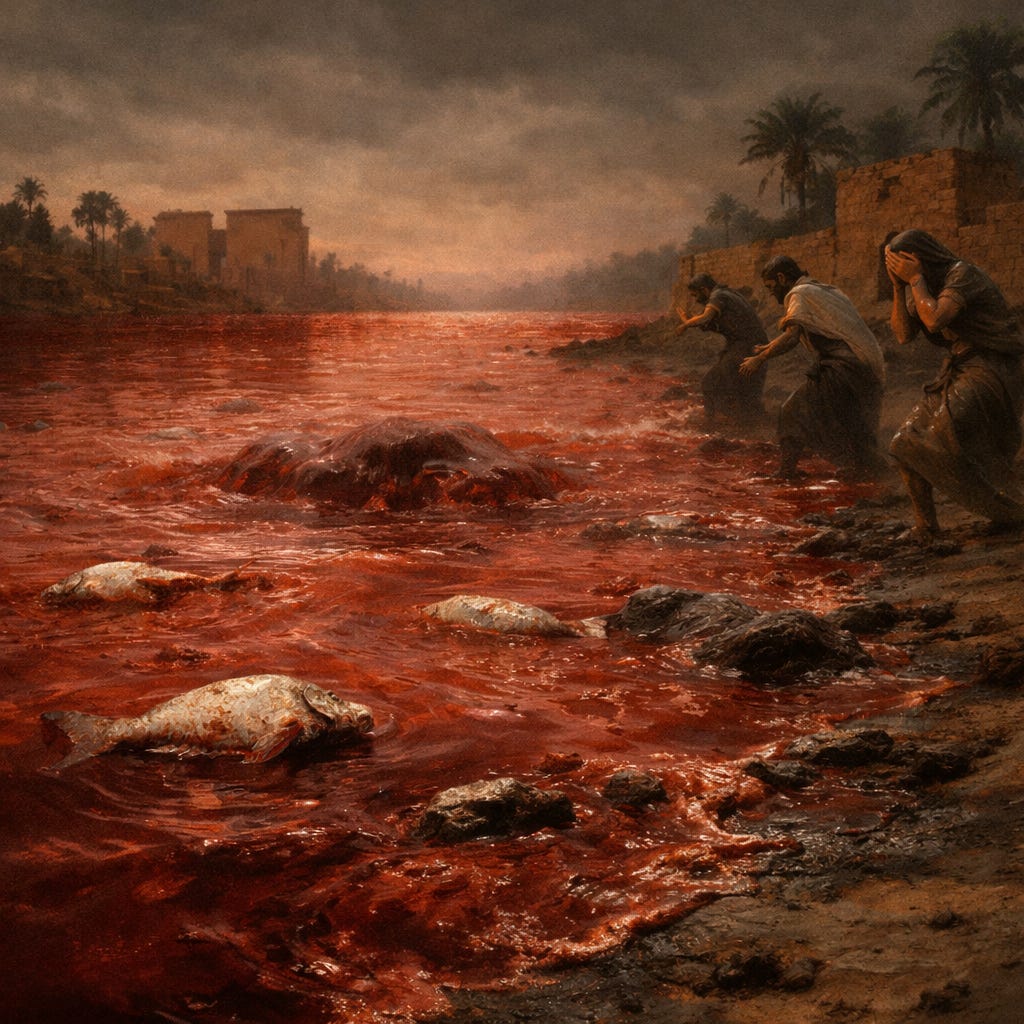
That first makah therefore does more than afflict Egypt. It exposes Egypt.
The place where the blood of Jewish children was concealed now displays blood openly. The river that covered the crime now reveals it. The message is not subtle: We have not forgotten. You did not hide anything. G-d saw.
This also explains why the Nile is the focal point, even though the makah expands beyond it. When Moshe warns Pharaoh, the emphasis is the Ye’or:
בזאת תדע כי אני ה׳
...by this you will know that I am Hashem.
But the actual plague spreads wider:
rivers
canals
ponds
gathered waters
even water in wood and stone.
The center is the Nile, because that is the moral center. The expansion is broader, because the judgment is broader. Egypt’s crime was concentrated there, but Egypt’s guilt was not.
There may be something else here too.
The blood in the Nile is not only memory.
It is warning.
At the beginning of the story, it most naturally evokes the blood Egypt already spilled there — the blood of the murdered children. But by the end of the story, another image comes into view: Egyptian blood in water.
The empire that began by throwing Hebrew children into the river will end with Egyptians overwhelmed in the sea. The first plague is therefore not only indictment. It is forewarning.
Beware of the blood in the water.
That is how the war begins.
Not with the destruction of Egypt’s army. Not with the collapse of Pharaoh’s throne. Not even with direct human death.
It begins with revelation.
Before G-d brings Egypt down, He shows Egypt what it is.
Crying Out
The next makah is Tzefardea.
At first glance, it is a strange plague. What exactly is the affliction here?
We usually picture Tzefardea as frogs. That is certainly the standard understanding. But Abarbanel — and, according to Ibn Ezra, others as well — identify them as crocodiles.
Why would they do that? Presumably because the plague seems to demand something more threatening than mere annoyance. Frogs are invasive, filthy, and exhausting. Crocodiles are frightening.
The Netziv offers a kind of middle position: frogs for the masses, crocodiles for Pharaoh’s court.
Whatever one makes of that zoological debate, it serves mainly to sharpen the problem. This plague is not meant to be read as simple inconvenience. And once that is clear, the deeper question comes into focus: not only what the creatures are, but why they emerge specifically from the Ye’or.
That question matters because the first plague already taught us that the river is not just a setting. It is a witness. It is the place where Egypt tried to bury its crime. So when the next plague also rises from the Ye’or, we should assume the Torah wants us to connect the two.
But how?
Not in bricks. Nor in mortar or city-building. Rather, in cries:
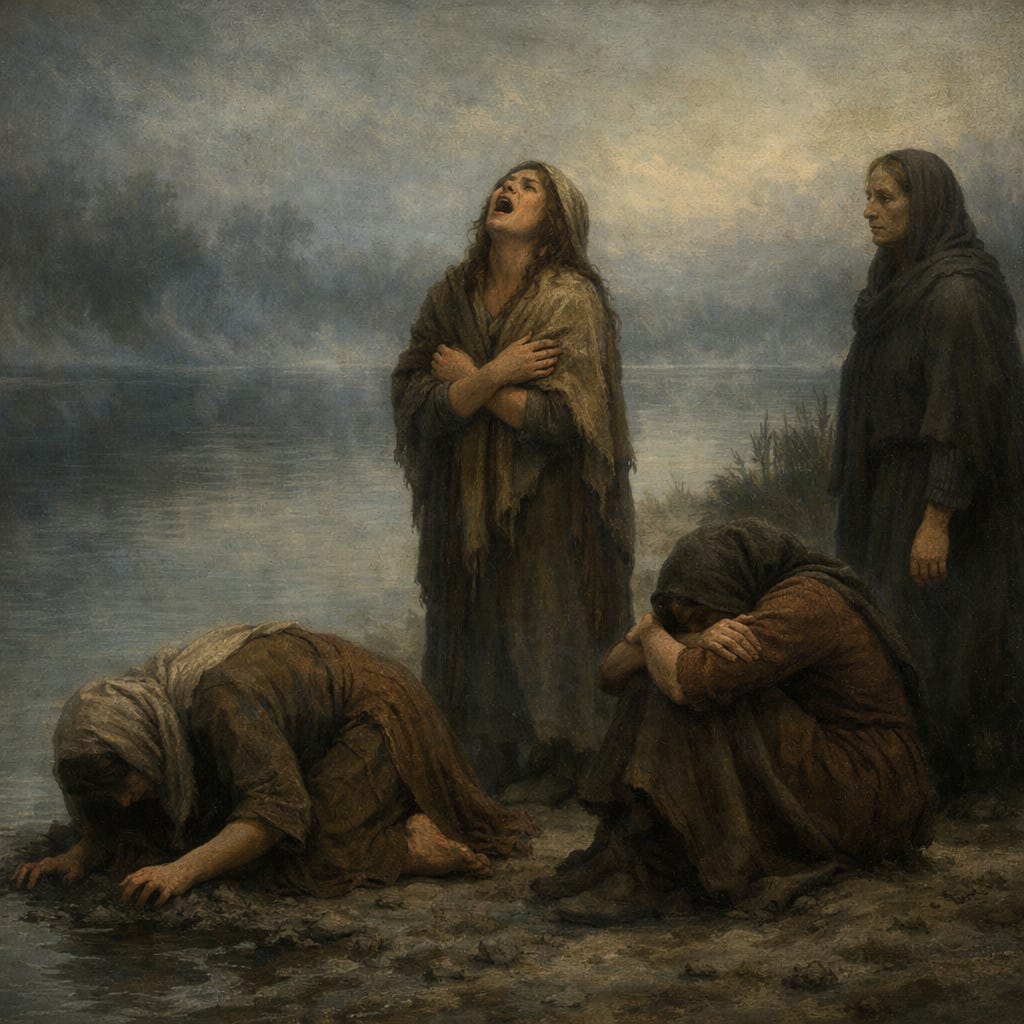
וַיֵּאָנְחוּ בְנֵי יִשְׂרָאֵל מִן הָעֲבֹדָה וַיִּזְעָקוּ וַתַּעַל שַׁוְעָתָם אֶל הָאֱלֹהִים מִן הָעֲבֹדָה
The Israelites groaned under the bondage and cried out, and their plea rose up to G-d from the bondage. (2:23)
Israel cries out. And at the bush, Hashem says:
כִּי שָׁמַעְתִּי אֶת צַעֲקָתוֹ... הִנֵּה צַעֲקַת בְּנֵי יִשְׂרָאֵל בָּאָה אֵלָי
“I have heard their cry... the cry of the children of Israel has come to Me.” (3:7, 9)
And now, under the pressure of Tzefardea, Pharaoh turns to Moshe and Aharon:
הַעְתִּירוּ אֶל ה’ וְיָסֵר הַצְפַרְדְּעִים מִמֶּנִּי וּמֵעַמִּי וַאֲשַׁלְּחָה אֶת הָעָם
“Entreat Hashem to remove the frogs from me and from my people, and I will send the people out.” (8:4)
And what does Moshe do?
וַיִּצְעַק מֹשֶׁה אֶל ה’
Moshe cried out to Hashem. (8:8)
Moshe himself cries out to Hashem.
The reversal is sharp.
The empire that ignored cries must now depend on them.
What Egypt would not hear from Israel, Pharaoh must now seek for himself. The very man who stood over a system of suffering is reduced to asking someone else to plead for relief.
This is why Abarbanel’s formulation is so powerful. He describes these creatures as הַצּוֹעֲקִים — the ones that cry out — and connects their emergence from the Nile to the cries that once came from that same river:
כְּצַעֲקַת וִילְלַת בְּנוֹת יִשְׂרָאֵל וַיֵּצְאוּ מִן הַיְאוֹר כִּי מִשָּׁם יָצְאָה צְעָקָה וִילְלָה
Like the crying and wailing of the daughters of Israel, they came out from the river, for from there came crying and wailing.
That line transforms the plague.
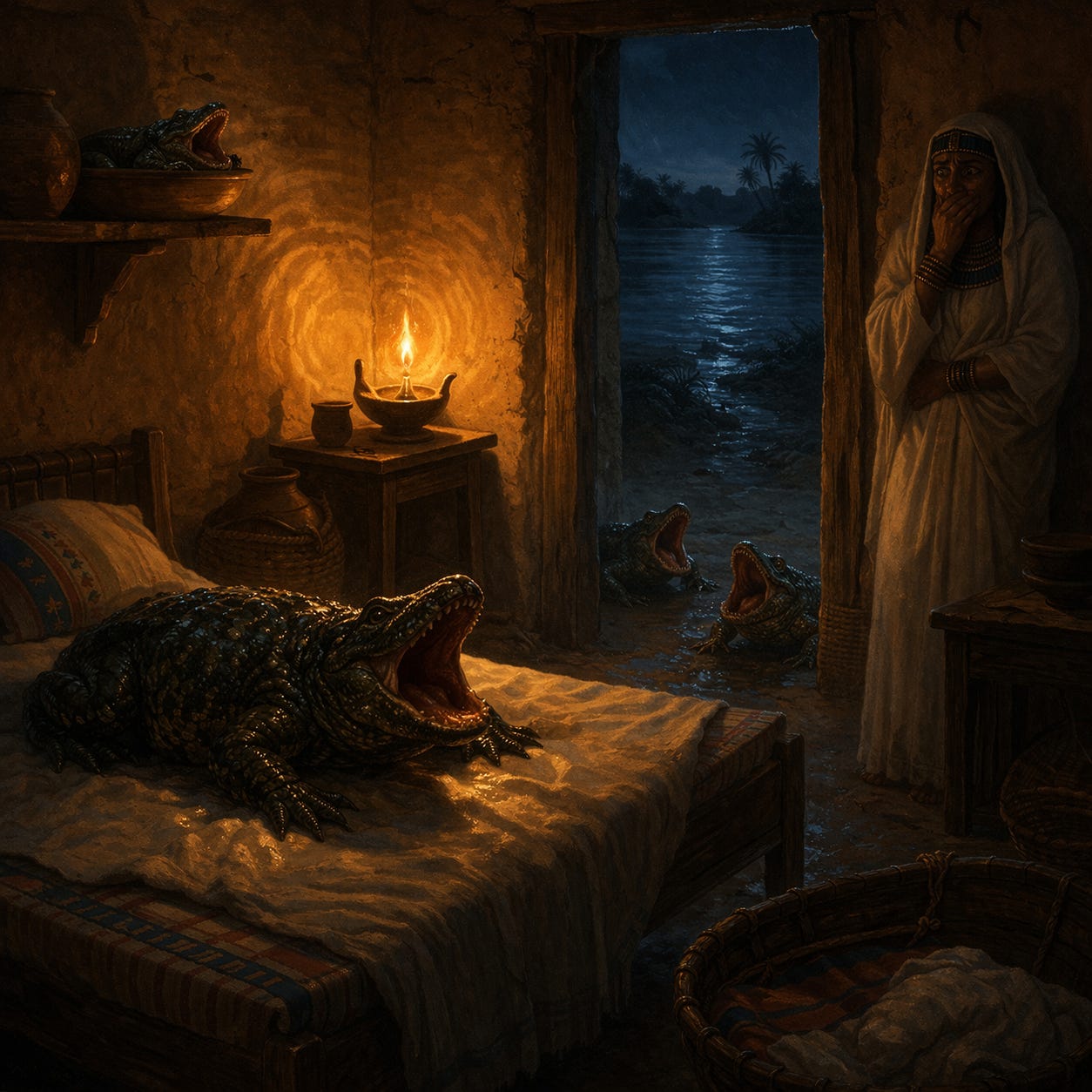
The river does not only return blood. It returns sound.
In Dam, the Ye’or becomes a visible accusation. In Tzefardea, it becomes an audible one.
And the pattern does not stop there. In Dam, death in the water produces stench. In Tzefardea, death on the land produces stench again. The corruption of the river now spreads outward, from water to land, from hidden crime to public disorder.
That outward movement matters.
The babies in the river were the most concentrated and horrifying expression of Egypt’s cruelty. But they were not the whole story. Israel cried not only because children were taken, but because the whole machinery of slavery was crushing them. So the plague begins in the Ye’or, where the worst of the crime was hidden, and then it spills onto dry land, as if to say: the suffering was broader than that, and G-d sees that too.
If Dam reveals what Egypt did, Tzefardea reveals what Egypt refused to hear.
The Dust Strikes Back
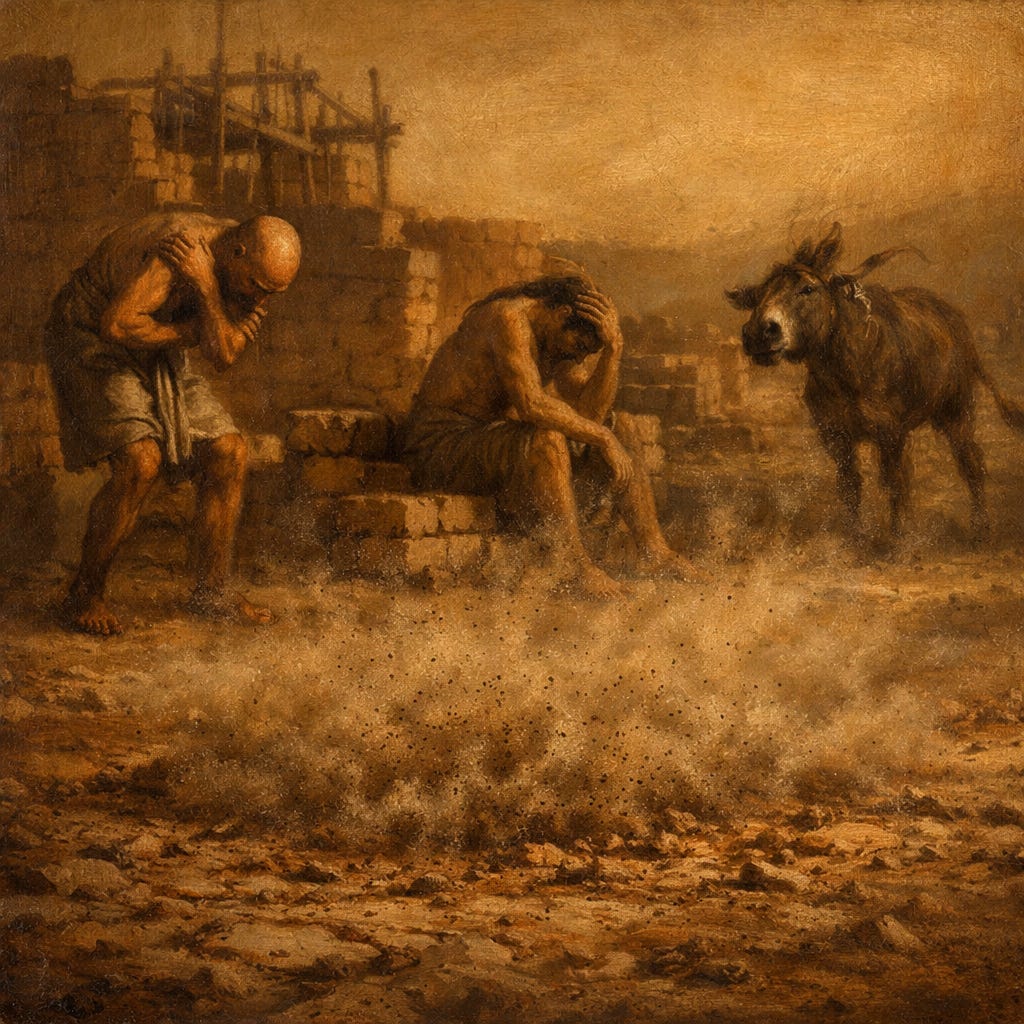
The third makah is Kinim.
Aharon strikes the afar ha’aretz — the dust of the earth — and that dust becomes kinim on adam and behemah.
By now a clear progression has emerged.
Dam was rooted in the water. Tzefardea began in the Ye’or and then spilled onto the land. Kinim comes from no river at all. Its source is the earth itself.
The plague has moved fully onto dry ground.
And that matters, because dust is not neutral in the story of Egypt’s oppression.
Egypt worked Israel with chomer, leveinim, and avodah basadeh. Brickmaking. Field labor. Backbreaking work close to the ground, in dust, sweat, and humiliation. The Kli Yakar makes the physical point directly: hard labor leaves a laborer covered in dust and sweat, and kinim belong to exactly that world. The Malbim adds a deeper layer. Kinim is a makah of בִּזָּיוֹן — not only pain, but disgrace.
That is the heart of the plague.
The dust of slavery strikes back.
What Egypt forced onto the bodies of its slaves now comes upon Egypt’s own bodies. The substance of degradation becomes the instrument of degradation. This is not yet the murder of Dam, and it is not the returning cry of Tzefardea. It is something broader and, in a certain sense, more ordinary: the daily humiliation of servitude, the reduction of human beings to filthy, sweating, dust-covered labor.
And that is precisely why Kinim belongs here.
The first three makkos now read as a single moral movement.
Dam exposes the blood Egypt tried to hide. Tzefardea gives back the cries Egypt refused to hear. Kinim returns the degradation Egypt made others live in.
The progression is striking. It moves from the most concentrated and horrifying crime — the murder of the children in the Nile — to the wider field of suffering that Egypt ignored, and then to the atmosphere of degradation that saturated the whole system. The evil becomes less concentrated, but more expansive. The first makah reveals what Egypt did at its worst. The third reveals what Egypt had become all the time.
That is why Kinim matters so much.
It is the completion of the first triad.
The theme of these opening blows is not yet total collapse. It is moral exposure. G-d is showing Egypt what it has done, and what kind of kingdom it has become. Blood. Cries. Dust. Murder. Indifference. Degradation.
G-d sees all of it.
And now, for the first time, even the chartumim cannot keep up. They fail, and they say: אֶצְבַּע אֱלֹהִים הִוא — “It is the finger of G-d.”
Of course it is.
By the third plague, the dust itself has begun to testify.
The Second Round
We are not just moving to the next plague here. We are entering a new round.
And the Torah marks that shift in a recognizable way. At the opening of each new elevation, Hashem explains what this stage is for. With Dam, the point was:
בְּזֹאת תֵּדַע כִּי אֲנִי ה’
by this you will know that I am Hashem.
Now, at the opening of the second round, the formula returns — but it deepens:
לְמַעַן תֵּדַע כִּי אֲנִי ה’ בְּקֶרֶב הָאָרֶץ
so that you know that I am Hashem in the midst of the earth.
The point is not only repeated. It is expanded.
First: that I am Hashem.
Now: that I am Hashem in the midst of the earth.
The claim is growing as the plagues unfold.
And as it is with the explanation for why G-d is sending plagues, so it is with the actual plagues themselves.
Arov
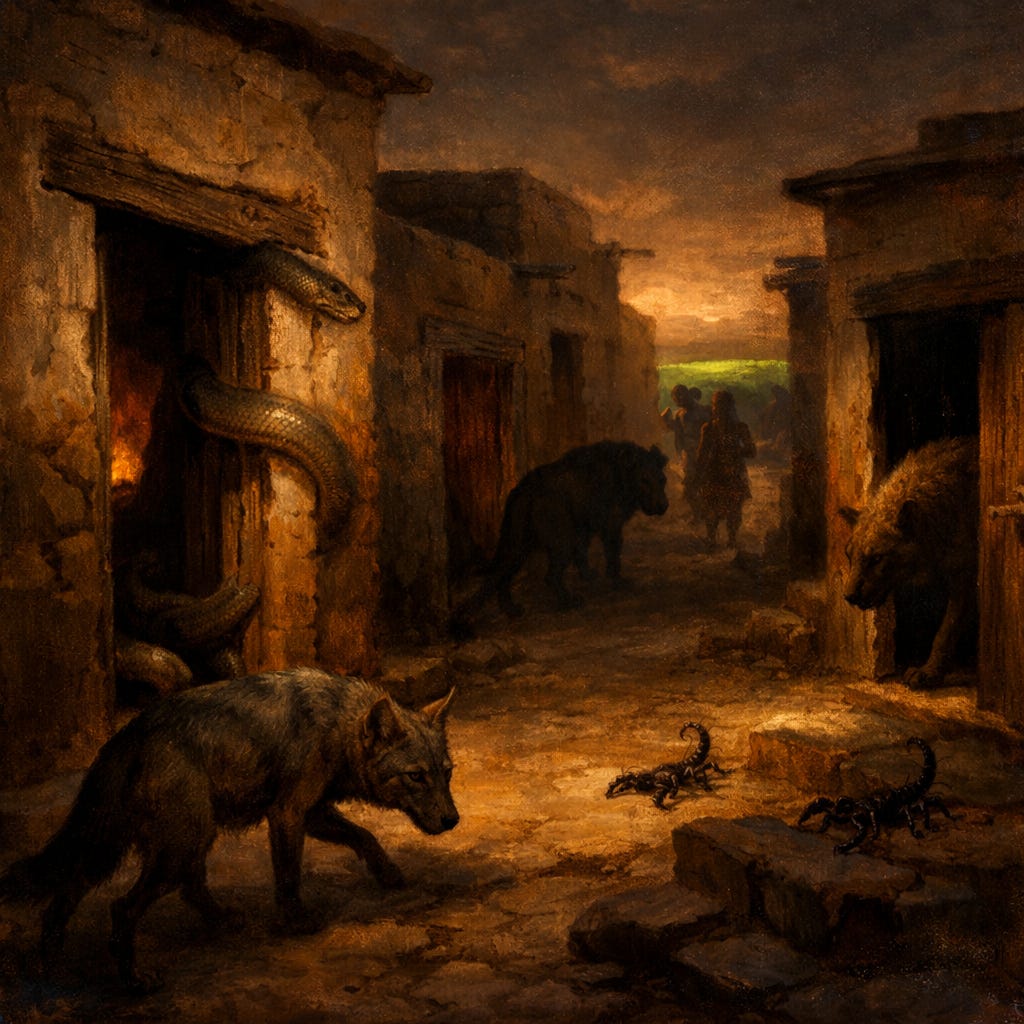
Let’s start with Arov.
There is a real connection here to Tzefardea. In both plagues, creatures invade human space. Tzefardea penetrates bedrooms, ovens, and houses. Arov does the same thing more violently. The private sphere is not merely disturbed now. It is overrun.
There may also be a resonance here, even if I would not press it too far. Egypt invaded Jewish homes. It entered the private sphere, shattered its safety, and took children from their families. Now Egyptian homes are invaded in turn. Tzefardea had already entered bedrooms and ovens. Arov fills “your houses and the houses of your servants.” The home itself is no longer secure.
This is also where the hafla’ah begins. For the first time, Goshen is explicitly set apart. Hashem distinguishes between Egypt and Israel, and from here that distinction will only sharpen.
Dever
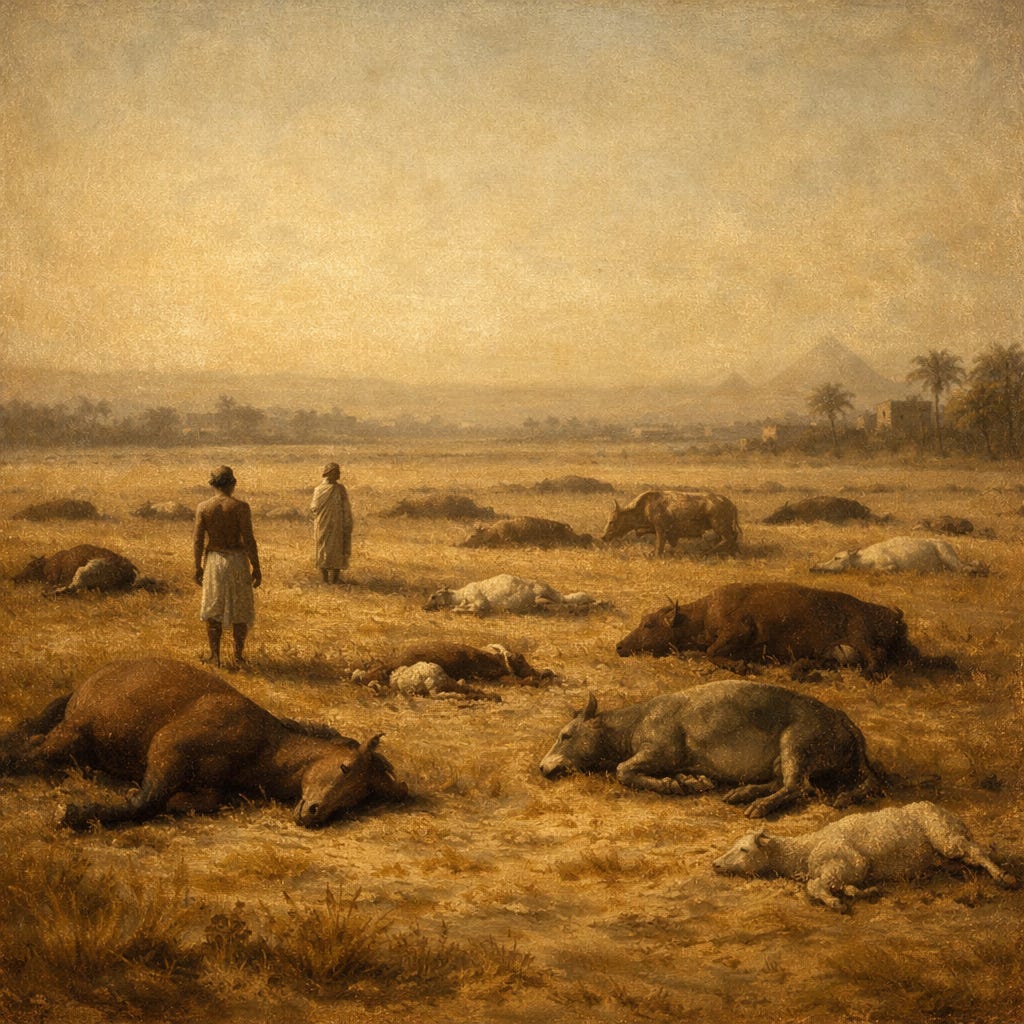
Then comes Dever.
And here I think something new is happening.
Until now, the blows have exposed guilt, invaded space, and afflicted bodies.
But Dever is different. This is a direct attack on Egypt’s economic life and power.
Until now, as painful as the other plagues were — they came and they went. Psychologically they may have been traumatic. And the stench was a constant reminder of what had been.
But the blood — gone.
The frogs (or crocodiles) — gone.
Not so with Dever. When Dever is done, there is devastation in its wake.
Your cattle — dead.
Your horses — dead.
Your donkeys — dead.
Your camels — dead.
Your sheep and goats — dead.
Every single one? I don’t think so. After all, later on, the Egyptians chase after Am Yisrael on their horse and carriages. And the plague of Barad (hail) struck any domesticated animal left in the field (which presumably contained horses and donkeys and camels and more).
But it was devastating nonetheless. One with lasting economic consequences.
Transport. Agricultural power. Stored wealth. Productive strength.
All struck and damaged.
In short, this is a new phase of the war. G-d has upped the ante.
He is now going after the Egyptian economy.
Shechin
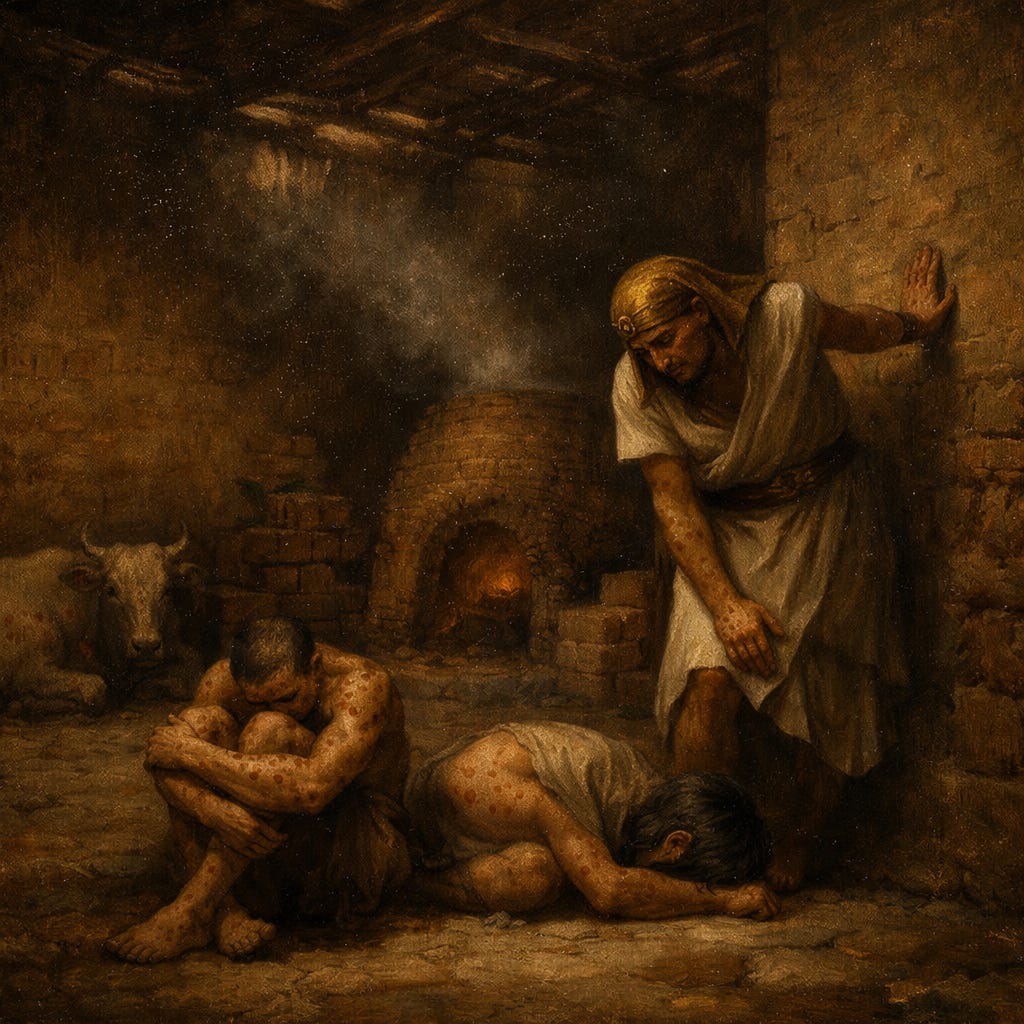
Now for Shechin.
Here we are back on more familiar ground. Shechin clearly intensifies Kinim.
In Kinim, the dust of the earth (עפר — afar) becomes a bodily affliction on adam and behemah.
In Shechin, Moshe takes soot from the kiln (פיח כִּוְשָׁן — piach kivshan), and throws it heavenward.
Dust and soot — similar, yet different. We’ve seen that pattern before. It’s the stuff that variations are made of.
If I were to venture a guess — the dust of the earth relates to the work of the field. Soot, on the other hand, relates to the work of bricks and mortar.
Both of which were mentioned back in chapter 1:
וַיְמָרְר֨וּ אֶת־חַיֵּיהֶ֜ם בַּעֲבֹדָ֣ה קָשָׁ֗ה בְּחֹ֙מֶר֙ וּבִלְבֵנִ֔ים וּבְכׇל־עֲבֹדָ֖ה בַּשָּׂדֶ֑ה אֵ֚ת כׇּל־עֲבֹ֣דָתָ֔ם אֲשֶׁר־עָבְד֥וּ בָהֶ֖ם בְּפָֽרֶךְ׃
And they made their lives bitter with hard labor in mortar and in bricks, and in all the work of the field, which they made them do with rigor. (1:14)
Either way, we see that the material world of the slave becomes the instrument of the plague.
And we see that which they did to the Jews, is now being done to the Egyptians and their domestic animals (אדם ובהמה — adam and behemah).
And once again, we see an escalation as we work our way through the rounds of the plagues.
Kinim irritate and degrade. Shechin wounds and disables.
Indeed, with shechin even the chartumim cannot stand before Moshe. What had been bodily misery becomes bodily incapacity.
The Third Round
Now we come to the third round.
And once again, at the opening of a new elevation, Hashem explains what this stage is for:
בַּעֲבוּר תֵּדַע כִּי אֵין כָּמֹנִי בְּכׇל הָאָרֶץ
so that you know that there is none like Me in all the earth.
The progression is unmistakable.
First: that I am Hashem.
Then: that I am Hashem in the midst of the earth.
Now: that there is none like Me in all the earth.
The claim is growing as the plagues unfold.
And as it is with the purpose-statements, so it is with the plagues themselves.
Barad
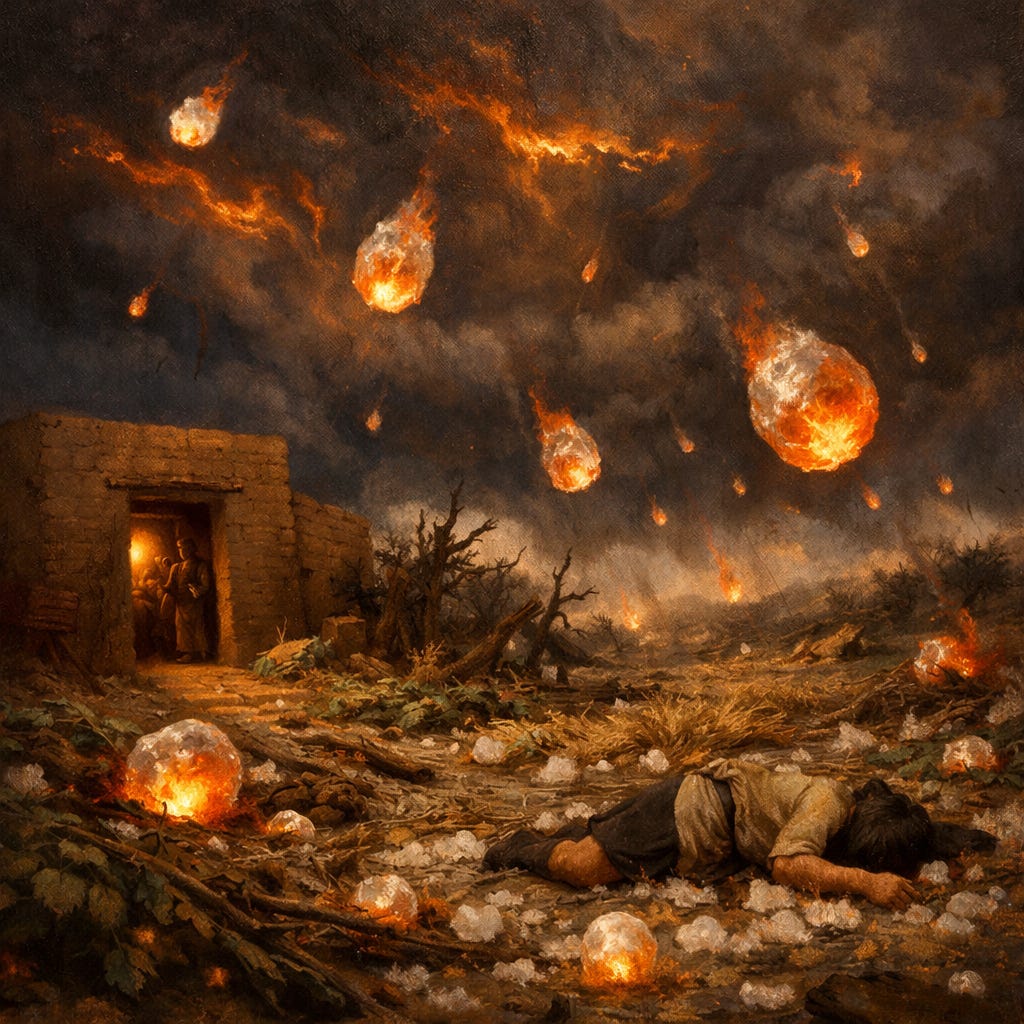
Begin with Barad.
Here the textual connection to Dever is hard to miss.
Dever struck the mikneh in the sadeh:
הִנֵּה יַד ה’ הוֹיָה בְּמִקְנְךָ אֲשֶׁר בַּשָּׂדֶה בַּסּוּסִים בַּחֲמֹרִים בַּגְּמַלִּים בַּבָּקָר וּבַצֹּאן
behold, the hand of Hashem will be upon your livestock that are in the field — upon the horses, the donkeys, the camels, the cattle, and the flock.
Barad returns to that same terrain — mikneh and sadeh — but expands it:
וְעַתָּה שְׁלַח הָעֵז אֶת מִקְנְךָ וְאֵת כָּל אֲשֶׁר לְךָ בַּשָּׂדֶה כָּל הָאָדָם וְהַבְּהֵמָה אֲשֶׁר יִמָּצֵא בַשָּׂדֶה וְלֹא יֵאָסֵף הַבַּיְתָה וְיָרַד עֲלֵהֶם הַבָּרָד וָמֵתוּ
and now send, bring your livestock and everything that is yours in the field under shelter; every man and beast that is found in the field and is not brought home — the hail will come down upon them, and they will die.
And then the Torah makes the further expansion explicit:
וַיַּךְ הַבָּרָד בְּכׇל־אֶרֶץ מִצְרַיִם אֵת כׇּל־אֲשֶׁר בַּשָּׂדֶה מֵאָדָם וְעַד־בְּהֵמָה וְאֵת כׇּל־עֵשֶׂב הַשָּׂדֶה הִכָּה הַבָּרָד וְאֶת כׇּל־עֵץ הַשָּׂדֶה שִׁבֵּר
and the hail struck throughout all the land of Egypt all that was in the field, from man to beast; and the hail struck every herb of the field, and every tree of the field it shattered.
Dever struck the animal world of the field.
Barad widens the blow.
Now it is not only mikneh, but also כל האדם והבהמה אשר ימצא בשדה. And beyond that, the Torah explicitly adds plant life: כל עשב השדה and כל עץ השדה.
So this is not simply a repetition of Dever. It is an expansion of it.
The attack on Egypt’s economic life is now widening. First the animal life of the field was struck. Now the growing life of the field begins to be struck as well.
And here the house suddenly changes meaning.
With Tzefardea and Arov, the house had become vulnerable. Creatures entered bedrooms, ovens, and private spaces. But now the house becomes the place of refuge. Bring your servants inside. Bring your animals inside. Whoever comes into the house can be saved.
The place Egypt once violated now becomes the place in which one may seek protection.
Arbeh
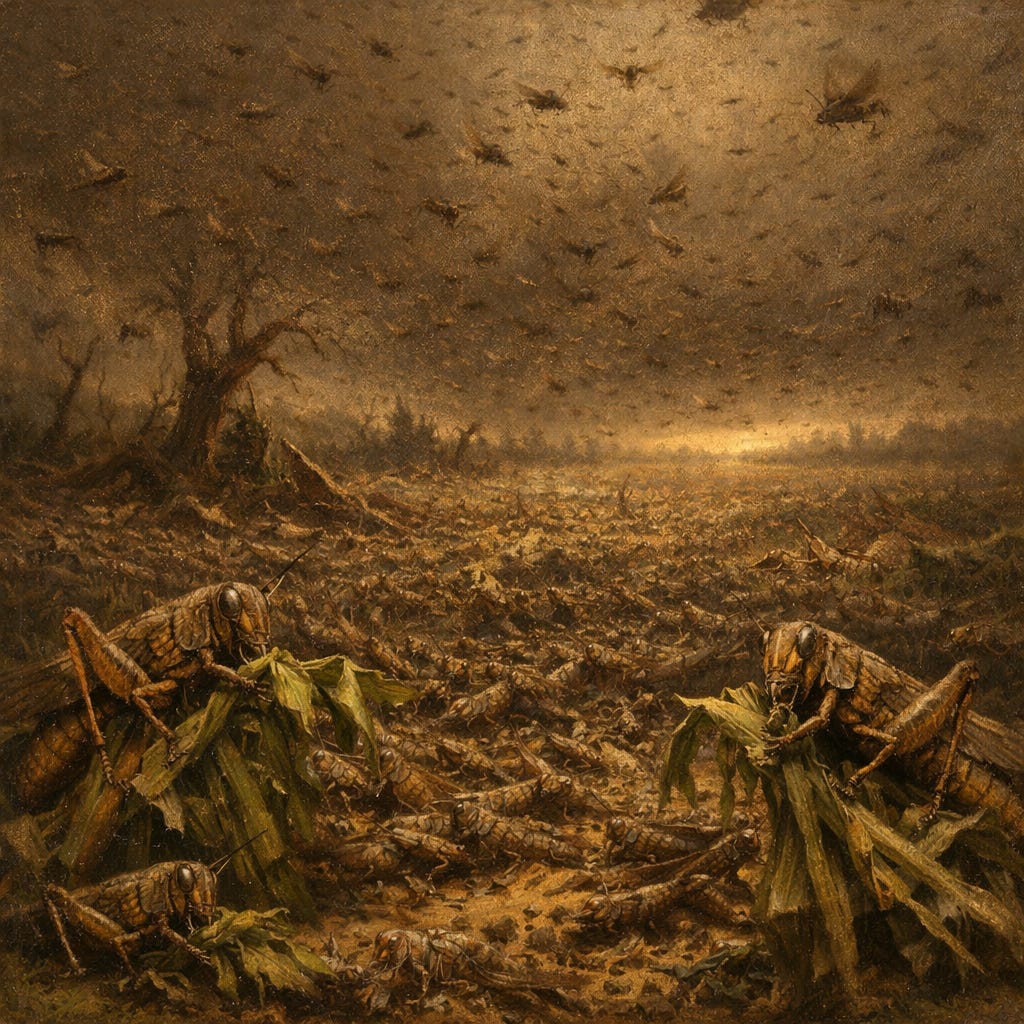
Then comes Arbeh.
Now the blow spreads even further:
וְכִסָּה אֶת עֵין הָאָרֶץ ... וְאָכַל אֶת יֶתֶר הַפְּלֵטָה הַנִּשְׁאֶרֶת לָכֶם מִן הַבָּרָד
it will cover the surface of the land ... and it will eat the surviving remnant that was left for you from the hail.
Barad began the attack on plant life.
Arbeh completes it.
Barad breaks.
Arbeh devours.
These are twin agricultural strikes.
The first damages what is standing.
The second consumes what remains.
And now the economic war has clearly moved from animal life to plant life — from the creatures that work the field, carry goods from the field, and support the field, to what grows in the field itself.
All this work in the field that the Jewish people had done, all this benefit Egypt had been drawing from Jewish slave labor — now it is being lost.
Choshech
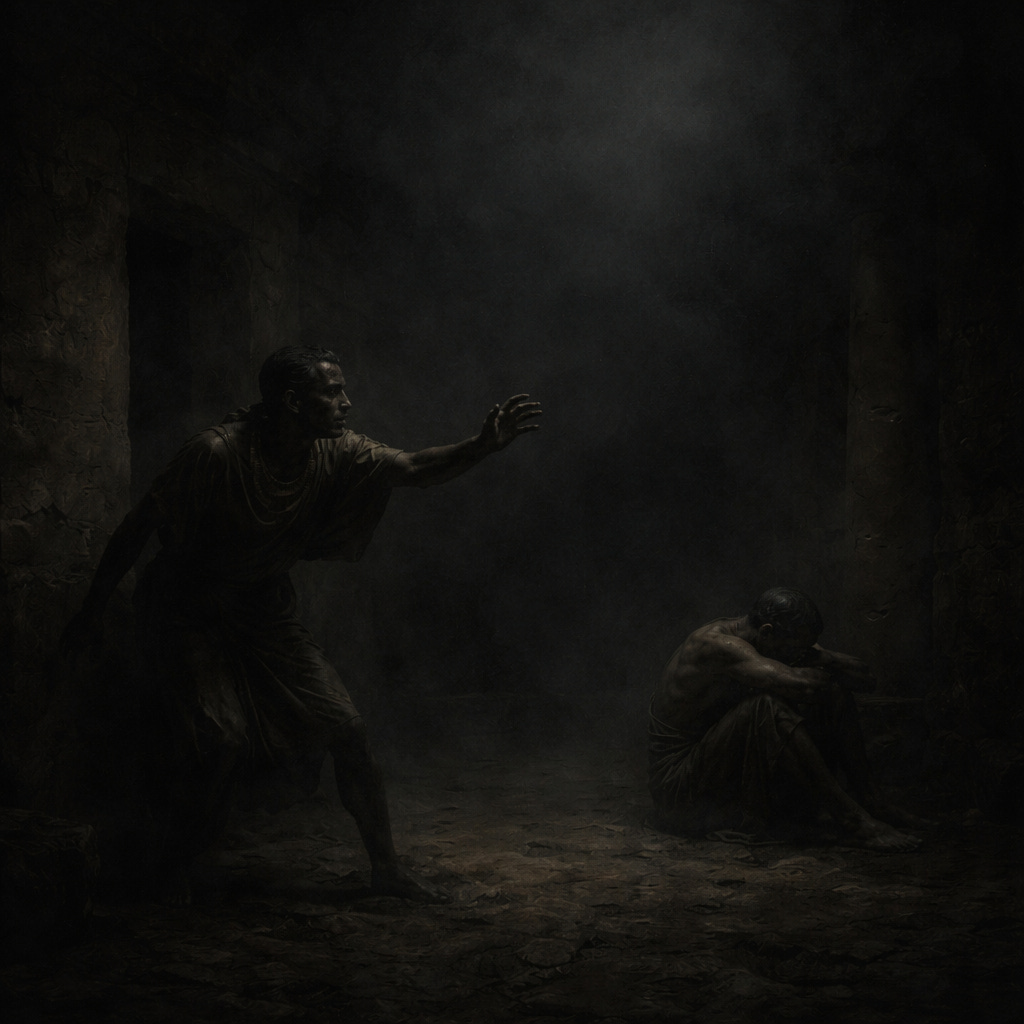
Then comes Choshech.
Now Moshe’s hand is stretched not toward water, not toward dust, not toward soot, but toward heaven:
נְטֵה יָדְךָ עַל הַשָּׁמַיִם
stretch out your hand toward the heavens.
That matters.
Until now, the plagues have been expanding the territory of Egypt that is being struck.
First the waters.
Then the dust.
Then the homes.
Then the fields.
Then the borders.
And now, with Choshech, it is not only territory that is struck. It is time itself.
וְיָמֵשׁ חֹשֶׁךְ
and one will feel darkness.
Choshech is different from the plagues that kill.
Dever destroys livestock.
Barad and Arbeh together destroy plant life.
But Choshech does something else.
It blocks light.
And by blocking light, it prevents growth, recovery, and rebirth.
Light gives warmth.
Light gives visibility.
Light makes fertility and growth possible.
To remove light is not merely to make Egypt suffer. It is to cut off one of the great conditions of life itself.
That is one reason Choshech feels like a kind of parallel to Dam.
The Nile is a source of life.
The sun is a source of life.
One gives water.
The other gives light.
Both sustain human life.
Both sustain agricultural life.
And both, in Egypt, were bound up with divinity. The Nile was treated as a god. Ra was the Egyptian sun god.
So it is striking that the first plague begins with water, and the ninth comes to darkness.
At the beginning of the sequence, Hashem strikes one of Egypt’s great life-sources.
Near the end, He strikes another.
And in both, there seems to be some independent medium which prevents the Egyptians from benefiting from their “gods.”
The river is full of blood — so they cannot drink the water.
The air in Egypt seems to be thick — perhaps indicating a foreign substance which prevents the light from shining through.
And the message is theological as well as practical.
These powers are not what you think they are.
They are not independent.
They are not self-sustaining.
They can be taken away.
That is how Egypt learns dependency.
Barad damages what is there.
Arbeh consumes what remains.
Choshech prevents anything from growing back.
That is the third round.
And one way to see the structure of the makkos as a whole is 3 + 3 + 3 + 1.
Three rounds of three, each introduced by its own purpose-statement, each one building on the last.
The first round exposes what Egypt did and what Hashem sees.
The second round expands the war and begins the attack on Egypt’s animal-based economy.
The third round widens that attack further — first to the growing life of the field, then to the possibility of growth itself.
Each round maintains what was present in the previous round and expands upon it.
At this point we should step back and notice the nature of the battle.
It is painful.
It is devastating.
It strikes Egypt’s ordinary life and economic foundations at ever deeper levels.
But Egypt’s military might has not yet been directly touched.
Until this point, the war has been fought through the systems that sustain Egypt — its water, its bodies, its animals, its fields, its produce, and even its access to light itself.
Future for Future
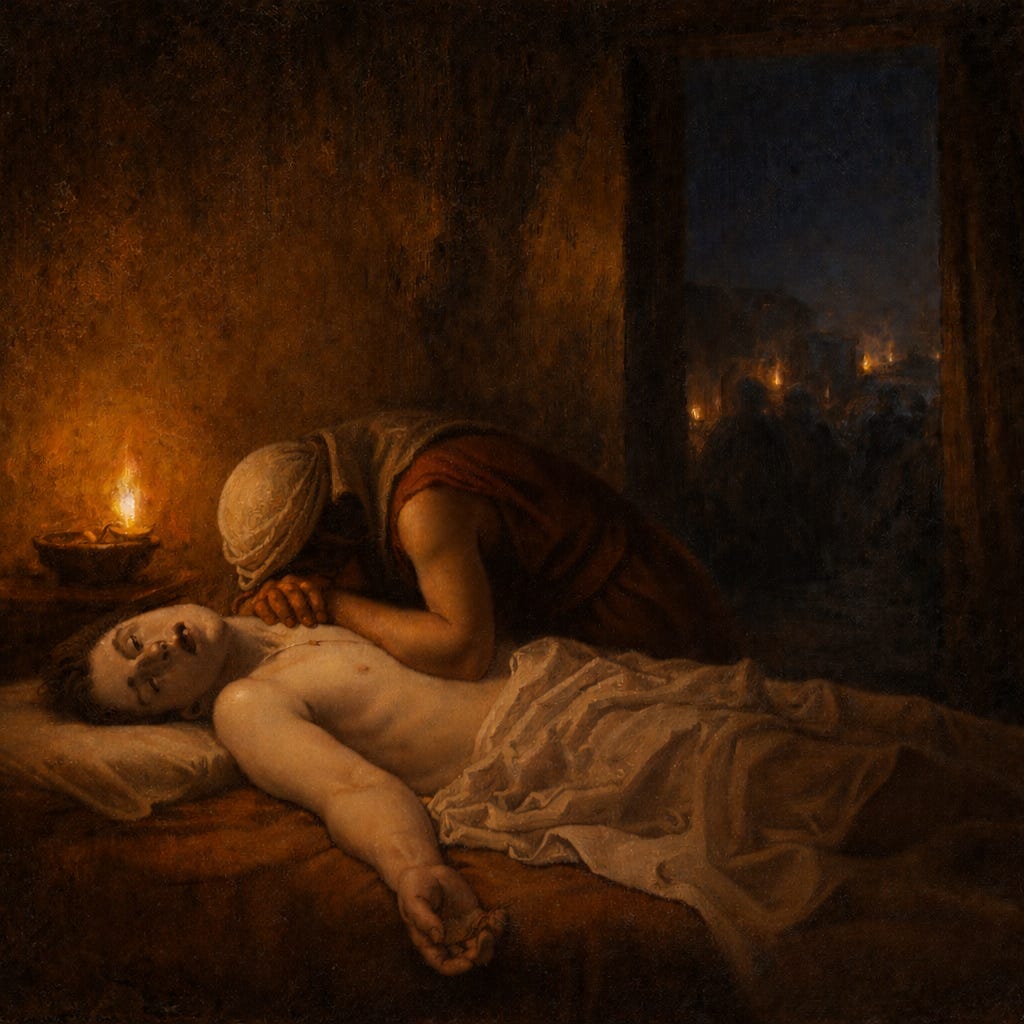
By the time we reach Makkas Bechoros, death has been expanding for a long time.
The fish die, and the Nile stinks of death.
The tzefardea die, and the land stinks of death.
With Arov and then Dever, death moves closer and closer.
With Barad and Arbeh, plant life itself is destroyed.
Choshech is not death, but darkness and death are close cousins.
And now the blow reaches its human climax.
Adam and Behemah
And when it does, it also brings to completion a textual line that has been building for some time.
In Kinim, the plague falls on אדם ובהמה:
וַתְּהִי הַכִּנָּם בָּאָדָם וּבַבְּהֵמָה
and the lice were on man and beast.
In Shechin, the same pair returns in more acute form:
וַיְהִי שְׁחִין אֲבַעְבֻּעֹת פֹּרֵחַ בָּאָדָם וּבַבְּהֵמָה
and there were boils breaking out on man and beast.
And now, in Makkas Bechoros, that line reaches its end in death:
וּמֵת כָּל בְּכוֹר בְּאֶרֶץ מִצְרַיִם מִבְּכֹר פַּרְעֹה ... עַד בְּכוֹר הַשִּׁפְחָה ... וְכֹל בְּכוֹר בְּהֵמָה
and every firstborn in the land of Egypt shall die, from the firstborn of Pharaoh ... to the firstborn of the maidservant ... and every firstborn of beast.
So there is an escalation here as well.
Kinim.
Shechin.
Bechoros.
Affliction.
Incapacity.
Death.
And the target is precise.
The firstborn is not merely a child.
The firstborn is continuity.
The firstborn is inheritance.
The firstborn is the future passing from one generation to the next.
That is what Egypt attacked when it went after the Jewish baby boys. And that is what is being struck now in return.
Future for future.
Cry and Silence
There is also a great cry in Egypt:
וְהָיְתָה צְעָקָה גְדֹלָה בְּכׇל אֶרֶץ מִצְרָיִם
and there shall be a great cry throughout all the land of Egypt.
But among Israel there is silence:
וּלְכֹל בְּנֵי יִשְׂרָאֵל לֹא יֶחֱרַץ כֶּלֶב לְשֹׁנוֹ
but against any of the children of Israel, not a dog shall whet its tongue.
The people whose cries rose to heaven pass through the night in silence. The nation that ignored those cries is now filled with its own.
The Middle of the Night
And this happens in the middle of the night.
Egypt’s violence against Israel’s children was hidden, deniable, and bound up with the secrecy of night. Children were taken under cover of darkness and cast into the Nile. Now, in the middle of the night, the hidden crime returns in a form no one can deny.
The Nile Returns
And here we should note a second structure within the Ten Makkos.
As we noted earlier, the Nile is parallel to the Sun — both are sources of life.
But the Nile filled with blood is parallel to Makkas Bechoros. Not as life-source, but as blood-guilt.
At the Nile, blood appeared where Egyptian violence had been hidden.
Here, at the end, that blood-guilt is answered in Egypt’s own homes.
The Egyptians had been warned. G-d saw all that you had done.
Admit it.
Rectify it.
Ask forgiveness for it.
That was the warning. It was a warning the Egyptians ignored. Here, we see the consequences of that choice.
G-d did not forget.
Pharaoh’s War
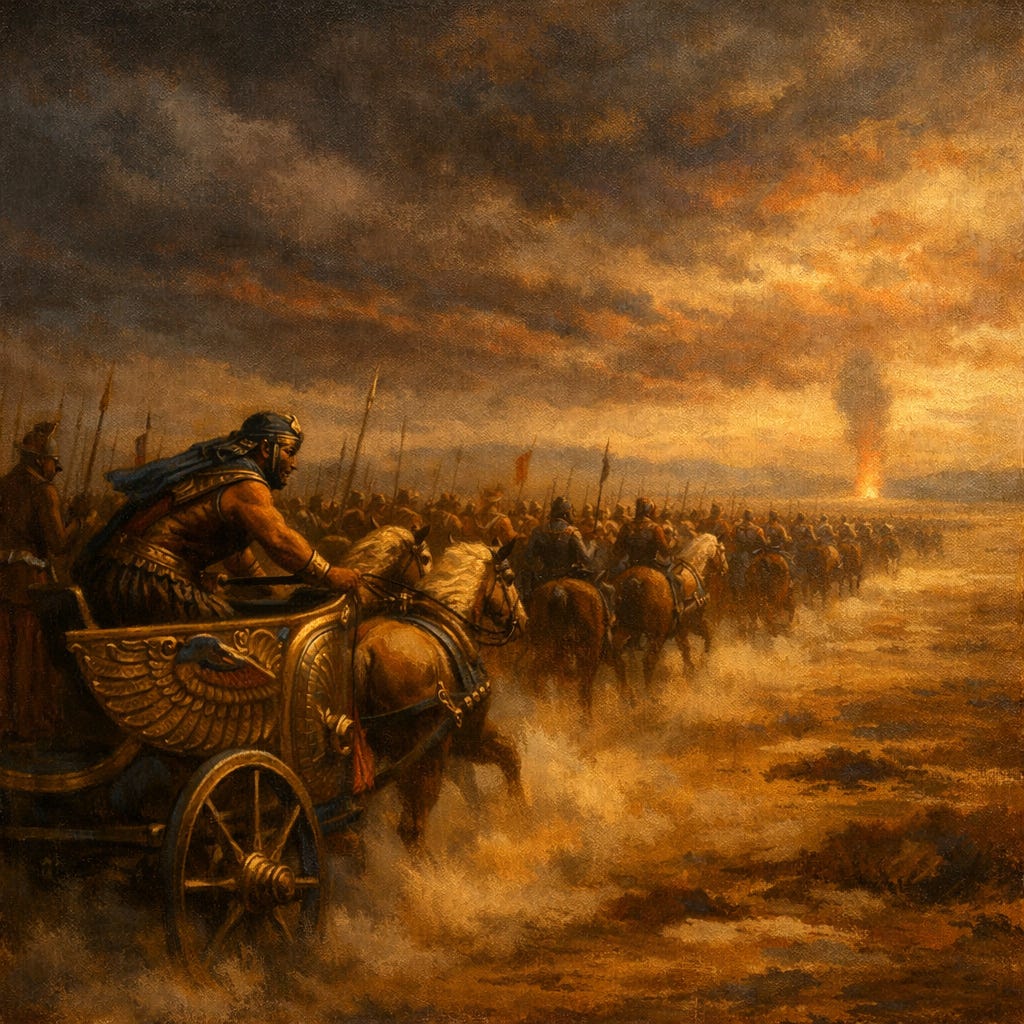
Let us now try to tie this together.
By the end of the ninth plague, Egypt has been devastated. By the end of the tenth, its future itself has been struck. At that point, the story could have ended. Israel could have left. Egypt could have let them go. The entire chapter of Egypt might have closed there.
But Pharaoh makes a choice.
He cannot allow it to end that way.
So he harnesses his chariot, gathers his army, takes his elite force — six hundred chosen chariots — and goes after Israel.
War.
What a choice for Paro to make.
At the very beginning, Pharaoh’s fear was not simply that the Jews would multiply. His fear was that they would leave in the context of war:
הָבָה נִתְחַכְּמָה לוֹ פֶּן יִרְבֶּה וְהָיָה כִּי תִקְרֶאנָה מִלְחָמָה וְנוֹסַף גַּם הוּא עַל שֹׂנְאֵינוּ וְנִלְחַם בָּנוּ
let us deal shrewdly with them, lest they multiply, and it happen that when a war occurs, they too join our enemies and fight against us.
Paro feared war.
Now he is starting a war.
And he is about to learn that Hashem is a “man” of war:
ה׳ אִ֣ישׁ מִלְחָמָ֑ה
Hashem is a man of war. (Exodus 15:3)
Paro was afraid of the Jewish people leaving Egypt via war — and so he attempted to outsmart them.
He thought that by enslaving them, he could control them and prevent them ever leaving.
He sought to contain them, weaken them, and prevent that future from ever arriving. He enslaved them so they would never leave.
And now, when they are in fact leaving, he does the very thing he feared from the beginning.
He goes to war.
The Great Irony
And here is the great irony of this tale.
The man who feared war, used cunning and subterfuge to prevent the Jewish exodus:
הָבָה נִתְחַכְּמָה
let us deal shrewdly
And now, that very same exodus is going to be secured by G-d outmaneuvering Paro vis-a-vis the war that Paro himself is now starting.
Hashem leads Israel to the sea. Egypt sees them hemmed in and trapped. Paro thinks he has finally regained control. He pursues them into the water.
And there, the Nile returns.
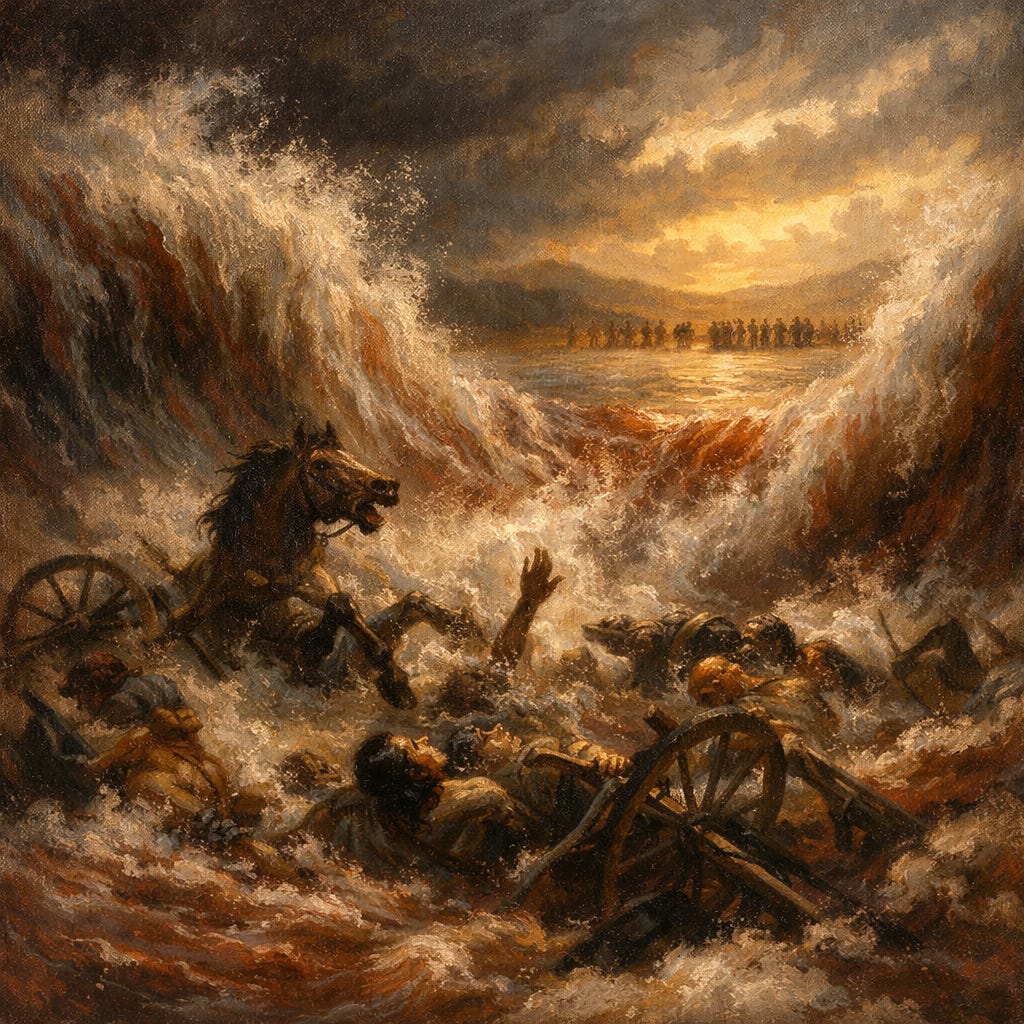
Because that blood in the Nile was not only a sign of what Egypt had done. It was also a warning of what Egypt was becoming.
The blood in the water said two things at once.
First: you killed their children, and your children will die in turn.
Second: you are murderers, and murderers themselves must answer for the blood they spill.
That is why the Nile opens more than one line at once.
It opens the line that leads to the smiting of the Egyptian Sun god.
It leads to the line of the smiting of the Egyptian first born.
And now it will lead to the line of the smiting of Paro and his army.
And that military power is brought to the bottom of the sea.
The same kingdom that cast Israel’s children into water is itself cast into water.
The same regime that tried to bury its crimes beneath the Nile is now buried beneath the sea.
One sign — blood in the water of the Nile.
Two warnings.
Two fulfillments.
Brought together by One G-d.