
The Names of G-d: What Moshe Heard that the Avos Never “Knew” | Parshas Va'era
E-lokim, Y-K-V-K, and what it means to truly know G-d

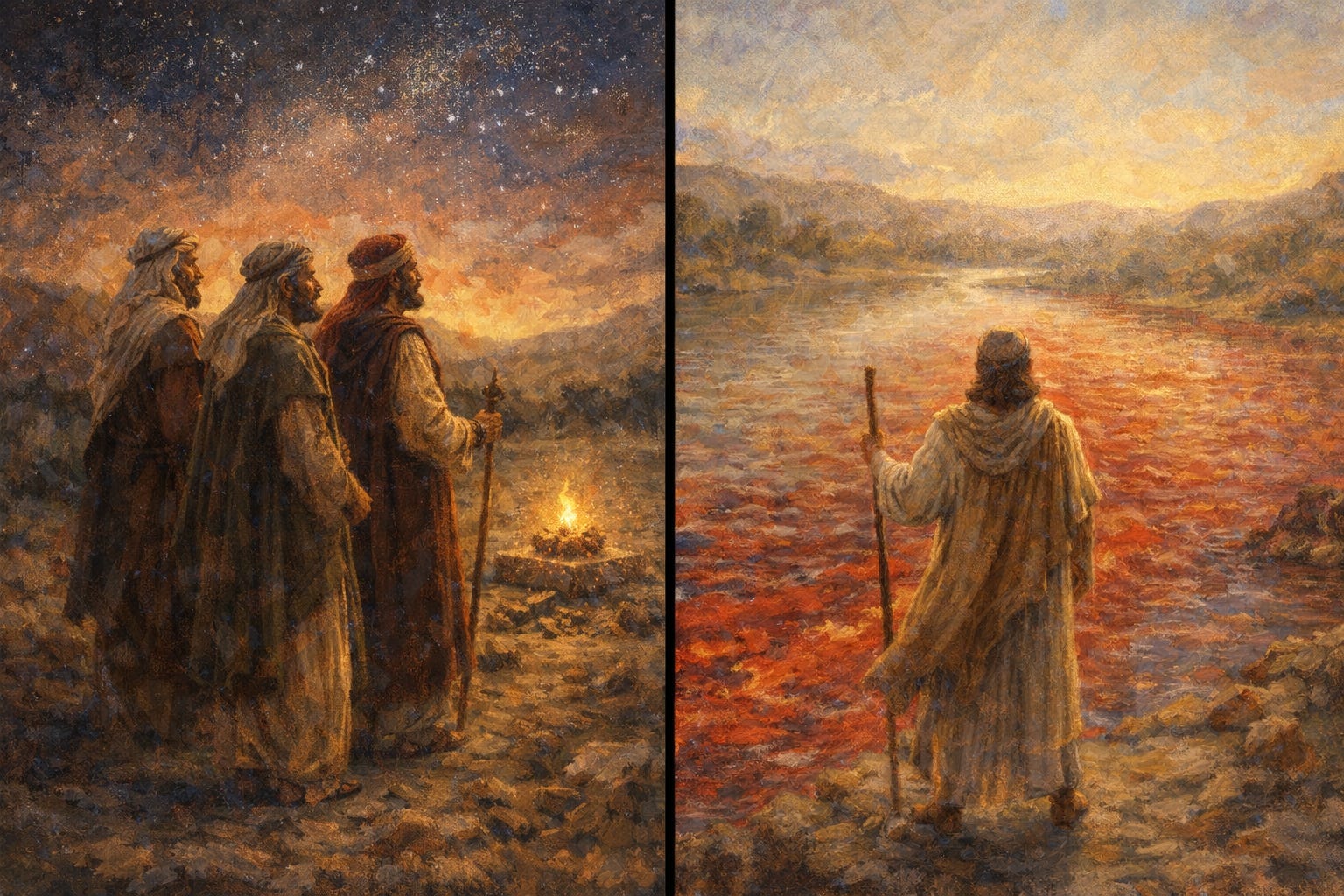
If you want to see the brilliance of the Torah, look no further than the names of G-d Himself. And if you want a single pasuk that makes clear that G-d’s names carry depth and meaning — look no further than the opening of this week’s parsha:
וַיְדַבֵּ֥ר אֱלֹהִ֖ים אֶל־מֹשֶׁ֑ה וַיֹּ֥אמֶר אֵלָ֖יו אֲנִ֥י יְהֹוָֽה׃
וָאֵרָ֗א אֶל־אַבְרָהָ֛ם אֶל־יִצְחָ֥ק וְאֶֽל־יַעֲקֹ֖ב בְּאֵ֣ל שַׁדָּ֑י
וּשְׁמִ֣י יְהֹוָ֔ה לֹ֥א נוֹדַ֖עְתִּי לָהֶֽם׃And E-lokim spoke to Moshe and He said to him: “I am Y-K-V-K,
And I presented myself to Avraham, to Yitzchak and to Yaakov as E-l Sh-Dei
But my name Y-K-V-K, I did not make known to them.
Let’s note how striking (and interesting) this verse is.
For starters, “Who” is speaking with Moshe Rabbeinu? E-lokim (א-לקים). This is one of the two primary names used to describe G-d in the Chumash. It is the name used exclusively in the story of creation — and appears countless times afterwards.
And what does E-lokim want Moshe to know — that He is Y-K-V-K (יקוק). This is the second of the two primary names used to reference G-d in the Chumash.
And it is interesting that G-d — revealing Himself to Moshe from the perspective or aspect of His being E-lokim wants to communicate to Moshe that He is the entity best known as Y-K-V-K.
In essence, G-d is telling Moshe his “real” name. What does that mean? Well — that’s kind of what this article is all about. Meaning, we’ll get there shortly enough.
But there is more — after informing Moshe about his “real” name, E-lokim has another message for Moshe — namely; that He (E-lokim) appeared to the forefathers by yet a third name: E-l Sh-Dei (א-ל ש-די).
But E-lokim is not revealing this name to Moshe. Rather, he is noting that he only appeared to the Avos as E-l Sh-Dei and not by the name Y-K-V-K — the name that he just revealed to Moshe is His “essential” name.
Is This True?
Now — as interesting (or confusing) as all of this is — it seems to also be false. Indeed, the very first time that HaKadosh Baruch spoke with Avraham (as recorded in the Chumash), He did so as Y-K-V-K:
וַיֹּ֤אמֶר יְהֹוָה֙ אֶל־אַבְרָ֔ם לֶךְ־לְךָ֛ מֵאַרְצְךָ֥
And Y-K-V-K said to Avrahm, Go (for your own benefit) from your land…
And later, when Avraham arrived in Eretz Yisrael, He appeared to him as Y-K-V-K:
וַיֵּרָ֤א יְהֹוָה֙ אֶל־אַבְרָ֔ם וַיֹּ֕אמֶר
And Y-K-V-K appeared to Avrahm and He said…
Avraham’s response is equally telling. He builds an altar and publicly calls out in the name of Y-K-V-K:
וַיִּֽבֶן־שָׁ֤ם מִזְבֵּ֙חַ֙ לַֽיהֹוָ֔ה וַיִּקְרָ֖א בְּשֵׁ֥ם יְהֹוָֽה
And he built an altar to Y-K-V-K and he called out in the name of Y-K-V-K
These verses describe Avraham’s very first recorded encounters with HaKadosh Baruch Hu. But they are far from the last.
Let us move on to Bris Bein HaBesarim. There we are told that the “word of Y-K-V-K came to Avram”. And during that encounter, HaKadosh Baruch Hu explicitly identifies Himself as Y-K-V-K:
וַיֹּ֖אמֶר אֵלָ֑יו אֲנִ֣י יְהֹוָ֗ה
אֲשֶׁ֤ר הוֹצֵאתִ֙יךָ֙ מֵא֣וּר כַּשְׂדִּ֔יםAnd He said to him:
“I am Y-K-V-K,
who took you out from Ur Kasdim…
Now this line is familiar — quite similar to the very words that HaKadosh Baruch Hu says to Bnei Yisrael at Har Sinai:
אָֽנֹכִ֖י֙ יְהֹוָ֣ה אֱלֹהֶ֑֔יךָ אֲשֶׁ֧ר הוֹצֵאתִ֛יךָ מֵאֶ֥רֶץ מִצְרַ֖יִם מִבֵּ֣֥ית עֲבָדִ֑͏ֽים׃
I am Y-K-V-K,
who took you out from the land of Egypt,
from the house of bondage.
At Sinai, the very first thing G-d wanted Bnei Yisrael to know was His name: Y-K-V-K.
And here is G-d using (seemingly) the exact same language to make the exact same point.
But we aren’t done yet.
Later on, after forming a covenant with Avimelech, Avraham once again calls out in the name of Y-K-V-K — this time adding a crucial phrase:
וַיִּ֨קְרָא־שָׁ֔ם בְּשֵׁ֥ם יְהֹוָ֖ה אֵ֥ל עוֹלָֽם
And he called out in the name of Y-K-V-K, the E-l of the world
That word E-l is rather similar to E-lokim. Indeed, it is essentially the same word (or name) in singular form. So here we have Avraham noting that Y-K-V-K is the E-l of the world — similar to how E-lokim in our verse let’s Moshe know that He (E-lokim) is Y-K-V-K.
And finally, we have the Akeida itself, where E-lokim tests Avraham. And there, once Avraham passes the test, he (Avraham) gives a name for that very place:
וַיִּקְרָ֧א אַבְרָהָ֛ם שֵֽׁם־הַמָּק֥וֹם הַה֖וּא יְהֹוָ֣ה ׀ יִרְאֶ֑ה
אֲשֶׁר֙ יֵאָמֵ֣ר הַיּ֔וֹם בְּהַ֥ר יְהֹוָ֖ה יֵרָאֶֽהAnd Avraham called the name of that place Y-K-V-K will see
All in all, it seems rather hard to argue that Avraham did not know Y-K-V-K. After all,
G-d first appeared to Avraham as Y-K-V-K
Avraham made public proclamations in the name of Y-K-V-K
G-d Himself “informed” Avraham that He (G-d) is Y-K-V-K
G-d named the very place of the Akeida after Y-K-V-K
So how is it possible for E-lokim to state that He did not make His name Y-K-V-K known to the avos?
Only Avraham?
Perhaps you will say that this is only Avraham — that he knew the name Y-K-V-K, but that Yitzhak and Yaakov did not.
Well, let’s see.
We’ll start with Yitzhak.
There is a famine in the land — and Yitzhak knows what to do. Like his father (Avraham), he’ll go down to Egypt. But, says Y-K-V-K, not so fast:
וַיֵּרָ֤א אֵלָיו֙ יְהֹוָ֔ה
וַיֹּ֖אמֶר אַל־תֵּרֵ֣ד מִצְרָ֑יְמָהAnd Y-K-V-K appeared to him
and said: ‘do not go down to Egypt’
So, like Avraham, HaKadosh Baruch Hu appeared to Yitzhak as Y-K-V-K.
And this was not the only time that HaKadosh Baruch Hu appeared to Yitzhak as Y-K-V-K. After the repeated “altercations” with the Pelishtim, HaKadosh Baruch Hu appeared to Yitzchak at night as Y-K-V-K:
וַיֵּרָ֨א אֵלָ֤יו יְהֹוָה֙ בַּלַּ֣יְלָה הַה֔וּא
And Y-K-V-K appeared to him on that night…
Granted, this is not as exhaustive a list as with Avraham — but, truth be told, the stories about Yitzhak are much sparser than those of Avraham (or Yaakov). So, given what we have — it seems reasonable to argue that Yitzhak also knew the name Y-K-V-K.
What about Yaakov?
Let’s see.
We’ll start with his famous dream of a ladder connecting heaven and earth. Who, we ask, was “standing” upon that later: Y-K-V-K. And who spoke to Yaakov in that dream? Again, Y-K-V-K:
וְהִנֵּ֨ה יְהֹוָ֜ה נִצָּ֣ב עָלָיו֮
…
וַיֹּאמַר֒ אֲנִ֣י יְהֹוָ֗ה אֱלֹהֵי֙ אַבְרָהָ֣ם אָבִ֔יךָ וֵאלֹהֵ֖י יִצְחָ֑קAnd Y-K-V-K was standing upon it…
And he said: ‘I am Y-K-V-K, the G-d of Avraham your father and the G-d of Yitzha
And when Yaakov woke up, he proclaimed that Y-K-V-K was in this place (and he did not know):
וַיִּיקַ֣ץ יַעֲקֹב֮ מִשְּׁנָתוֹ֒
וַיֹּ֕אמֶר אָכֵן֙ יֵ֣שׁ יְהֹוָ֔ה בַּמָּק֖וֹם הַזֶּ֑ה
וְאָנֹכִ֖י לֹ֥א יָדָֽעְתִּיAnd Yaakov woke up from his sleep
And he said, indeed there is Y-K-V-K in this place
And I did not know
That was when Yaakov was on his way to Lavan. And when it was time for him to leave Lavan, Y-K-V-K once again appeared to him:
וַיֹּ֤אמֶר יְהֹוָה֙ אֶֽל־יַעֲקֹ֔ב
שׁ֛וּב אֶל־אֶ֥רֶץ אֲבוֹתֶ֖יךָAnd Y-K-V-K said to Yaakov
Return to the land of your fathers…
And when Yaakov davened to be saved from the Eisav, he davened specifically to that very Y-K-V-K who had told him to return to Eretz Yisrael:
וַיֹּ֘אמֶר֮ יַעֲקֹב֒
אֱלֹהֵי֙ אָבִ֣י אַבְרָהָ֔ם
וֵאלֹהֵ֖י אָבִ֣י יִצְחָ֑ק
יְהֹוָ֞ה הָאֹמֵ֣ר אֵלַ֗י שׁ֧וּב לְאַרְצְךָ֛And Yaakov said,
the G-d of my father Avraham,
and the G-d of my father Yitzhak,
Y-K-V-K, who said to me; ‘return to your land’…
When all is said and done, it seems very difficult to say that the Avos did not know the name Y-K-V-K. Over and over again we see that G-d spoke to them using that name, told them that that was His name, and that they themselves proclaimed and/or utilized that name.
So then — what is our verse talking about?
The Need for Definitions
If we are going to make sense of all of this, then we need to establish some clear definitions. In particular, we are going to have to understand what the names Y-K-V-K (יקוק) and E-lokim (א-לקים) mean — as well as the word “know” (daas — דעת).
Why?
Because these names have meaning. They represent fundamental concepts, perspectives, and experiences through which we relate to — and encounter — the Divine.
As such, we cannot really understand what our verse is talking about until we first gain some understanding of what these names of G-d represent in terms of our interaction with, and understanding of, the Infinite One.
The same is true of the word daas, which we usually translate as “know.” That translation does not capture the full depth of what daas means in the Torah. But what that depth actually is will only become clear once we establish a deeper understanding of the names of G-d themselves.
And we will begin that process in the most natural place of all: with the creation of nature itself.
Divine Names in Context
Creation and the Natural Order
Perhaps the most obvious place to begin in understanding the names of G-d is with the very first line — and the very first story — of the Torah.
The opening line, perhaps the most famous line ever written, tells us: “In the beginning, G-d created the heavens and the earth.” But in Hebrew, the verse reads:
בְּרֵאשִׁית בָּרָא אֱלֹהִים
אֵת הַשָּׁמַיִם וְאֵת הָאָרֶץ
It is E-lokim who creates the heavens and the earth.
And as anyone even somewhat familiar with the Chumash knows, throughout the entire narrative of creation, only the name E-lokim appears. The Torah tells the story of the natural order — light, sky, land, vegetation, animals, and finally man — using that name alone.
This does not mean that Y-K-V-K is unrelated to creation. Soon enough, when the Torah refers back to creation, the name Y-K-V-K does appear:
בְּיוֹם עֲשׂוֹת יְהֹוָה אֱלֹהִים
אֶרֶץ וְשָׁמָיִם
But there is an important distinction here. When the Torah references creation, Y-K-V-K can appear. When it tells the story of creation itself — when it describes the unfolding of the natural order — the name used is E-lokim.
Gan Eden: Unification of the Divine Names
Immediately afterward, the Torah turns to a second foundational narrative: the creation of man, his placement in Gan Eden, the commandment he is given, his sin, and his exile.
Here, the name Y-K-V-K enters the text — joined with E-lokim. Throughout this entire section, the two names appear together: Y-K-V-K E-lokim.
At this stage, there is no clear distinction between the natural order and relationship. They flow together as a single, harmonized unity. G-d is both Creator and Commander, the One who brings the world into being and the One who speaks to man, walks with him, and commands him. Nature and relationship are not yet separate domains.
That unity is ruptured by sin — but it is not destroyed.
Man is expelled from Gan Eden. The relationship is damaged, but it still exists. G-d continues to speak to man, to guide him, and to respond to his actions. Relationship remains possible, even if it is no longer fully integrated with the natural order.
Kayin and the Degradation of Relationship
The first clear separation appears with Chava. When she gives birth to Kayin, she declares:
קָנִיתִי אִישׁ אֶת־יְהֹוָה
“I have acquired a man with Y-K-V-K.”
Soon afterward, Kayin brings an offering:
וַיָּבֵא קַיִן מִפְּרִי הָאֲדָמָה
מִנְחָה לַיהֹוָה
Y-K-V-K turns toward the offering of Hevel, but not toward the offering of Kayin. A moral dialogue follows — a direct conversation between Y-K-V-K and Kayin, warning him about sin and responsibility.
But Kayin refuses to repair what he has done. After murdering Hevel, the Torah tells us:
וַיֵּצֵא קַיִן מִלִּפְנֵי יְהֹוָה
Kayin does not merely leave a location; he removes himself from relationship.
History Without Relationship
What follows is a further degradation of Kayin’s line. The Torah traces his descendants and describes the development of human culture and power — the forging of tools and weapons, the spread of violence, and the turning of human creativity toward domination rather than repair.
This descent culminates in the figure of Lemech, who does not merely commit violence, but turns it into poetry and song:
כִּי אִישׁ הָרַגְתִּי לְפִצְעִי
וְיֶלֶד לְחַבֻּרָתִי
Violence has now been aestheticized. Murder is no longer tragic; it is something to boast about, something to sing about. This is not merely sin — it is the normalization and celebration of sin.
Replacement, Not Repair
It is in this context that Chava gives birth again. And when she explains the name of this child, the language shifts:
כִּי שָׁת־לִי אֱלֹהִים
זֶרַע אַחֵר תַּחַת הֶבֶל
כִּי הֲרָגוֹ קָיִן
Here, the child is not presented as the beginning of renewed relationship, but as a replacement — “another seed in place of Hevel.” And the name invoked is not Y-K-V-K, but E-lokim.
What follows is no longer narrative, but history. The Torah moves into genealogies and generations. There is no plot, no central tension, no relationship being explored — only the continuation of human existence across time. And throughout this section, the name used is E-lokim.
Even Chanoch, a figure of spiritual distinction, is described in these terms:
וַיִּתְהַלֵּךְ חֲנוֹךְ אֶת־הָאֱלֹהִים
At the end of this lineage, something shifts again.
A different Lemech — not the violent poet — names his son Noach and says:
זֶה יְנַחֲמֵנוּ
מִמַּעֲשֵׂנוּ וּמֵעִצְּבוֹן יָדֵינוּ
מִן־הָאֲדָמָה אֲשֶׁר אֵרְרָהּ יְהֹוָה
Here, Y-K-V-K returns — in the context of pain, curse, and the hope for repair.
Noach: Preservation and Relationship Revisited
The pattern continues in Parshas Noach.
When the Torah describes the moral state of humanity, it says:
וַיַּרְא יְהֹוָה
כִּי רַבָּה רָעַת הָאָדָם בָּאָרֶץ
And then:
וַיִּנָּחֶם יְהֹוָה
כִּי עָשָׂה אֶת־הָאָדָם בָּאָרֶץ
Here we are firmly in the realm of relationship — moral concern, pain, regret, and response — and the name used is Y-K-V-K.
But when the Torah shifts to describing the world itself as corrupted, the language changes:
וַתִּשָּׁחֵת הָאָרֶץ
לִפְנֵי הָאֱלֹהִים
This is not yet described as moral evil, but as nishchas — ruined, distorted, broken as a system. And here, the name used is E-lokim.
Noach himself is described as someone who:
וְאֶת־הָאֱלֹהִים הִתְהַלֶּךְ־נֹחַ
When E-lokim speaks to Noach, He speaks in terms of preserving the natural order: build a teivah, save yourself, bring two of every living creature so that life can continue.
But Y-K-V-K speaks to Noach as well — and the instruction changes:
מִכֹּל הַבְּהֵמָה הַטְּהוֹרָה
תִּקַּח־לְךָ שִׁבְעָה שִׁבְעָה
This has nothing to do with survival. It has everything to do with korbanos — with relationship.
Indeed, Noach will later bring offerings to Y-K-V-K from those very animals.
What emerges, simply by following the text, is a distinction. E-lokim relates to the natural order — creation, preservation, structure, and history. Y-K-V-K introduces something more: relationship, moral concern, closeness, pain, regret, and response.
All of this emerges simply by observing how the Torah uses these names in context, before saying anything about their linguistic roots or philosophical meanings.
This is only the first round of understanding. But even at this stage, it becomes clear that the names are not interchangeable.
And that brings us one step closer to the question we began with: what it truly means to “know” the name Y-K-V-K.
The Grammar of the Names
Now that we have the context, let’s turn to the grammar of the names.
“Grammar” is a word that many of us tend to shun. But grammar is actually our friend — because through grammar we can often access layers of meaning and ideas embedded in the Torah. And this won’t be hard. Some grammar is hard; this is not.
We’ll start again at the beginning, with the name E-lokim. We’ll begin with some basic observations, and only afterward turn to what the mefarshim have to say.
Initial Grammatical Observations: E-lokim
Let’s start with the name itself.
First observation: the root of this name appears to be E-l (א־ל) — meaning power or might.
For example, Lavan says to Yaakov that he has the power to harm him — literally, “there is el in my hand”:
יֶשׁ־לְאֵל יָדִי לַעֲשׂוֹת עִמָּכֶם רָע
So on one level, E-lokim seems connected to el — power, capability, potency.
Second observation: E-lokim appears in the plural form, ending with the י־ם suffix.
Despite this, when used in reference to G-d, E-lokim consistently takes a singular verb. For example:
בְּרֵאשִׁית בָּרָא אֱלֹהִים
The verb bara is singular. If E-lokim were actually plural, the verb would have to be plural as well. Yet throughout the Torah, when E-lokim refers to G-d, it takes singular verbs.
We are left, then, with an odd grammatical tension: a word that looks plural, but functions as singular.
Third observation: the word elohim (with the same exact spelling) is often used to refer to entities that are clearly not G-d.
Judges, for example, are called elohim:
וְהִקְרִיבוֹ אֲדֹנָיו אֶל־הָאֱלֹהִים
“Its owner will bring him to the judges.”
And foreign gods are called elohim:
לֹא יִהְיֶה לְךָ אֱלֹהִים אֲחֵרִים עַל־פָּנָי
“You shall not have other gods in My presence.”
Fourth observation: even when referring to G-d Himself, E-lokim behaves in ways that proper names normally do not.
For example, it can take the definite article — “the E-lokim”:
אֶת־הָאֱלֹהִים הִתְהַלֶּךְ־נֹחַ
“Noach walked with G-d.”
And it can appear in construct (or possessive) form:
אָנֹכִי אֱלֹהֵי אָבִיךָ
אֱלֹהֵי אַבְרָהָם
אֱלֹהֵי יִצְחָק
וֵאלֹהֵי יַעֲקֹב“I am the G-d of your father —
the G-d of Avraham,
the G-d of Yitzchak,
and the G-d of Yaakov.”
Proper names usually do not work this way. We do not say “ha-Moshe” (המשה), nor do we speak of “Avraham of Yitzchak” (אַבְרָהָם שֶׁל יִצְחָק).
All of this suggests that although E-lokim is called a “name of G-d,” it does not function exactly like a proper name.
Unless it functions more like a title — something akin to “king,” “president,” or “pharaoh.” Titles can function almost like names in certain contexts, even though they primarily describe role or function.
For example, “Mr. President.” “Mr.” is normally reserved for a personal name — Mr. Rosenberg. Yet it is also used for the President of the United States (though, interestingly enough, not for presidents of companies).
We’ll return to this point shortly. But first, let’s take a closer look at the other Divine name.
Initial Grammatical Observations: Y-K-V-K
Now compare all of this to the name Y-K-V-K.
It does not share most — if any — of the features of E-lokim.
First observation: it comes from a different root entirely — ה־ו־ה / ה־י־ה — the language of being. It is difficult to translate cleanly into English, but it points toward existence, being, “is-ness,” so to speak.
Second observation: it is always singular. There is no plural form of this name.
Third observation: it is never used for other entities.
Judges are not called Y-K-V-K.
Angels are not called Y-K-V-K.
Foreign gods are never referred to as Y-K-V-K.
Fourth observation: it appears in a construct-like form only in relation to the heavenly realm — not in relation to human beings.
For example, Y-K-V-K of the heavenly hosts (קוק צְבָאוֹת — Y-K-V-K Tzevaos), but not Y-K-V-K of Avraham.
Think of this as similar to the phrase “William of England” — who ruled England, but was not from England. In the same way, Y-K-V-K Tzevaos indicates sovereignty over the heavenly realm, not origin or possession.
All of this suggests that Y-K-V-K functions like a proper name.
Putting It All Together
Already, just from this grammatical comparison, we may be beginning to see what is happening in our verse: E-lokim says to Moshe, “I am Y-K-V-K.”
Y-K-V-K points toward something essential — who G-d is. In that sense, it functions as a proper name. E-lokim, by contrast, describes role and function — a title.
And this fits remarkably well with what we observed earlier in the narrative context.
When the Torah speaks about creation and the natural order, it uses the title E-lokim. When narrating the story of creation itself, that is the name employed. But when we later reflect on creation within the context of relationship, we attach the proper name to the title — because we understand that creation was for us.
After the sin, that unity was damaged. We could still relate to G-d — and therefore still use His proper name. And we could still see Him as Creator — and therefore still use His title. But we could no longer see the connection between the two.
It is like a father whose work his children do not appreciate — they fail to see the connection between his long hours at the office and their food on the table.
Later, when Kayin further sins and “leaves home,” so to speak, the relationship itself is damaged. All that remains is G-d’s functional title. And so the Torah reverts to E-lokim alone.
The same is true when the Torah lists the generations from Adam to Noach. This is history as natural process — one generation following the next — but without relationship.
Yes, there are individuals like Chanoch who attempt to walk in line with G-d’s natural laws. But that is abstract — like a good employee doing his job properly. There may be appreciation, but not intimacy.
It is only with Lemech (Noach’s father) that we return to the name Y-K-V-K — because he attempts to repair the damaged relationship.
This is also why the Torah uses Y-K-V-K when G-d makes a moral assessment of humanity. G-d is relating to man as a moral being — not as an object in a system.
And finally, this explains the usage of the names in the story of the flood. When the concern is simply maintaining the natural order, the title E-lokim is used. But when G-d seeks to rekindle relationship — symbolized by the seven tahor animals — the name Y-K-V-K appears.
The Meaning of the “E-lokim”
At this point, we have enough on the table to say something simple — but very powerful.
We’ve already seen that E-lokim does not behave like a standard proper name. It behaves much more like a title. It can be shared with other beings (judges, foreign gods, even malachim in certain contexts), it can take the definite article (ha-E-lokim), and it can enter construct (E-lohei Avraham…).
All of that would be very strange if this were a purely personal name — but it makes perfect sense if we are dealing with a title that describes a role.
So what does E-lokim mean — in the way the Torah actually uses it? Here is the simplest formulation: E-lokim is the name of unified power.
It describes the mastery of HaKadosh Baruch Hu over the many forces that make reality run — forces that appear separate, even independent, but are in truth all sourced in one will and governed by one authority.
If you want an image for this, you don’t need philosophy. You need a kingdom.
A king rules a vast and complicated system. He has generals, ministers, courts, officers, and messengers. He may or may not personally go out to war. He certainly is not building bridges, collecting taxes, or enforcing the law himself. But the entire structure runs because authority flows from and through him. Everyone in the kingdom who acts with power is doing so under the king’s authority — whether they recognize it or not.
That is the basic model of E-lokim.
And this also explains something we noticed earlier but hadn’t yet fully closed: why the Torah can use the word elohim for judges, for malachim, and even for foreign gods.
Judges are called elohim because they wield real authority — sometimes over life and death — and they enforce din: law, structure, and order.
Malachim can be described in this language because they are empowered “messengers.” They do not act independently; they execute command. They are forces through which the will of the King is carried out.
Foreign gods are called elohim because that is precisely what idolatry is: taking one force inside the system — one koach — and inflating it, absolutizing it, treating a part as though it were the whole.
And now the plural form itself comes into focus.
The Torah is not teaching “many gods.” It is teaching the opposite. The plural form expresses many powers unified in one ruler. This is the same linguistic phenomenon we see in other words of authority and honor — where a single individual is described in the plural because he bears multiple domains of power and responsibility.
So when the Torah calls HaKadosh Baruch Hu E-lokim, it is saying: all powers are one, because they are all unified under a single Source.
This also helps us understand why Chazal associate the name E-lokim with the midah of din.
The phrase midat ha-din is often translated as “the attribute of judgment,” but that translation can be misleading. In Lashon HaKodesh, din means far more than judging. It also means law, logic, structure, and order. In fact, the act of judging flows out of this deeper meaning.
Here, din refers to the fact that the universe is a system — a world governed by consistent rules and intelligible structures.
A kingdom cannot function if everything is improvised. It cannot survive if every decision is purely emotional or made ad hoc. Systems exist not because the king is distant or uncaring, but because stability requires structure.
True, there is something impersonal about systems. A system, as a system, may be indifferent to individual circumstances. But that does not negate the need for structure; it simply highlights its limitations.
This, then, is din.
And this is what the name E-lokim represents: G-d as the Source and Master of all the forces of reality — the One who gathers those many powers, orders them, and governs them as a single, logical, and consistent system.
Not in opposition to relationship, but as the necessary framework that makes a stable world possible at all.
At this point, we have a solid understanding of Shem Elohim.
Now we need an understanding of Shem Havayah.
And for that, we turn to Rav Hirsch.
The Meaning of the Name Y-K-V-K (Shem Havayah)
At this point, Chazal tell us something essential: while E-lokim is associated with din, the name Y-K-V-K is associated with rachamim.
To understand why, we have to be very careful about what these words actually mean.
Din does not mean harshness, and rachamim does not simply mean kindness. These are not emotional labels. They are descriptions of modes of governance.
As we’ve seen, Shem Elohim describes G-d as the One who brings the world into existence as a system — a structured, ordered reality governed by consistent rules and interlocking forces. Logic, structure, causality, and stability all flow from this name. That is why Chazal associate it with din: not judgment in the narrow sense, but lawfulness, coherence, and order.
Shem Havayah is something else entirely — it is not about structure, but about purpose.
In other words, if E-lokim is G-d as King in the sense of being the ultimate source of authority, then Y-K-V-K is the King in a very different — and deeper — sense.
Y-K-V-K is the King in the sense of someone who decides how to use that authority — moment by moment. Not merely power and rights and capabilities, but intention and desire.
It is the King who cares about his subjects.
The King who has goals for his kingdom.
And therefore the King who looks at the system as it has been established — the laws, the institutions, the resources — and decides how best to utilize them for the benefit of his citizens and subjects, and for the advancement of the goals of the kingdom as a whole.
He decides which resources to deploy.
Which problems demand attention now.
Where strict enforcement is needed — and where patience, flexibility, or forbearance are required.
That is Havayah.
It is G-d not merely as the source of all power, but as the One who actively governs — who continuously uses the systems He Himself created to guide reality toward its purpose, and to shape the world in accordance with His care, concern, and goals for mankind.
In short, Y-K-V-K is a name of G-d, but not in the sense of “who” or “what” G-d is, but how rather in terms how G-d acts and what He wants.
And once we see that, we can begin to understand why Chazal associate the name Havayah with rachamim — not as emotion, but as purposeful, attentive, and loving involvement in the running of the world.
From here, the next step is clear: we now need to see how this idea is built directly into the grammar and vocalization of the Name Y-K-V-K itself.
How the Name Itself Expresses This Idea
Up to this point, we have described what Shem Havayah represents.
Now we need to see how the name itself says all of that.
Because unlike E-lokim, this name does not describe a role, a system, or a function.
It does not describe G-d as the architect of reality.
It describes G-d in motion.
The four-letter name Y-K-V-K is built on the root היה / הוה — the language of being and existence. But here we need to be very precise, because this is where the meaning is often misunderstood.
This name is not describing who G-d is.
It is describing what G-d does.
Grammatically, this is crucial. The four-letter name is not a noun. It is a verbal form. That alone tells us that the Torah is not presenting a static description of G-d’s essence, but an ongoing action — an activity, a mode of engagement with reality.
However, at this stage we still do not yet know exactly what the verb is saying.
Why?
Because a Sefer Torah has no vowels.
Without vowels, the same root can be read in multiple ways, each implying a very different meaning. The written Torah gives us the letters — but not the full grammatical meaning. For that, we need the Masorah, the Oral Tradition, which preserves how the name is to be understood.
And this is where Rav Hirsch makes his decisive point.
According to the Masorah, the Name Y-K-V-K is understood as a future-oriented, causative form of the root of being.
Not “the One who exists.”
Not “the One who is.”
But rather:
The One who brings being into being.
The One who grants existence.
The One who is constantly re-constituting reality.
And the future tense here is not about time in the simple sense. It does not mean “someday.” It describes ongoing readiness — a constant orientation toward what comes next.
In Rav Hirsch’s formulation, this name describes G-d as:
“The One who is always ready to bestow new being.”
That phrase captures the essence of the name.
It means that G-d is not only the source of existence at the beginning of time, but the One who, at every moment, looks at the world, looks at human beings, looks at their needs, their failures, their growth, and grants reality its next moment of existence accordingly.
This is not abstract metaphysics.
This is responsive governance.
Think in human terms.
If someone is sick, you do not respond the same way you would if they were healthy. If there is an emergency, you mobilize resources immediately — you call for help, you act decisively, you break routine if necessary. If there is no crisis, maybe what is needed is patience, attention, teaching, or simply presence.
You are constantly assessing the situation and responding to what is needed now.
That is Shem Havayah.
It is G-d watching reality unfold — the world as a whole, and each individual within it — and constantly granting existence in a way that serves purpose, growth, and relationship.
Usually, this happens within the system He Himself created — the laws, the structures, the natural order described by Shem Elohim. But when necessary, He can also override or redirect that system to further His goals, His purposes, and His love for humanity.
This is why Chazal associate Shem Havayah with rachamim.
Not emotion.
Not softness.
But attentive, purposeful involvement.
If Elohim is G-d as the source of all power and structure,
then Havayah is G-d as the One who actively uses that power — moment by moment — to guide reality toward its intended end.
And with this understanding in place, we are finally ready to return to our original verse — and to understand what it means for Moshe to be told that E-lokim says:
“I am Y-K-V-K.”
Putting It All Together: What E-lokim Is Telling Moshe
Now we can finally return to our opening verse and hear it the way it is meant to be heard.
To do that, we need to remember where we are in the story.
We are standing on the cusp of the Ten Makos.
In just a moment, HaKadosh Baruch Hu is going to begin dismantling the entire Egyptian worldview. He will manipulate the natural order openly and decisively in order to free the Jewish people and to judge Mitzrayim. And He will do so in a way that leaves no ambiguity about who is in control.
He will begin with the Nile — the river the Egyptians worshipped as a god.
He will move to the land itself.
He will demonstrate mastery over living creatures, from microscopic insects to swarming locusts to wild animals.
He will control disease and health, darkness and light.
He will reach into the heavens, affect the sun, and ultimately touch life and death itself.
In short, He will display complete technical mastery over every domain of the created world.
This is Elohim in full force.
Power. Authority. Control over nature. Absolute command of the system.
But before any of that begins, HaKadosh Baruch Hu stops Moshe and says something essential:
“I am Y-K-V-K.”
Meaning: Do not misunderstand what you are about to see.
This is not power for its own sake.
This is not domination.
This is not a cold display of authority.
What you are about to witness is power being used — deliberately, carefully, purposefully — for love, for redemption, and for moral truth.
E-lokim — the Master of all forces — is telling Moshe that behind this display of authority stands Havayah: the One who is watching the world at every moment, seeing what is needed now, and granting existence accordingly.
Right now, the world requires disruption.
Right now, the system must be bent — even broken — in order to free an enslaved people.
Right now, the full weight of divine power must be brought to bear — not because power demands expression, but because love and purpose demand action.
And that is what Moshe must understand.
When HaKadosh Baruch Hu says:
“I appeared to Avraham, Yitzchak, and Yaakov as E-l Shaddai, but My name Y-K-V-K I did not make known to them,”
He is not saying that the Avos never heard the name, nor that they lacked theological knowledge.
They knew the name.
They spoke it.
They believed in it.
But there is a kind of knowledge that cannot remain abstract.
There is a kind of knowing that only comes through lived experience — through seeing history bend, through watching the system itself respond to moral necessity, through witnessing power mobilized entirely in service of redemption.
That is the knowledge of Y-K-V-K.
The Avos lived with promise.
Moshe will live through fulfillment.
And so, just before the Makos begin, HaKadosh Baruch Hu tells Moshe what kind of King He is.
Yes — He is Elohim, the source of all power.
But that power itself flows from something deeper:
from will, from care, from love — from a desire to guide the world toward its purpose, and to use power only as that purpose and that love demands.
This beautiful article is a very deep, articulate, eloquent and insightful message and lesson. It strengthens and solidifies the conviction of HaShem's love for us, his עם ישראל!