
The Real Beginning | Parshas VaYikra, 5786
Why Sefer Vayikra Opens with a Call, Not a Sacrifice

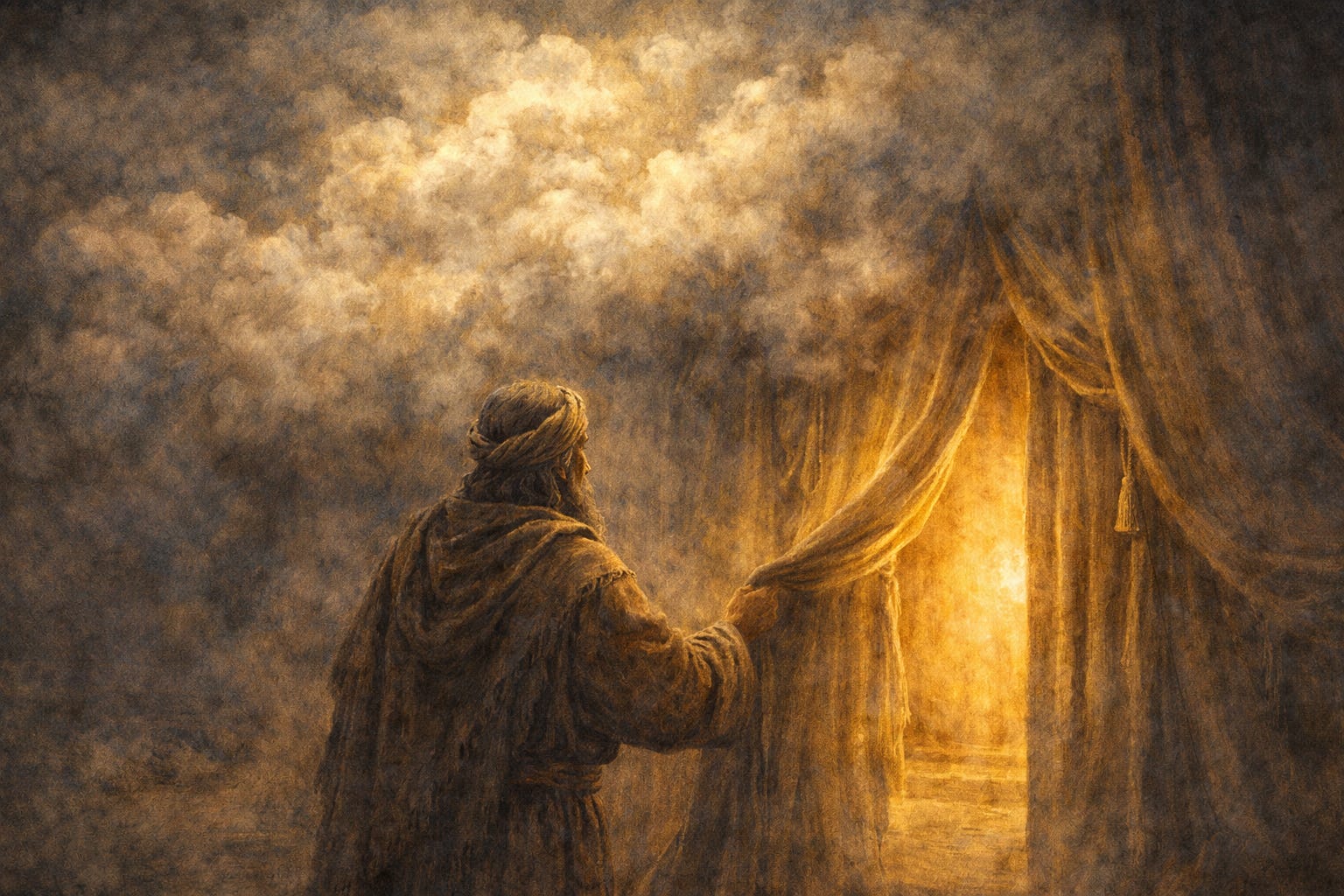
We ended last time learning how much weight the word וַיִּקְרָא carries at the opening of the sefer. Not just that G-d called to Moshe — the word arrives loaded with context.
The immediate context is Sefer Shemos. The Sneh. The first time G-d calls directly to a human being — מִתּוֹךְ הַסְּנֶה. That is where the kriya begins for Moshe.
But the full context starts earlier. And what is striking is not how the word is used — but how it is not used.
G-d spoke to Avraham. He commanded Avraham. He appeared to Avraham.
As it was with Avraham, so it was with Yitzchak and Yaakov.
What we do not find is G-d calling to the Avos.
Or do we?
There is one time that it may be that G-d Himself calls to Avraham. It is toward the end of the Akeida — the moment when Avraham is about to sacrifice Yitzchak:
וַיִּקְרָא אֵלָיו מַלְאַךְ יְהוָה מִן־הַשָּׁמַיִם וַיֹּאמֶר אַבְרָהָם אַבְרָהָם וַיֹּאמֶר הִנֵּנִי׃
“And the angel of Hashem called to him from the heavens, and said: ‘Avraham, Avraham!’ And he said: ‘Here I am.’”
Was that HaKadosh Baruch Hu Himself? The mefarshim disagree. The Ramban reads it as an angel relaying G-d’s word. Rashi seems to treat the speaker as Hashem Himself. What it may represent is one unique moment — perhaps the only moment — when HaKadosh Baruch Hu called out to Avraham. Beyond that, He never called, never summoned, never invited any of the Avos.
Then there is Moshe. Hiding away in Midian. Shepherding the flocks. There, he sees a vision. And from within that vision, Elokim Himself (not a malach) calls out to him:
וַיִּקְרָא אֵלָיו אֱלֹהִים מִתּוֹךְ הַסְּנֶה וַיֹּאמֶר מֹשֶׁה מֹשֶׁה וַיֹּאמֶר הִנֵּנִי׃
“And G-d called to him from within the bush and said: ‘Moshe, Moshe!’ And he said: ‘Here I am.’”
And as it was at the Sneh, so it was at Har Sinai — except that at Sinai, it is Shem Havayah (יקוק) who calls to him:
וַיִּשְׁכֹּן כְּבוֹד־יְהוָה עַל־הַר סִינַי וַיְכַסֵּהוּ הֶעָנָן שֵׁשֶׁת יָמִים וַיִּקְרָא אֶל־מֹשֶׁה בַּיּוֹם הַשְּׁבִיעִי מִתּוֹךְ הֶעָנָן׃
“And the honor of Hashem rested upon Har Sinai, and the cloud covered it for six days, and He called to Moshe on the seventh day from within the cloud.”
And as we noted, that same cloud now covers the Mishkan. And Moshe is unable to enter on account of it.
And as it was at the Sneh and Har Sinai, so too it was at the Mishkan:
וַיִּקְרָא אֶל־מֹשֶׁה וַיְדַבֵּר יְהוָה אֵלָיו מֵאֹהֶל מוֹעֵד לֵאמֹר׃
“And He called to Moshe, and Hashem spoke to him from the Ohel Moed, saying.”
There is something about Moshe and being called.
Of course, as we noted, it may not only be Moshe. Avraham was also called. But it was only one time. And it’s not clear if it was Hashem who called him or a malach.
And if we look a little deeper, there is another prophet who was called: Shmuel HaNavi. And like Moshe, he was called in the Mishkan.
But that too was a one time event. One night. While asleep.
Avraham.
Moshe.
Shmuel.
What is the connection?
I have a guess.
The Mishkan/Beis HaMikdash.
After all, Avraham was on Har HaMoriah when Hashem (or the malach) called out to him.
And even those other two times that Hashem called to Moshe — at the sneh and Har Sinai. They too seem to share the same properties of the Mishkan, even if they aren’t physically the same place.
After all, as the Ramban notes, the Mishkan seems to be the continuation of Har Sinai. And as the pasuk tells us — Moshe was on Har Sinai when he saw the vision of the sneh.
So clearly, there is a Mishkan, calling connection. It’s not about the Mishkan per se — but about some property that the Mishkan has that it shares with the Beis HaMikdash and Har Sinai.
But what is that connection? And what are those properties?
A Puzzling Beginning
And so, we move on. But no further do we textually travel that we hit upon another puzzling fact.
Chazal often refer to Sefer VaYikra as Toras Kohanim — the laws of the Kohanim. And there is a simple reason for that — because much of Sefer VaYikra relates to laws that are relevant specifically to the Kohanim.
And that is particularly true with regards to the Mishkan. As we find out in Parshas Tzav:
וַיְדַבֵּ֥ר יְהֹוָ֖ה אֶל־מֹשֶׁ֥ה לֵּאמֹֽר׃ צַ֤ו אֶֽת־אַהֲרֹן֙ וְאֶת־בָּנָ֣יו לֵאמֹ֔ר זֹ֥את תּוֹרַ֖ת הָעֹלָ֑ה
And Hashem spoke to Moshe, saying: “command Aharon and his sons, saying: ‘this is the Torah of the Olah...”
It doesn’t get much clearer than this. Command Aharon and his sons — i.e., the Kohanim. Tell them that this is the Torah of the Olah. Put it all together — Toras Kohanim.
And it’s not just the Olah.
It’s also the Torah of the Mincha.
And the Torah of the Chatas.\ And of the Asham.\
And the Shlomim.
So far, so good.
But as I noted, all this is in Parashat Tzav. We are in Parshas Vayikra and in the very beginning of the Sefer that is known as Toras Kohanim, where we finally have the first Kriya to Moshe from within the Ohel Moed. Who does Hashem want to speak to?
Not the Kohanim.
Not Aharon and his sons.
No. He wants to speak to the entire nation.
דַּבֵּר אֶל בְּנֵי יִשְׂרָאֵל
Speak to B’nei Yisrael...
And what does he want to talk to them about?
About the Korban Olah.
And the Mincha.
And the Shelamim.
And the Chatas.
And the Asham.
The order is (slightly) different. But the subject matter is exactly the same.
Now this does not seem to make sense.
Why start with the Jewish people?
Indeed, why is he talking to them at all. After all, it is the Kohanim that do the essential avoda with the Korbanot.
They throw the blood on the Mizbeach. They put the Korban on the Mizbeach. They arrange the fire on the Mizbeach. And much, much more.
So why is he addressing the Jewish people about this at all? And why does he start with them?
Evidently, there is something about the korbanot that HaKadosh Baruch Hu wants the nation as a whole to know. Something that does not relate to the Torah of these korbanot.
What is that something?
A Different Word
But with just a little effort, we can see one clear distinction between what HaKodesh Baruch Hu has to tell the Kohanim and what he has to tell the Jewish people.
With regards to the Kohanim, it’s all about the Torah, as we mentioned above. It’s the Torah of the Olah. The Torah of the Minchah. And so on.
But with regards to the Jewish people — that word does not appear. Another word, takes its place.
אָדָ֗ם כִּֽי־יַקְרִ֥יב מִכֶּ֛ם קׇרְבָּ֖ן לַֽיהֹוָ֑ה
A man who will cause to come close a korban to Y-K-V-K...
Korban (קרבן)
A word which will remain untranslated for the time being.
Each and every time. By the Olah (as I just mentioned).
By the Minchah:
וְנֶ֗פֶשׁ כִּֽי־תַקְרִ֞יב קׇרְבַּ֤ן מִנְחָה֙ לַֽיהֹוָ֔ה
A soul who will cause to come close a korban Minchah to Y-K-V-K...
By the Shelamim:
וְאִם־זֶ֥בַח שְׁלָמִ֖ים קׇרְבָּנ֑וֹ אִ֤ם מִן־הַבָּקָר֙ ה֣וּא מַקְרִ֔יב אִם־זָכָר֙ אִם־נְקֵבָ֔ה תָּמִ֥ים יַקְרִיבֶ֖נּוּ לִפְנֵ֥י יְהֹוָֽה׃
And if a slaughtering of shelamim is his korban, if from the cattle he causes it to come close before Y-K-V-K...
And it’s even by the Chatas (and asham) — but we have to search a bit to find it:
אִ֣ם הַכֹּהֵ֧ן הַמָּשִׁ֛יחַ יֶחֱטָ֖א לְאַשְׁמַ֣ת הָעָ֑ם וְהִקְרִ֡יב עַ֣ל חַטָּאתוֹ֩ אֲשֶׁ֨ר חָטָ֜א פַּ֣ר בֶּן־בָּקָ֥ר תָּמִ֛ים לַיהֹוָ֖ה לְחַטָּֽאת
If the anointed Kohen will sin to the detriment of the people — he will cause to come close with regards to the sin that he committed, a bull from the cattle, unblemished, to Y-K-V-K for a sin offering...
So far we have two out of three:
coming close - וְהִקְרִ֡יב
Y-K-V-K (יקוק) — did you notice that Shem Havaya shows up each and every time.
But we don’t yet have the word Korban (קרבן). But it will show up. We just have to move past the Kohein HaMashiach and his Chatas — and move on to the Nasi and his chatas:
אֲשֶׁ֥ר נָשִׂ֖יא יֶֽחֱטָ֑א וְעָשָׂ֡ה אַחַ֣ת מִכׇּל־מִצְוֺת֩ יְהֹוָ֨ה אֱלֹהָ֜יו אֲשֶׁ֧ר לֹא־תֵעָשֶׂ֛ינָה בִּשְׁגָגָ֖ה וְאָשֵֽׁם׃ אֽוֹ־הוֹדַ֤ע אֵלָיו֙ חַטָּאת֔וֹ אֲשֶׁ֥ר חָטָ֖א בָּ֑הּ וְהֵבִ֧יא אֶת־קׇרְבָּנ֛וֹ שְׂעִ֥יר עִזִּ֖ים זָכָ֥ר תָּמִֽים׃
If a Nasi will sin and do one of all the mitzvos of Hashem his G-d that should not be done in error, and he is guilty — or if he is informed about his sin that he committed in it, and he will bring his korban, a male goat, unblemished...
But here, it basically ends. When it comes to the Korban Meilah, Korban Talui and (perhaps) the Korban Asham we lose our structure. No use of the word Korban. No statement that one is bringing the Korban close. Although Hashem (as always) is still there.
Why the difference? I don’t know — and we’ll have to leave that question for another time.
But all in all, the pattern is clear. For all the other korbanos there is a clear theme of coming close. Indeed, the idea of closeness is in the very root of the word that we all too often translate as “sacrifice” or “offering”.
קָרְבָּן (korban) comes from the root קרב (ק-ר-ב).
As Rav Hirsch points out, a korban is not something you give up. It is something that helps you draw close to HaKadosh Baruch Hu.
And it’s this facet of a korban that our parsha is emphasizing.
This is utterly different than next week’s parsha. There the focus is on the Torah of these korbanos. It is on the Kohanim’s responsibility.
But here, in our parsha, the focus is on coming close. Evidently, there is something about this moment which requires that we hold off on talking to the Kohanim and the laws that they need to know.
Closeness takes precedence.
Or, more accurately, closeness of the entire nation takes precedence.
And that closeness happens here, in the Mishkan. The Mishkan that has the cloud hovering over it. And into which Moshe is invited — via a kriah.
And in case you are wondering — yes, I do think that there is a connection between the kriah and the closeness.
Not Just Now
Moshe was invited into the cloud on Har Sinai via a Kriah. And if we think about it — there is something interesting about that kriah.
That kriah (the kriah to enter a cloud) was after the Aseres HaDibros and after the giving of the Mishpatim.
But it was before the laws about building the Mishkan.
Now that is interesting.
You want to learn about how to build a Mishkan? You need to be invited into a cloud to do so.
You want to learn about how to do the avodah in the Mishkan.
You need to be invited to do so.
Now that is fascinating. And I have absolutely no idea what it means. But I do have a hunch.
Let’s take a closer look at the first verse of our parshas — the verse that gives our sefer its name: Sefer VaYikra:
וַיִּקְרָ֖א אֶל־מֹשֶׁ֑ה וַיְדַבֵּ֤ר יְהֹוָה֙ אֵלָ֔יו מֵאֹ֥הֶל מוֹעֵ֖ד לֵאמֹֽר׃
“And He called to Moshe, and Hashem spoke to him from the Ohel Moed, saying.”
This verse seems simple enough — similar in nature and form to a thousand other verses like it.
But look again.
We’ll start with the first three words:
וַיִּקְרָ֖א אֶל־מֹשֶׁ֑ה
“And He called to Moshe...”
Still seems pretty simple, right? But one question — Who is speaking with Moshe?
We all know. It is Hashem, Y-K-V-K. But He is not mentioned yet.
No, that happens in the next clause:
וַיְדַבֵּ֤ר יְהֹוָ֙ה֙ אֵלָ֔יו
“And Y-K-V-K spoke to him...”
Now this is a bit strange. Why not combine it together. Something like this:
וַיִּקְרָ֖א י-ק-ו-ק אֶל־מֹשֶׁ֑ה מֵאֹ֥הֶל מוֹעֵ֖ד לֵאמֹֽר
“And Y-K-V-K called to Moshe from the Ohel Moed, saying...”
Now that would actually be simple. Straight and to the point. No extra pronouns, no unnecessary repetition.
But that’s not what happens. We break it up.
And He called to Moshe and Y-K-V-K spoke with him...
Why?
Another question. Take a look at this Rashi:
לְכָל דִּבְּרוֹת וּלְכָל אֲמִירוֹת וּלְכָל צִוּוּיִים קָדְמָה קְרִיאָה
Every dibbur, every amirah, every tzivuy was preceded by a kriya, a calling.
According to Rashi (based on Chazal), this kriah was not a one time event. Now, that is a beautiful idea — where did this idea come from? What proof is there for it.
There is nothing in the words that indicate it.
Or perhaps there is something we are missing.
Something hidden in the very structure of the verse itself.
It’s in the Words
Take a look at the following verse:
וַיֵּרָ֤א יְהֹוָה֙ אֶל־אַבְרָ֔ם וַיֹּ֕אמֶר
“And Y-K-V-K appeared to Avraham and said...”
Do you see anything noteworthy? No.
Okay, then let’s try this one:
וַיִּגַּ֥שׁ אַבְרָהָ֖ם וַיֹּאמַ֑ר
“And Avraham approached and said...”
Is that better?
Still no.
Okay, let’s try again.
וַתַּ֤הַר לֵאָה֙ וַתֵּ֣לֶד
“And Leah conceived and bore a son...”
I know, I don’t need to ask — it’s still not clear.
So let me try to present it a different way:
[action] [subject] [second action]
Or
[verb] [noun] [verb]
This is what I will call a linguistic template (if it has a technical name, I don’t know it). One that we can use for various different sentences of certain types.
Let me illustrate with an example.
We have a young baby (a yeled — יֶלֶד) named Yitzchak. And this yeled ends up doing two actions.
Action #1: He grows older Action #2: He is weaned from nursing
Same subject, two separate actions.
In that case, this is how Biblical Hebrew works.
First you mention the first action (the verb). Then you mention the subject (the noun). Then you mention the second action (the second verb).
And thus we have:
וַיִּגְדַּ֥ל הַיֶּ֖לֶד וַיִּגָּמַ֑ל
“And the child grew and was weaned...”
In other words, in this linguistic situation, use this grammatical form.
Linguistic situation: two actions done by one subject. Grammatical form: verb, noun, verb.
How do we know that it’s a rule. Because we see it time and time again. Look up above at the other three examples I gave above. They all follow this pattern. And, according to the Malbim (who is the source of this rule and these examples) this is the pattern we see time and again.
So, we have a rule.
And that means that we have a problem. Because take a look at our verse — not the words, but the structure.
One subject: Y-K-V-K.
I have to pause here and note that Moshe is not the subject of this verse. Rather, he is the object. The subject is the one doing the action. In this case, Hashem is the One who is calling and speaking.
Moshe is not doing either of those actions. Rather, he is the “recipient” of those actions. He is the one being called and the one being spoken to. That is what we mean (in grammatical terms) by the object.
So, let us return to our problem.
One subject: Y-K-V-K. Two actions: calling and speaking.
And we have one rule: [verb] [noun] [verb].
So we can easily plug this in:
וַיִּקְרָ֖א י-ק-ו-ק אֶל־מֹשֶׁ֑ה וַיְדַבֵּ֤ר אֵלָ֔יו
“And Y-K-V-K called to Moshe and spoke to him...”
If we follow our rule, then this is how the verse should be written.
And yet, that is not the structure of our verse. Our verse follows a rather different (and convoluted) structure:
[verb] [object] [verb] [noun] [object]
The structure is off. The object is needlessly repeated.
More importantly, the verse places the subject after the second verb as follows:
[verb] [verb] [noun]
And that breaks our rule of [verb] [noun] [verb].
So, the question is — what are we supposed to do with this?
We have two options.
Option #1: Shrug our shoulders and move on. Option #2: Look for an answer.
Option #1 is easier. But it keeps us locked in our ignorance.
So, we’ll go with option #2
Even if it takes time.
Even if it is hard.
Even if we have no idea where to start.
Rules and Variations
Above we noted a rule. And rules are set in stone.
But stones don’t have to have just one rule.
That was our initial problem. Yes, we have one subject. And yes, we have two actions. But that’s not always the whole story.
Yitzchak grew up. Very nice. He stopped nursing. Great.
How many times do you think that Yitzchak did this? My guess — once.
The same is true with Leah becoming pregnant and giving birth (as noted above). For this child, she became pregnant once and gave birth to him once.
Nothing out of the ordinary here.
But what if it’s a bit different. What if it’s not a one-off event. What if it’s something that recurs again and again. How does the language (read grammar) handle that?
One option, by switching up the order. And so, we have a variation to our rule.
Rule #1: all things equal, [verb] [noun] [verb] Rule #1b: if the actions are recurring, then [verb] [verb] [noun]
And this is what Chazal (and Rashi in their wake) is telling us. Let us retranslate our verse and see how it makes sense:
וַיִּקְרָ֖א אֶל־מֹשֶׁ֑ה וַיְדַבֵּ֤ר יְהֹוָ֙ה֙ אֵלָ֔יו
And Y-K-V-K would call to Moshe and say to him...
See that subtle switch I made in the translation? There is no Hebrew equivalent of the word “would”, so the language needs to find other methods of conveying the same idea.
I believe that one such method (there may be more than one) is this very switch in the order of the verbs and the noun. And I believe that this is why Rashi (following Chazal) is telling us that this was not a one time event. This was something that happened again and again.
I should note that the Malbim understands it slightly differently (see the appendix at the end of this article).
Of course, this verse is still part of a narrative flow. The anan (ענן) did cover the Mishkan. Moshe was (later on) invited in.
All of that is true.
But the way the narrative is being framed tells us something beyond that narrative flow. In our case, it is telling us that when Hashem spoke with Moshe, He always called him first.
And He did so because of His love and affection for us.
And that love — and that affection — they are crucial for understanding our parsha. Indeed, perhaps one can even say that this kriah here was a paradigmatic kriah — one that clearly shows just how much Hashem really loves us.
About that Narrative Flow
There is something that is bothering me.
I see how the Mishkan is parallel to Har Sinai. I see the connection. It is so clear — and so beautiful.
But (and I don’t mean to be blunt), what is the point? Why are we recreating Har Sinai?
I’m not against it. Love the idea.
But I want to understand it.
What is HaKadosh Baruch Hu trying to accomplish?
Remember, He told us that we should make a Mishkan so that He can dwell among us:
וְעָ֥שׂוּ לִ֖י מִקְדָּ֑שׁ וְשָׁכַנְתִּ֖י בְּתוֹכָֽם
“And they shall make for Me an inherently holy place, and I will dwell among them.”
As such, I assume that this facet of being a mini-Har Sinai relates somehow or other to that goal. I just want to know how.
And I already have in mind two ideas.
**Idea #1: ** Rabbi Yishmael. **Idea #2: ** Rabbi Akiva.
Idea number one is, in some ways, easy. It’s the notion that there are more mitzvahs to receive. HaKadosh Baruch Hu has more Torah to reveal to us. Not every one of the 613 mitzvahs was given to Moshe on Har Sinai.
Yes, we got the 10 Statements (aka the Ten Commandments). And yes, we got Parshas Mishpatim. And yes, we got the laws about building the Mishkan.
But there is so much more that we did not get:
We didn’t get the laws of the korbanos. We didn’t get the laws of arayos. We didn’t get the laws of the legal and judicial system.
So, for example, during the Ten Statements (aka the Ten Commandments) we got the commandment to not commit adultery. We usually see this as a specific prohibition to do a specific action.
But it may be what I call a paradigmatic example.
A paradigmatic example is when the Torah uses a particular example of a particular Mitzva as a means of representing an entire class of Mitzvos. In that case, adultery would be representative of illicit marital relations. And it would be singled out because it is the most common method by which people violate this class of prohibitions.
The same would be true of not murdering. Not murdering would not be mentioned in the Ten Commandments as an isolated prohibition, but as an example of a class of prohibitions against causing physical harm to another human being.
It would be singled out because it is the most extreme form of causing physical harm to someone else.
And this would fit in quite nicely with the chazal that teaches us that not stealing is about kidnapping, which is the most extreme form of stealing we can imagine.
As such, these mitzvahs and others given at Har Sinai would be considered general principles rather than specific details. And, says Rabbi Yishmael, it was only in the Ohel Moed that the details of these prohibitions got specified.
So, for example, it’s only in the Ohel Moed that we get the full list of prohibited marital relations. Only there do we learn about incest, homosexuality, and bestiality.
And therefore we need the mishkan.
Because without the Mishkan we cannot get the full Torah. And without the full Torah, HaKadosh Baruch Hu cannot fully dwell among us.
And so we have the cloud and we have the calling. And as I still hope to show, we have the fire — although I don’t know if I’ll show it this week. Hopefully, at the very latest, next week.
This seems to me, in some ways, the easiest and most straightforward reading of the narrative that we’ve been following. It would map perfectly to what we have read so far. The mitzvahs are revealed in the Torah in the order and at the time that they were given.
For example, in Egypt we already got the laws about the sanctification of the month (aka Kiddush HaChodesh).
Later on at Marah, we got various parshas of the Torah to study and learn. And those particular parshas were fleshed out during the Ten Commandments in Parshas Mishpatim.
Then, after that, Moshe goes up to Har Sinai for forty days and forty nights — not to get the full Torah. Rather, to get the laws of building the Mishkan, which is the next step in our redemptive process.
And now that the Mishkan is built, we now need to get the rest of the Torah.
Which is why the luchos are in the Aron HaKodesh. And why the keruvim are on top of the luchos.
So that between those keruvim on that Aron with those luchos, HaKadosh Baruch Hu can reveal to us the rest of the Torah.
And thus, ויקרא.
But what about Rabbi Akiva?
According to Rabbi Akiva, it was not just the general legal principles that were given on Har Sinai. No, the Torah in its entirety was given at Har Sinai. Details and all.
True, it is not presented that way, but that’s an issue of narrative presentation, not about what historically happened.
Okay, fine.
I hear the idea, but why? Why present it this way? What are we being told?
What is the point of this particular narrative presentation as understood by Rabbi Akiva?
The answer to that question is hidden within the Mishkan itself.
A House and a Home
The Mishkan, as we know, is the desert version of what is eventually going to be known as the base of the Beis Hamikdash (בית המקדש) -- the Inherently Holy House.
It’s the word Beis (בית, house) that I want to focus on.
A house, in my definition, is just a structure — a structure with potential. A house can become a home if one takes advantage of it. If there is love in the home, caring, connection, growth.
Or, put otherwise, if the people who are living in a house are close to one another; then you have a home.
But more often than not, people do not begin close to one another. They may desire to have that closeness. They may want to build a home. But they are who they are at that moment when they begin.
They’re different. They lack understanding. They have emotions and desires and drives which aren’t in sync with the other members of the home.
And so if one wants to build a home, there’s a certain type of work that one has to do. It’s the work of coming close.
Of learning to understand the other. Of modifying oneself so that one can connect to and live with the other.
With that said, let’s take a look at our home away from home. Our true home, in the Jewish sense of the word, is the Beis Mikdash on Har HaBayis in Yerushalayim in Eretz Yisrael.
But we aren’t yet in Eretz Yisrael. We can’t build up Yerushalayim, let alone build a Beis Hamikdash. But that doesn’t mean we can’t build a home.
A home needs a structure.
And if that means that we have to build the equivalent of a rental unit or a vacation home, so be it.
It still can be a place where we can all live and grow together. And by “all”, I mean G-d and the Jewish people.
And so we build the Mishkan. And the holiness of the Mishkan is in its name itself.
The name מִשְׁכָּן (Mishkan) comes from the root שׁ-כ-נ — meaning to dwell. The Mishkan is the dwelling place of the Shechinah — aka the Divine Presence. It is the place where G-d meets the Jewish people.
But how does that work? What makes the Mishkan such a place. We have already partially touched upon that — the luchos.
The luchos I’ve been calling the ten statements, because that’s the most accurate English translation. They are commonly known in English as the Ten Commandments, which is also defensible.
For our purposes here, though, I would like to introduce a new, more literary translation — the Ten Principles. We noted above the idea of a paradigmatic example. Built within these ten statements or these ten commandments are ten categories of laws which encompass the Torah as a whole. Rashi already notes this in the name of Rav Saadia Gaon.
How that works fully is beyond the scope of this article, but it’s there. We’ve already seen a few examples. Here’s a few more:
Shabbos as the paradigmatic example of all the Moadim (holidays).
Not having other gods as the paradigmatic example of all the prohibitions against idolatry.
Not bearing false witness as the paradigmatic example of having an honest court system.
Of course, this is only a partial list and I have not fully made my case yet. But for now, I think this suffices. The point right now is not so much how the Ten Principles encompass the entire Torah, but that they do. The how will have to be fleshed out another time.
So, principles in hand (and heart and mind), we build an Aron to house these ten Torah-encompassing principles.
We place it in the holy of the holies — the place that is the most sanctified. Because it’s the place where you can most clearly see G-d. And, by extension, where G-d can most clearly see us.
We put that into a mishkan. In short, it is, for lack of a better word, a shrine to the principles and values and ideals of the Torah.
But just like a home, all we have right now is potential. We have the values. We have the ideals. We have even the details, but there’s something that’s still lacking: the ability to live it, to put into practice those ideals and those details that we so deeply cherish.
It is like a man and a woman getting married and wanting to start a home. Do they yet know how to actually and truly love and care for each other? Are they ready at that moment to actually love and parent their children?
The desire is there, but is the ability there? Often times yes and often times no. I think most often yes and no. We begin with certain capabilities but also with certain limitations. If we want to build a home, we have to sharpen our capabilities and develop them while dealing with and working on our limitations. As it is in our everyday homes, so too it is in our home away from home.
It’s not enough to build the shrine. It’s not enough to say we will do and we will hear. We need to work on the transformation. We need to become the people who can actually live what we desire and profess to be.
And that is where our Parsha comes in. Our Parsha is the next stage in the journey.
The journey begins with the initial desire to be committed. With the naaseh (נעשה) without the v’nishmah (ונשמע).
It then moves on to the initial listening — the hearing of the Ten Principles (or, at the very least, the first two).
It then continues with an actual commitment. We hear more fully what is involved and then we add the v’nishmah — naaseh v’nishmah (נעשה ונשמע).
And then we build our home — the Mishkan.
And like a couple who hangs their kesubah on the wall of their home, we place the Aron with the luchos at the heart of the Mishkan.
And if we look, we see this is the narrative flow of Sefer Shemos leading up to Sefer Vayikra. The Torah isn’t giving us a chronology of what happened and when. It’s laying out the process — the transformation — that had to take place. For Rabbi Yishmael, sequence means chronology. For Rabbi Akiva, sequence means process. That (may be) how he reads the narrative of the Torah.
And with this said, we’re now ready to go back and re-read the opening of Sefer Vayikra.
Ready to Begin
So the Mishkan is built, and the cloud is hovering above it. We’ll take a second to talk about that cloud, not in any sort of depth and not fully. Rather, we’ll just touch upon one aspect of the cloud andleave a fuller explanation for another time.
It’s a hot day. You’re traveling — outside.
For hours at a time. Day after day.
It’s difficult. It’s tiring. Even dangerous.
And then a cloud appears. There’s still light. But a much more pleasant light.
This type of cloud is an act of caring. As such, the cloud can also be a sign of love. And that sign is what hovered over the Mikdash.
And then comes the loving call: “Moshe, Moshe”. And Moshe enters. This is the context. It’s the love. It’s the desire to have not just a house, but a home.
As such, we begin Sefer Vayikra not with the Kohanim, but with Am Yisrael. At the end of the day, the Mishkan is not about the Kohanim. The Kohanim work there, but they are not the focus or the purpose.
The focus and purpose of the Mishkan is so that Hashem will dwell among us — the Jewish people. The Kohanim are the facilitators. But they can only facilitate if we — the Jewish people — are ready, willing, and able.
And therefore, with that first call, HaKadosh Baruch Hu lays out the essence of what we are supposed to do with the Mishkan — transform. Or, in the language of the Torah, to becoming close to HaKadosh Baruch Hu.
So what does it mean to come close?
The answer laws within the very structure of the Mishkan itself.
The heart and soul of the Mishkan are the luchos. Which is to say that the values and principles of the Torah are the heart and soul of the Mishkan.
And that is the key. Let’s see how.
Did we follow Hashem into the desert? Check. Did we pldge our allegiance to Him and His Torah? Check. Did we make the covenant? Check.
How about the Mishkan?
Did we donate our time? Check. Did we donate our efforts? Check. Did we donate our skills? Check.
In short, we are inspired, dedicated and committed.
All of that is necessary. But it is not sufficient.
Let’s take a trip into the future (not our future, our ancestors future).
We are past the Makos. Past Yam Suf. Past Har Sinai. Past building the Mishkan. Past entering the land.
And it is Tuesday.
What, you might ask, is so special about Tuesday?
Absolutley nothing! And that is the point.
Tuesday is Moshe speak for a regular day. And the question we need to ask is what then. How are we on a regular day?
When things are going well — or not.
When we are in a good mood — or not.
When we are inspired — or not.
What happens when those thoughts enter our mind. You know, the thoughts that we don’t tell anyone about. The thoughts that we wish we didn’t have?
And what about those desires?
What happens when those inner drives hit and urge us to do that what we should not do — or not do that which we should?
And ditto goes for our emotions or habits (good and bad) and everything else that keeps us from actually living the principles of the Torah — in all their details.
If you are a human being reading this, then you know what I’m talking about. You know that it’s easy to talk the talk, but not always easy to walk the walk.
But that’s not the end of the story. Rather, it is the beginning.
Relationships have to be built. Because each of us start as we are — not as who we need to be. In the context of marriage, it means that we don’t always speak as we want. We aren’t always there for each other. We don’t always do what we need to do and often times we do what we should not do.
But if we are dedicated to the relationship, then we work on it. We learn how to become the person we need to be in order to develop the relationships that we want to have.
And that is how it is with HaKadosh Baruch Hu.
Entering a relationship with G-d, means that Tuesdays will not be easy. We will find that we aren’t always as in sync with G-d and His will as we originally thought. That we have drives that we don’t know how to deal with and thoughts that we don’t know what to do with.
Or, put otherwise, there are G-d’s principles and values — and there are our thoughts, desires and emotions. And they need not be in sync. Often times they are not.
And, as such, we are distant from G-d and need to find a way to come close. As it says in Pirkei Avos — make G-d’s will your will.
How? By doing the work to align yourself with G-d’s principles and values. Because that is what G-d wants — for us to live these values (not merely preach them).
As such, we have the karbonot.
We have the Korban Olah, which is about dealing with our inappropriate thoughts and those positive commandments (our responsibilities) that we failed to fulfill.
We have the Korban Mincha — which I have to admit may be connected to the manna and the shulchan (an idea I hope to develop further some time in the future). But it may (also?) be a poor man’s version of an ola.
We have the Shelamim. Not 100% sure about this one. What I would like to say is that the Shelamim is about learning how to live with each other (aka peace). And it is about being complete and whole — to further devloping those Torah and Mitzvos that I most readily resonate with while dealing with and shoring up those areas where I struggle.
We have the Korban Chatat, which relates to what we did wrong. Not to the things that we purposely did wrong, but rather to those commandments that we didn’t want to violate, but inadvertantly did so.
In short, when we want to work on the relationship. We take something of value and bring it to the opening of the Mishkan (אֶל־פֶּ֜תַח אֹ֤הֶל מוֹעֵד֙) — the shrine of G-d’s values — and work on transforming us into the people that G-d (and we) want to be.
The Music of Closeness
One last example.
Imagine someone who doesn’t know how to play piano. Indeed, he has never once set a single finger on a single key.
You hand them a book on how to play piano. It is a gem of a book. It doesn’t just teach how to play the piano, but everything that could possibly be related.
The history of pianos. How to make pianos. How to fix them. Music theory. How to write songs. The various different styles of music. And — of course — how to actually play the piano.
And this man, genius that he is, reads and masters the entire book. He knows it backwards and forwards.
But he still has never set a single finger on a single key.
All knowledge, no training.
Now, let’s introduce him to an actual piano. We’ll seat him at the best there is — in carnegie hall. In front of a crowd of thousands.
How do you think he would do? How long until you — and everyone else — walk out?
Perhaps you’ll stay out of kindess. Perhaps you’ll leave out of kindness.
I don’t know.
But what I am sure about is that he won’t be playing the piano. He can’t.
He never trained himself.
True, all his knowledge helps. It can aid him tremendously in his development. But only if he at some point actually plays.
Which means hitting the wrong note. Playing the wrong chord. Losing rhytm.
And all the other mistakes that naturally come with getting better.
The analogy is clear. The Torah is the book.
The Mishkan is the piano.
The Korbanot are the training sessions. Our life is the concert. And Hashem is the One who keeps inviting us to play.
וַיִּקְרָא
Appendix: The Malbim’s Reading of Vayikra 1:1
In the article above, we noticed that the structure of our verse is unusual. The subject (Hashem) appears after the second verb, not between the two verbs where we would expect it. We suggested that this change in word order signals a recurring action — that Hashem would call to Moshe every time He spoke with him, not just this once.
The Malbim, in his commentary on Vayikra 1:1, notices the same problem — but reads it differently. Here is his approach, step by step.
The Rule
The Malbim establishes a rule of Biblical Hebrew grammar. When one subject performs two actions, the standard word order is:
[verb] [subject] [verb]
He brings several examples:
וַיֵּרָא יְהוָה אֶל־אַבְרָם וַיֹּאמֶר
“And Hashem appeared to Avram and said...” (Bereishis 12:7)
וַיִּגַּשׁ אַבְרָהָם וַיֹּאמַר
“And Avraham approached and said...” (Bereishis 18:23)
וַיִּגְדַּל הַיֶּלֶד וַיִּגָּמַל
“And the child grew and was weaned...” (Bereishis 21:8)
In each case: first verb, then the subject (the person doing the actions), then the second verb. That is the normal pattern.
The Problem
Now look at our verse:
וַיִּקְרָא אֶל־מֹשֶׁה וַיְדַבֵּר יְהוָה אֵלָיו
If we follow the rule, it should read:
וַיִּקְרָא יְהוָה אֶל־מֹשֶׁה וַיְדַבֵּר אֵלָיו
“And Hashem called to Moshe and spoke to him...”
But instead, the subject (יְהוָה) is pushed past both verbs to the end. The Malbim calls this a סֵרוּס — a displacement, an inversion. And he says: the Torah does not invert its language without reason.
What the Displacement Means
The Malbim explains that Chazal have a consistent principle for reading such displacements. When the subject is pushed past both verbs, it fuses the two actions together. It teaches that the two actions were alike in some way — and therefore the Torah presses them close together, with no space between them.
He brings a proof from Bereishis Rabbah on the verse about Sarah:
וַתַּהַר וַתֵּלֶד שָׂרָה לְאַבְרָהָם
“And she conceived and bore — Sarah — to Avraham” (Bereishis 21:2)
The subject (שָׂרָה) is pushed to the end. Chazal derive: just as the birth was certainly from Avraham, so too the conception was from Avraham and from no one else. The displacement equates the two actions.
Another example, about Lavan:
וַיֵּלֶךְ וַיָּשָׁב לָבָן לִמְקוֹמוֹ
“And he went and returned — Lavan — to his place” (Bereishis 32:1)
The subject (לָבָן) is pushed past both verbs. Chazal derive: the going and the returning were immediate and inseparable. The moment Lavan turned away from Yaakov, he returned to his old ways.
Applied to Our Verse
The Malbim applies the same principle here. The kriya (calling) and the dibbur (speaking) are pressed together — inseparable. The calling is not an introduction or a preliminary. It is part of the speaking itself. Every dibbur had a kriya bound to it.
As the Malbim puts it: the Torah placed the subject after both verbs to teach that the kriya was תְּכוּפָה — pressed close — to the dibbur, and was a part of it. There cannot be a dibbur without a kriya.
This is slightly different from the reading we offered in the article. We suggested the word order signals that the action was recurring — that it happened again and again. The Malbim’s reading is that the word order signals fusion — that the two actions are inseparable. In both readings, the result is the same: every time Hashem spoke to Moshe, He first called to him. But the mechanism is different. We read recurrence into the grammar. The Malbim reads inseparability.