

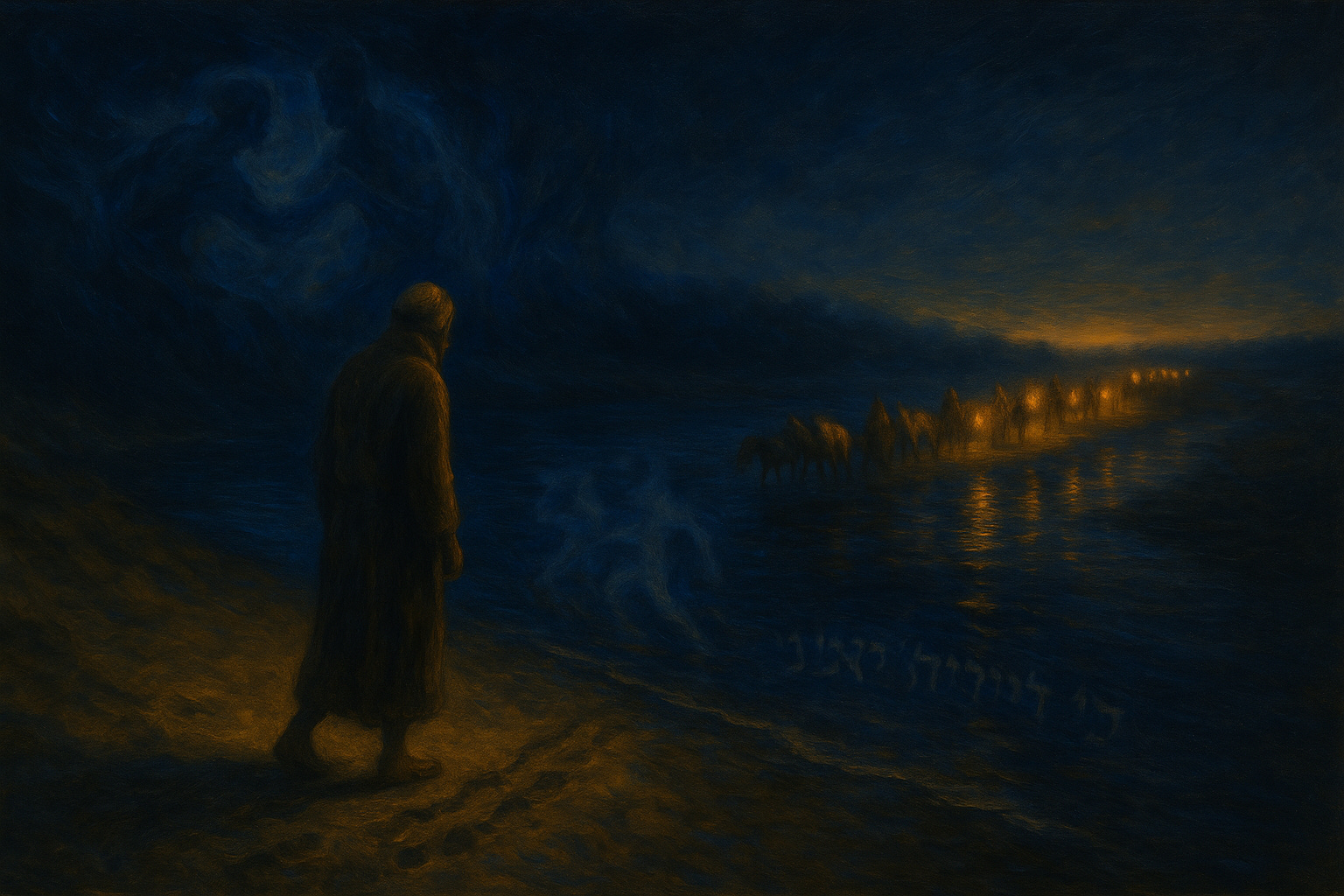
Let’s go back to October 8th.
Not to Gaza, but to Lebanon and Hezbollah — to the growing awareness of the massive threat they posed. Soon enough, tens of thousands of Jews in the North would abandon their homes because of that very threat. And everyone in the country understood that war with Hezbollah was no longer hypothetical. It was coming.
And we also understood what that would mean.
It meant missiles raining down on our cities day after day.
It meant sending our loved ones into Lebanon.
It meant international condemnation, political fallout, economic repercussions.
It meant all that — and more.
But there was one thing we did not know.
The outcome.
Could we defeat Hezbollah? If so, how? And at what price?
War was inevitable. Victory — and the cost of that victory — was completely uncertain.
That was our reality. We lived it palpably. The fear and concern were not abstract emotions; they were a constant undercurrent running beneath every news headline, every conversation, every attempt to live normally.
And that reality — a clear, present tension with an uncertain resolution — has a name.
It’s called a narrative.
Yes, a narrative.
Narratives revolve around a central tension and an inevitable movement toward a resolution we cannot yet see. And we live and experience narratives all the time. Indeed, one reason we resonate so deeply with fictional narratives is because they so closely mirror our real-life narratives.
And so, we found ourselves (once again) living a narrative.
And like all narratives, this one had an ending — and like all great narratives, it was an ending no one expected.
One day, out of nowhere, the news began to spread: small explosions, scattered throughout Lebanon.
Beepers.
Who knew Hezbollah still used beepers? Who knew the Mossad had hidden tiny explosives inside them?
But that was only the beginning.
They didn’t know their walkie-talkies had also been rigged.
They didn’t know their “secretly stored” missiles had geolocation tracking.
They didn’t know Israel could reach Nasrallah deep in his Beirut bunker — and would.
And would reach his successor.
And the successor after that.
None of this was foreseen.
And with that, the central tension in the North — this particular narrative — found its resolution. Final? Who knows. But a resolution nonetheless.
This is the experience I want us to recall.
Remember the constant fear, the unrelenting uncertainty.
Remember living inside the unresolved tension.
And then remember the moment of surprise — when everything shifted, suddenly, from one narrative to another.
Hold that experience in your body. Feel it.
Because with that visceral memory fresh and alive, I want to take you into the narrative of this week’s parsha.
When Problems Become Narratives
So here is Yaakov, returning home.
But there is a problem — and that problem has a name. Esav.
Esav — we had almost forgotten him. But he is still there.
But what about his hatred? Is that still there?
We don’t know. Yaakov doesn’t know. But he needs to find out.
At this point, though, there is still no narrative. There is no central tension or issue that demands resolution. There is just a problem that needs to be addressed. Problems, though, aren’t narratives.
But that is about to change.
Yaakov sends messengers to Esav and soon enough he gets a response. Esav — and four hundred men — are on their way.
Four hundred men — that’s not an entourage. It’s a strike force.
And now, everything that Yaakov has built — his family, his mission, the future of the Jewish people — is entirely at risk.
The danger is real.
The confrontation inevitable.
The outcome uncertain.
With this, the central tension — and therefore the narrative — has begun.
Life is Stranger than Fiction
And so, Yaakov responds.
Divide the camp.
Daven.
Send gifts.
Prepare for war.
And with that, our story — and with it our expectations — are set. And if this were a “normal” narrative, then we would know its general contours. This part of the story would end with the gifts Yaakov sent trailing off in the distance and Yaakov going to bed, uncertain as to whether they will be effective.
And then, he would wake in the morning and see — in that very same distance — Esav and his men arise. And we would then discover how exactly this narrative resolves.
In other words, we would go from:
וַתַּעֲבֹ֥ר הַמִּנְחָ֖ה עַל־פָּנָ֑יו וְהוּא לָן בַּלַּיְלָה־הַהוּא בַּמַּחֲנֶה׃
“And the tribute moved on ahead, while he lodged that night in the camp.”
— Bereishis 32:22
To this:
וַיִּשָּׂ֨א יַעֲקֹ֜ב עֵינָ֗יו וַיַּרְא֙ וְהִנֵּ֣ה עֵשָׂ֣ו בָּ֔א וְעִמּ֕וֹ אַרְבַּ֥ע מֵא֖וֹת אִ֑ישׁ…
“And Yaakov lifted his eyes and saw — behold, Esav was coming, and with him four hundred men…”
— Bereishis 33:1
But great narratives defy expectations — they shift unexpectedly and go places we never imagined possible.
Certainly that is so in the real world. As the saying goes, life is stranger than fiction.
We are about to discover just how much stranger.
The first hint that something different is about to happen is hidden within the first verse we quoted above. On that night Yaakov lodged in the camp.
What night? “That” night — but what is “that” referring to?
We do not know. And that not-knowing is our first sign that something more is unfolding.
And indeed, Yaakov doesn’t sleep through that night. Instead, he gets up and moves.
וַיָּ֣קׇם בַּלַּיְלָה הוּא וַיִּקַּח אֶת־שְׁתֵּי נָשָׁיו… וַיַּעֲבֹר אֵת מַעֲבַר יַבֹּק׃
“And he arose that night and took his wives, his maidservants, and his eleven children, and he crossed the Yabok crossing.”
— Bereishis 32:23
Do you see the double shift here? Originally, it was the tribute that was active and moving, while Yaakov stayed put. But now, out of nowhere, Yaakov changes course. He gets up and moves — seemingly in the other direction.
Why? What changed? What is going on?
The Torah refuses to tell us. And that silence is deliberate. Because in the unknowing, tension is created, curiosity awakened — and learning begins.
Wonder leads to questions. Questions lead to searching. Searching leads to understanding.
All of this is built into the narrative’s very structure. The Torah, as we first encounter it — before Chazal, before Rashi, before the mefarshim — invites us to wonder, question, and learn.
With that said — let’s return to our narrative and note that it is still our narrative. The central tension has not changed — only Yaakov’s way of responding to it.
And yet now, an unexpected twist appears. For some reason — again, unknown — Yaakov remains behind, alone:
וַיִּוָּתֵ֥ר יַעֲקֹ֖ב לְבַדּוֹ
“And Yaakov remained alone…”
Why?
Hasn’t everything already been moved across?
Shouldn’t Yaakov be on the other side?
At this point one might cite Rashi and the “small vessels,” and that is valuable — at the level of understanding. But right now we are not understanding. We are experiencing. We are inside the raw immediacy of the moment — inside not-knowing.
Why is he alone?
What is he doing there?
What is happening to our narrative?
And then comes a new kind of twist — something we have not seen before.
A narrative within the narrative.
וַיֵּאָבֵק אִישׁ עִמּוֹ…
“And a man wrestled with him…”
What in the world is happening?
Who is this ish?
Where did he come from?
Why are they wrestling?
The Torah is beautifully silent.
But one thing is clear: Esav and his four hundred men will have to wait. A new danger has appeared — and with it, a new tension that demands its own resolution.
In other words: we now have a new narrative.
And it is the best kind of narrative — the unexpected one.
And so they wrestle — all night long. Until dawn.
But not “until dawn” in the English sense.
Rather:
עַלּוֹת השחר
Shachar means “blackness.”
They wrestled until the blackness lifted.
Interesting. Black is dark. Night is dark. That night was dark. Until that dark night was lifted - they wrestled.
And now - for the height of the Torah’s beauty:
וַיַּ֗רְא כִּ֣י לֹ֤א יָכֹל֙ ל֔וֹ וַיִּגַּ֖ע בְּכַף־יְרֵכ֑וֹ
And he saw that he could not overcome him and he ‘touched’ the roundness of his thigh
Did you catch it - it’s right there. Okay, I’ll give you a hint.
Who is ‘he’?
Who is ‘him’?
Who is ‘his’?
Is it the ish that sees that he cannot overcome Yaakov?
Is it Yaakov that sees that he cannot overcome the ish?
Now, I know what you are thinking (perhaps screaming) — read the second half of the verse:
וַתֵּ֙קַע֙ כַּף־יֶ֣רֶךְ יַעֲקֹ֔ב בְּהֵאָֽבְק֖וֹ עִמּֽוֹ
That does not answer our question. That tells us that Yaakov’s thigh was dislocated in his wrestling with the ish. If that line was a simple explanation of the first - then it should have said simply “and Yaakov’s leg became dislocated”.
Rather, it could be that Yaakov is trying to overcome the ish, sees that he cannot do so, strikes his thigh and (irony of ironies) it is Yaakov’s thigh that actually ends up being dislocated.
Why? What would that mean? That is a question (read curiosity) to be explored.
But we aren’t exploring here - we are noting the mystery and ambiguity that the Torah purposely lays out and why the Torah does that.
With that said - I hear more “screaming” - doesn’t the end of this passage clearly tell us that it was the ish who struck Yaakov:
עַל־כֵּ֡ן לֹֽא־יֹאכְל֨וּ בְנֵֽי־יִשְׂרָאֵ֜ל אֶת־גִּ֣יד הַנָּשֶׁ֗ה אֲשֶׁר֙ עַל־כַּ֣ף הַיָּרֵ֔ךְ עַ֖ד הַיּ֣וֹם הַזֶּ֑ה כִּ֤י נָגַע֙ בְּכַף־יֶ֣רֶךְ יַעֲקֹ֔ב בְּגִ֖יד הַנָּשֶֽׁה׃
Therefore, the children of Israel do not eat the ‘gid hanasheh’ which is on the roundness of the thigh - because he touched the roundness of the thigh of Yaakov at the [place of] the ‘gid hanasheh’
Yes - at the level of post narrative we can (and should) find singular lines within the narrative. And since, the Torah is the Torah of Bnei Yisrael, we will naturally find the Jewish lines within that story.
But we, right now, are living the narrative, not looking back and giving a singular, particular interpretation of that narrative.
So, let’s go back to this gift of this ambiguity.
As we have noted - real life often takes on narrative form. But there is a fundamental difference between the world we actually live and the written word.
The written word has a limitation that the real world does not. You can only write one letter in a given place. And that letter has to follow another one in linear fashion. So is it with the word and sentence and paragraph and so on.
It is the limited, linear form of the written word that creates the problem. The real world is not always so limited or linear. In the same time and place, multiple issues can and do occur - each interconnected in a myriad of ways. But try and capture that in the written word and we’ll be forced to simplify it and contain it within the physical space inherent in writing.
But there is a way around - and that way around is ambiguity. By the skillful use of pronouns, the Torah has enabled us to insert multiple readings into the singular, linear form of the written word.
And it is within those multiple readings that our story within a story comes alive.
Because, after all, two men wrestling - that has a familiar ring to it. For is it not true that Yaakov and Esav have been wrestling since before they were born. And was it not the very ambiguity inherent in their first fights that lead Rivka herself to wonder and therefore to inquire?
Was it not Esav who sought to bypass (read, overcome) Yaakov by first coming out of the womb? And was it not Yaakov who prevented him from doing so?
Was perhaps Yaakov attempting to overcome Esav when he “wrestled” the rights of the bechor from him?
Has not this battle been going on from the very beginning? And is it not continue still - because, after all, the darkness has not yet lifted?
Indeed, let’s look back at the first line of this narrative within a narrative:
וַיֵּאָבֵ֥ק אִישׁ֙ עִמּ֔וֹ
Note what is not stated there - it is not stated who started this wrestling match. Indeed, we have no idea who started this fight.
And so it is with Yaakov and Esav. All we know is that from the moment that Rivka became pregnant, they were already fighting. Who started it and why - we don’t know and it seems that it does not matter. It is the existence of the battle that is relevant, not its cause.
Evidently, then, hidden within this story is an indication of how to deal with the larger narrative theme of the never-ending, always present battle between Yaakov and Esav.
And it is the ambiguity in the narrative presentation that allows us to represent the dual nature of the battle which is constantly taking place between them.
And it is the mystery within the narrative presentation that enables us to experience the mystery that Yaakov himself is going through in reality. For Yaakov, in a very real sense, is living in the darkness of the unknown.
No one has ever had to create a Jewish people before.
No one has ever had to take on an Esav before.
No one has ever walked this path before.
But Yaakov is doing all that - and he is wrestling not just with that ish but with this unknown. And it is the mystery contained within the literary presentation that allows us to wrestle with him.
With that said, let us continue upon this journey and explore the “resolution” of this mini narrative.
וַיֹּ֣אמֶר שַׁלְּחֵ֔נִי כִּ֥י עָלָ֖ה הַשָּׁ֑חַר
And he said, send me because the darkness has lifted
Did you catch the pronouns this time around? He (who?) said send me (who?) because the blackness (i.e., the dark night) has lifted.
Once again, we do not know who is speaking. And once again we do not know the connection between what he is saying and the reason given.
But one thing we do know - the darkness has lifted. The light has come. And with that, the battle is ending.
But note, it hasn’t quite ended yet. Evidently, there is something more that needs to be done. A sending off. And so, it is requested. And, once again, I would like to argue that the request can (and probably does) go both ways.
The ish (read Esav) will request it of Yaakov. And Yaakov will request it of the ish.
And there will be a response to the request - I will grant you your request conditionally - that you bless me.
Why - by this time you should know the answer — we don’t know. But it is there.
But something else is there right now - a collapsing of the ambiguity and a removal of the pronouns. At this point, a subject is named - Yaakov. And we have now broken out of the dual nature of this story to focus on the person who is (after all) the subject of our larger narrative.
And it is here that we will find our resolution (of sorts). The man will recognize a new name in Yaakov. What that means will have to await a new dvar Torah. But it is there - this aspect of the battle is over.
Or is it.
Note the continuation. Yaakov asks the ish his name. And in the most respectful manner possible:
וַיֹּ֙אמֶר֙ הַגִּֽידָה־נָּ֣א שְׁמֶ֔ךָ
And he said, please - tell me your name
And yet, note the response:
וַיֹּ֕אמֶר לָ֥מָּה זֶּ֖ה תִּשְׁאַ֣ל לִשְׁמִ֑י
And he said - what is this that you ask for my name
Did you see what just happened? Just a moment ago, the ish asked quite bluntly for Yaakov’s name — and Yaakov complied. And now, Yaakov is simply asking for him to return the favor.
And, if we lived in the fictional world of normal expectations the ish would do so. But that is not the world that we live in — no, we live in the real world. And in the real world — resolutions are much more surprising than we realize.
The darkness has risen - but for who?
The battle is over — but for who?
Yaakov, it seems is no longer fighting. You want to know my name - no problem, I’ll tell. I would also like to know your name - but I’m only going to politely request it of you - and I’ll be fine if you don’t wish to reveal it.
Yaakov is no longer battling Esav. He is no longer trying to overcome him.
That is the resolution. The darkness has risen - but only for Yaakov. Indeed, one can even wonder — does the ish ask Yaakov to send him off because the darkness has lifted for Yaakov?
Perhaps Esav can only fight Yaakov if Yaakov fights back. But if Yaakov leaves the battle, if he goes at his own pace in his own direction, then Esav (in essence) is done.
And that is the true resolution of our story. On that night — when Yaakov was fully engaged with and preparing for battle, he tried to go to sleep. But he couldn’t — he had to get away from that approach. He had to understand that while Esav may want to carry on battling Yaakov, Yaakov does not need to carry on battling Esav.
He has to leave the night and get to the dawn — and to do that, he has to realize that he does not need to overcome Esav. All Yaakov has to do is to transcend Esav by simply being Yaakov.
And, of course — by being Yisrael.
A Parting Question
And so - I will leave you with one final question.
Which story is the main narrative, and which one is the narrative within the narrative? Is it that the upcoming confrontation with Esav is the main narrative and this night-time battle is a sub-narrative?
Or perhaps, just perhaps - the truth is inverted. That this is the real story of Yaakov. That this was and (still is) the true battle of Yaakov. To deal with that ish, alone - in the middle of that night until the dawn comes.
And then - when we are able to successfully navigate that battle, the other ones will work out one way or the other. Because, in the real world - it is the major battles which are the sub-narratives of the “minor” ones.