
Two Miracles, One Theme: What the Oil Reveals About the Victory
Oil, Purity, and the Enduring Power of Influence.

Chazal are generally not focused on the technical mechanics of miracles or the precise circumstances that made them necessary. Those are logistical and historical questions that we are often interested in, but they are not Chazal’s primary concern. Rather, their focus is on the fact of the miracle and, more importantly, on its meaning and significance.
In this regard, it is worth noting that the Gemara tells us they did have oil in the Temple, but it was not tahor (ritually pure). And for whatever reason — a reason the sources do not spell out — it took them eight days until they had oil that was ritually pure and fit for lighting the Menorah.
Now, the number eight is a rather significant number in the Torah.
A baby boy enters the covenant through brit milah on the eighth day.
The Mishkan is inaugurated on the eighth day, after seven days of preparation.
Sukkot lasts seven days, followed by an eighth day, Shemini Atzeret, which stands apart.
A newborn kosher animal may not be offered as a korban until it is at least eight days old.
There is a well-known idea, often associated with the Maharal, that seven represents the natural order — the world as it functions within the framework of creation — while eight represents that which goes beyond nature, l’maalah min ha-teva. Eight does not negate nature; it rests upon it, but introduces a dimension that is not contained within the natural system itself.
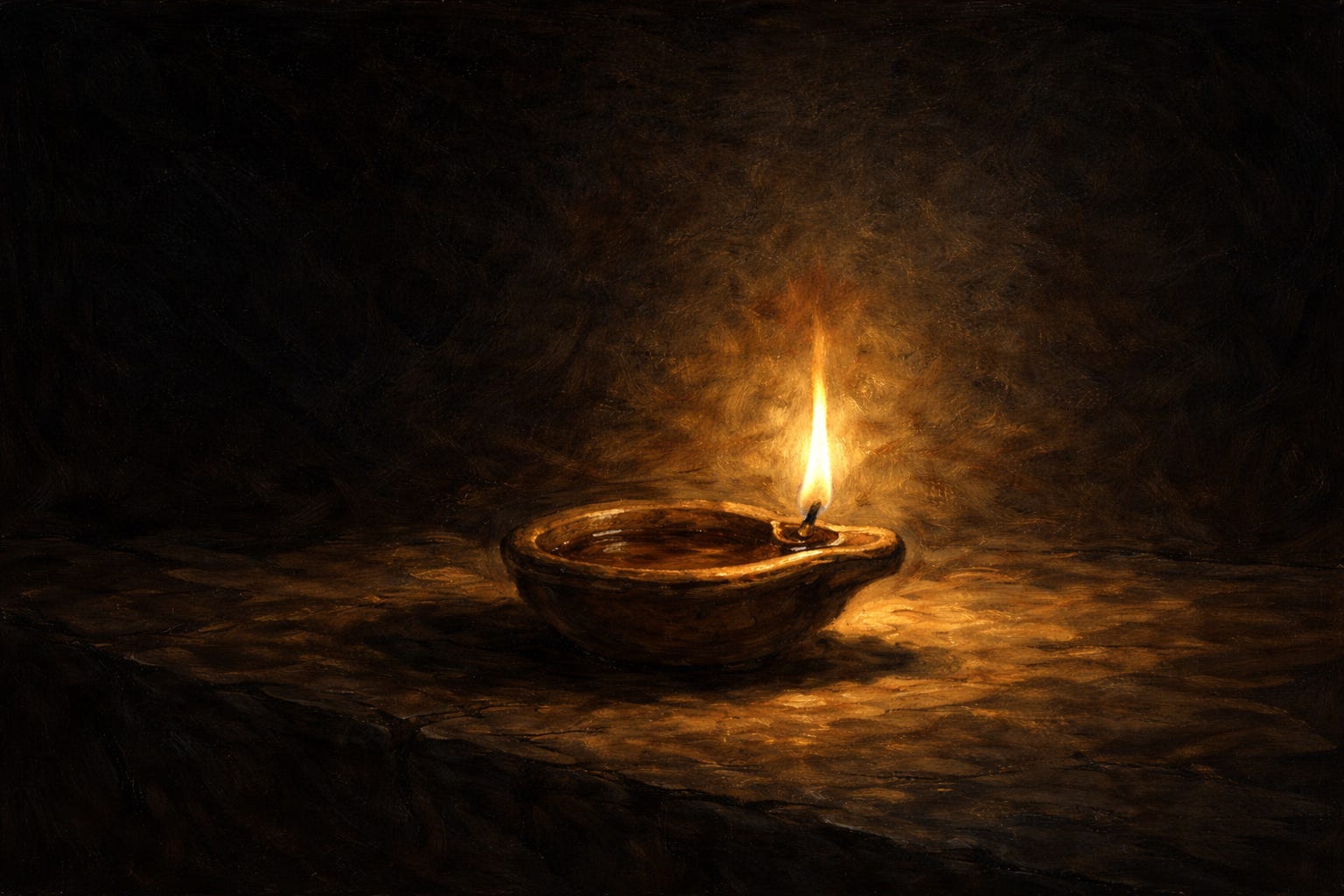
Seen through that lens, the miracle of Chanukah becomes clearer. The oil itself is entirely natural. Oil burns. The miracle was not that it burned at all, but how it burned — that it burned well beyond what we would naturally expect.
Similarly, the military war in one sense is entirely natural. People fight wars, often over ideology and over competing religious or cultural visions. The miracle of Chanukah is not merely that the Jews won a war. The deeper miracle is the influence that this victory was going to have.
That is what the miracle of the oil is pointing to.
And this is where the importance of tahor oil becomes central. Whatever it means for oil to be tahor (ritually pure), there is a clear message that in the world of influence and inspiration, not just any source of light will do. That source has to have a certain quality — what we call tahor. When the source of light is tahor, the light does not merely burn; it endures. It lasts far longer than the natural order would predict, far longer than it would if everything were operating only within the limits of nature.
The same is true of the war itself. This was not a war fought for land, money, or political power. It was fought in order to be able to live and practice the Torah faithfully, without distortion or coercion. It was a war fought with purity of intent. And the implication of the miracle of the oil is that a victory rooted in that kind of purity would have an influence that far outlasts the influence of ordinary military victories — even victories that are themselves extraordinary.
And indeed, here we are, roughly 2,200 years later, still lighting the menorah and still discussing the miracle.