

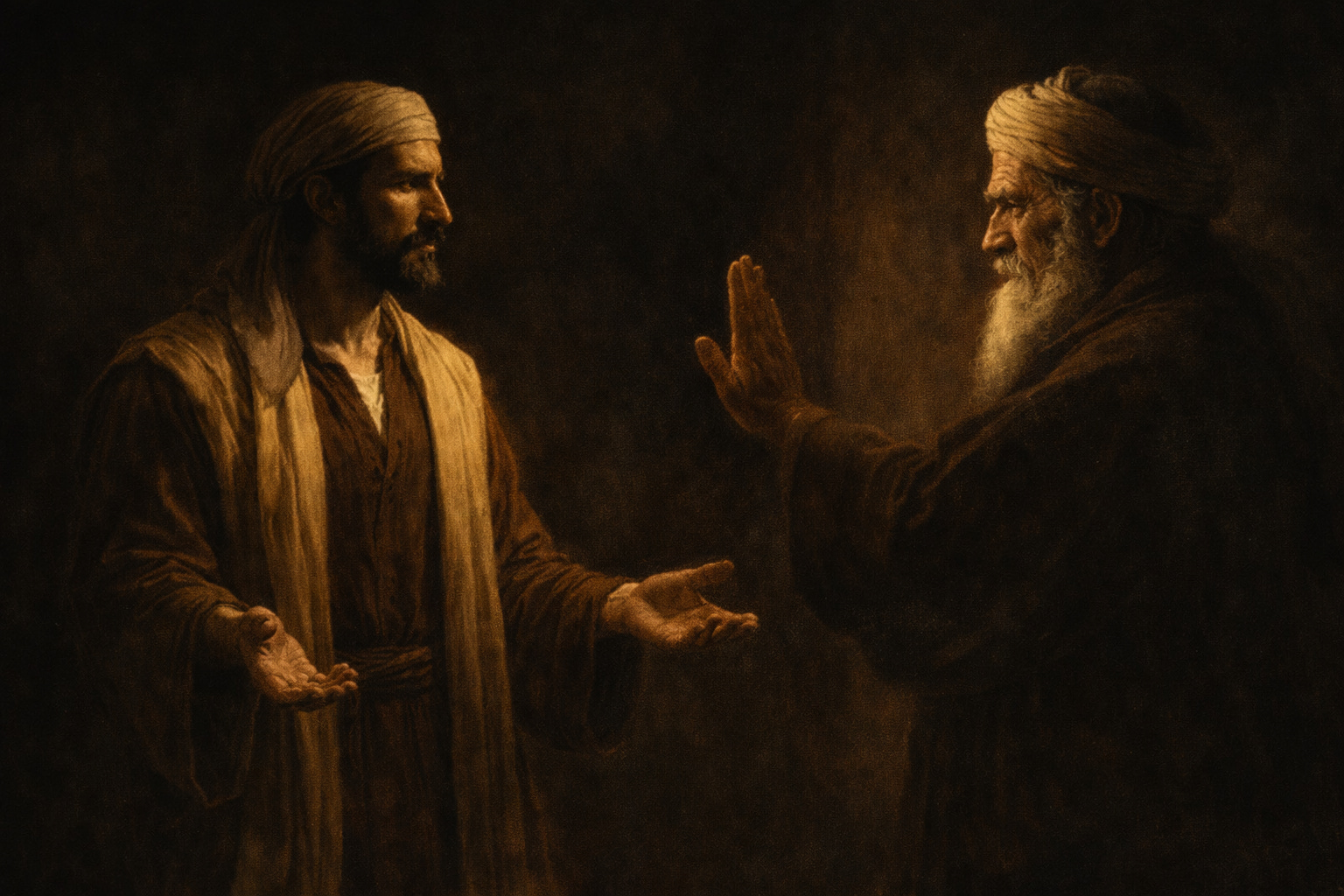
The brothers have come back from Egypt, but the famine isn’t over. What’s more, Shimon is still there. So they will have to return again.
But there is a two-part problem.
Part #1 is that the viceroy of Egypt has made it clear that without Binyamin, they will neither receive food nor have Shimon released.
Part #2 is that Yaakov does not want to send Binyamin.
But the brothers see a solution — convince Yaakov to send Binyamin with them. But that is easier said than done.
The brothers make an attempt and it doesn’t go well.
Reuven makes an attempt, and Yaakov rejects it.
Yehuda makes an attempt, and Yaakov accepts it.
The question is: why?
What is it about Yehuda’s approach that Yaakov accepts, and about Reuven’s (and the brothers) that he rejects?
Hearing the Story as Yaakov Hears It
As we noted, the brothers have returned. And they immediately set about telling Yaakov their version of what happened to them in Egypt.
They note that the lord of the land spoke harshly to them.
They note that he accused them of being spies.
They note that he forced them to leave Shimon with him.
They note that he insists that they come back with Binyamin.
And they note that if they do not come back with Binyamin then:
— They will not be able to buy any more food and
— Shimon will not be released
Soon after, the brothers open their bags and discover that the money they had taken to buy food is right there. This is strange.
They had received all the food.
They know they gave them this money.
And yet, here it is, sitting in their bags.
They all see this — and they are all afraid.
Yaakov Speaks
Now, ask yourself — what do you think is going through Yaakov’s mind right now?
Yaakov has just seen & heard that:
the ruler of Egypt spoke harshly with them
accused them of being spies
is holding one of his sons ransom
demands that they bring Binyamin
all their money has mysteriously been returned
Is Yaakov thinking, “yes, of course, let’s send Binyamin so we can get Shimon back”?
Or is he thinking that something sounds off here — and is he remembering that this is not the first time that the brothers have come back, with one of them missing?
If we have any doubts, Yaakov himself puts them to rest. Let us listen to his response:
אֹתִ֖י שִׁכַּלְתֶּ֑ם
יוֹסֵ֤ף אֵינֶ֙נּוּ֙
וְשִׁמְע֣וֹן אֵינֶ֔נּוּ
וְאֶת־בִּנְיָמִ֣ן תִּקָּ֔חוּעָלַ֖י הָי֥וּ כֻלָּֽנָה
Me, you have bereaved
Yosef is no more.
Shimon is no more.
And Binyamin — you will takeUpon Me has happened all of this
Do you hear the pain?
Do you hear the accusation?
Me, you have bereaved.
Not, you have bereaved me.
Me, you have bereaved.
Not, I am bereaved.
In short: I have suffered. You have caused it.
I sent Yosef to you — when you were in Shechem. And all that came back was a bloody jacket.
I sent Shimon with you — to Egypt. And all that came back was a story.
And now — you want to take Binyamin with you to Egypt?
Rachel, the Brothers & the Road
Let’s return to Yaakov’s mind and journey with him back in time. He is in Aram — and he meets Rachel for the first time.
He gives here a kiss — an act of love.
And he cries — an act of pain.
This is the story of Yaakov and Rachel — loved combined with pain.
He works for her seven years — but then is deceived.
He finally marries Rachel — but she doesn’t have children.
She finally has children — but then dies on the road home.
Her oldest son grows up — but is killed (Yaakov is told) on the road to Shechem.
This is Yaakov’s experience with Rachel — a story of never ending love and hope clashing with never ending loss and disappointment.
And now — all that is left of this love and hope is Binyamin. And he is being sent back on the road.
The road — where Rachel died.
The road — where Yosef died.
But it’s worse than that — it’s not simply that Rachel’s son (the son of her pain) is going on the road, but it’s that the brothers are the ones to take him.
The brothers — who were on the road when Yosef died.
The brothers — who were on the road when Shimon never returned.
These brothers want to take yet another one of Rachel’s son on the road.
Yaakov knows this road. It is the road of loss and disappointment.
And Yaakov is dead set against letting Binyamin travel down that road. That, indeed, is why Yaakov didn’t let Binyamin go with the brothers in the first place:
וְאֶת־בִּנְיָמִין֙ אֲחִ֣י יוֹסֵ֔ף לֹא־שָׁלַ֥ח יַעֲקֹ֖ב אֶת־אֶחָ֑יו כִּ֣י אָמַ֔ר פֶּן־יִקְרָאֶ֖נּוּ אָסֽוֹן׃
As for Binyamin — the brother of Yosef — Yaakov didn’t send him.
For he said: lest an ason (אסון) happen to him.
It’s all right here in this verse. Yaakov will not send Binyamin (Yosef’s brother) with the other brothers, on the road lest there is an ason (אסון).
In other words, we can sum up everything we have said up until now in a simple equation:
Rachel + Road = ason
It’s an interesting word ason — we will meet it again in Sefer Shemos. There, we will hear about two men who are fighting. One of them attempts to hit the other, but misses. Instead, he strikes a pregnant women. And there is an ason — she loses the child.
Does this sound familiar — losing one’s child?
Me, you have bereaved
Yosef is no more.
Shimon is no more.
And does fighting sound familiar?
וַיָּבֵ֥א יוֹסֵ֛ף אֶת־דִּבָּתָ֥ם רָעָ֖ה אֶל־אֲבִיהֶֽם׃
And Joseph brought bad reports of them to their father.וַֽיִּשְׂנְא֖וּ אֹת֑וֹ וְלֹ֥א יָכְל֖וּ דַּבְּר֥וֹ לְשָׁלֹֽם׃
… and they hated him and could not speak a friendly word to him.
וַיּוֹסִ֤פוּ עוֹד֙ שְׂנֹ֣א אֹת֔וֹ
And they hated him even more for his talk about his dreams.
וַיְקַנְאוּ־ב֖וֹ אֶחָ֑יו
So his brothers were jealous up at him…
It’s all there.
The bad reports.
The hatred.
The inability to speak peacefully with him.
The jealousy.
This is fighting — just not with fists.
Of course, one could argue that this was Yosef. Binyamin may be different.
He didn’t have a special coat.
He didn’t tell their father the problematic things they were doing.
He didn’t have any dreams.
But that would miss the point.
The source of the fighting wasn’t Yosef or how Yaakov related to Yosef. It was about how the brothers related to and interpreted the actions of Yaakov & Yosef.
If the brothers had been different, then no matter how they felt about what happened, they would have been able to deal with it without the hatred and jealousy.
But they weren’t different. Rather, they were fighters who got caught up in a battle — and the end result was ason.
And so, when it came time to go to Mitzrayim Yaakov said that he could not send Binyamin. The brothers are still the brothers. For all their wonderful qualities, they have not (yet) left behind the fights. Which means that I have to worry about an ason — particularly when it comes to Binyamin.
Reuven’s Offer
All of that was before the brothers went to Mitzrayim. Now, matters are worse.
Now you tell me that the leader of the land speaks to you harshly — reminds me of how you couldn’t speak peacefully to Yosef.
Now you tell me that he suspects you of being spies — reminds me of how you thought Yosef was spying on you.
Now you tell me that Shimon is gone — reminds me of how Yosef is gone.
And with all of this, you now want me to send Binyamin:
The son of Rachel
The brother of Yosef
On the road
With all of you
And yet, Yaakov has still not said no. He is in agony, he doesn’t want to do send him. But he hasn’t flat out rejected the idea yet.
And so, in steps Reuven.
Reuven understands that he needs to reassure Yaakov that he can protect Binyamin and bring him home. And he gives it his best shot:
אֶת־שְׁנֵ֤י בָנַי֙ תָּמִ֔ית אִם־לֹ֥א אֲבִיאֶ֖נּוּ אֵלֶ֑יךָ
You can kill my two sons if I don’t bring Binyamin back to you
Is this what you expected? Is this the approach you would have taken? I imagine not.
After all — what a jolting, disturbing statement! Indeed, we wonder — does Reuven mean this literally? Is he literally offering to murder his two sons if he does not succeed?
Beyond it’s shock value — we have another problem with Reuven’s statement. Why two sons? After all, Reuven has four sons — why not all four? Alternatively, why not offer only one son — parallel to Binyamin?
What is so special about the number two?
My guess — it is a reference to Shimon & Binyamin (the two sons whose lives are at risk right now). And the one I read it, Reuven is offering to join Yaakov in his pain. He is saying:
I understand your fear of loss.
I am willing to experience the same loss if I fail.
I will vicariously put myself in your shoes.Your pain will be my pain.
Your fear will be my fear.As such, I will guard Binyamin as you would guard him.
I will be your stand-in.
This is a powerful offer. It’s deep. It’s empathetic. It shows profound understanding.
And yet Yaakov still says no.
And when Yaakov says no, he does something strange. He does not respond to Reuven as an individual. Rather, he responds to the brothers as a group:
וַיֹּ֕אמֶר לֹֽא־יֵרֵ֥ד בְּנִ֖י עִמָּכֶ֑ם
And he said; Binyamin will not go with all of you
And so, we wonder:
Why does Reuven’s answer not speak to him?
It’s so personal and caring.
And it relates directly to Yaakov’s pain.And why does Yaakov reject Reuven’s offer by addressing the brothers as a whole rather than Reuven himself?
Yaakov’s Response Reconsidered
Let’s take a closer look at Yaakov’s response.
וַיֹּ֕אמֶר
לֹֽא־יֵרֵ֥ד בְּנִ֖י עִמָּכֶ֑ם
כִּֽי־אָחִ֨יו מֵ֜ת
וְה֧וּא לְבַדּ֣וֹ נִשְׁאָ֗ר
וּקְרָאָ֤הוּ אָסוֹן֙ בַּדֶּ֙רֶךְ֙ אֲשֶׁ֣ר תֵּֽלְכוּ־בָ֔הּAnd he said:
Binyamin will not go with all of youBecause his brother is dead
And he alone remainsAnd an ason will happen to him on the road that you are walking on
Yaakov doesn’t just tell the group that he will not send Binyamin with them, but he explains why.
One: the stakes are high. He is the only living descendant of Rachel, since his brother (Yosef) is dead. If I lose him, then — in essence — I have totally lost Rachel.
Two: the chance of failure is high. Given the road all of you are taking, an ason is likely.
In this one line of Yaakov, everything finally comes together:
Rachel
Yosef
Death
Ason
The brothers
And — of course — the road. Indeed, it is the road that gets special emphasis: the road that you are walking on. We can understand that line in two ways:
The literal road that they are traveling on
The way that they travel (through life)
Both readings fit into the same phrase — because both factors are at play.
Traveling carries with it certain dangers. The heat, the cold, the wild animals, the bandits and thieves.
But those dangers one can deal with — if they know how to travel. What truly worries Yaakov is not the dangers of the road, but rather how the brothers travel down those dangerous roads.
It’s their conduct, their attitudes, their approach. That is what makes the road so dangerous — and that is why Yaakov can’t send Binyamin with the brothers. Because the way they travel the chances of an ason too high.
A modern day example may help.
There is an inherent danger driving a car. Accidents happen — indeed they happen all the time. And yet, we get in cars day-in and day-out.
But take a reckless driver. Someone who drives too fast, weaves in and out of traffic, texts while driving — maybe even has a drink or two. He gets into an accident — and can explain it. The other guy ran a red light.
It’s true.
Then he gets into another accident. It’s not my fault — the other guy turned left without signaling.
Again — it’s true.
But it’s not the whole truth. People run red lights — it’s terrible. They turn left when they shouldn’t — also bad. But if you are paying attention and aren’t driving too fast — well, then that accident may not happen.
But if you keep driving the way you do — you and the other drivers who run red lights will find a way to meet up. And then, they’ll be an ason.
And so, Yaakov says to Reuven — your offer is beautiful. But it doesn’t address the core problem. The issue isn’t that I need a surrogate to go in my place and love Binyamin as I would.
Love is not the issue.
My love wasn’t enough to save Rachel.
My love wasn’t enough to save Yosef.
And it won’t be enough to save Binyamin.
No — the problem is not love. It is rather how all of you walk down the paths of life and relate to each other. That is what has to change — and that has not changed yet.
Yehuda’s Offer
So, it’s been settled. Binyamin is not going — and therefore the brothers are not going — and therefore Shimon is not coming home.
But the famine is not going away. Indeed, it’s as strong as ever. And the need to return to Mitzrayim is stronger than ever. And still, Yaakov won’t send Binyamin.
And it is here that Yehuda steps up. He makes his offer — and this is the one that Yaakov will accept. Yehuda starts by emphasizing the desperation of their situation. But he doesn’t end there — desperation in and of itself is not enough to convince Yaakov to entrust the brothers with Binyamin.
So Yehuda continues:
אָֽנֹכִי֙ אֶֽעֶרְבֶ֔נּוּ
מִיָּדִ֖י תְּבַקְשֶׁ֑נּוּ
אִם־לֹ֨א הֲבִיאֹתִ֤יו אֵלֶ֙יךָ֙ וְהִצַּגְתִּ֣יו לְפָנֶ֔יךָ
וְחָטָ֥אתִֽי לְךָ֖ כׇּל־הַיָּמִֽיםI will be an arev for him.
From my hand you can request him
If I do not bring to you and place him before you
Then I will have wronged you for all of my days
There is something different in this speech — something that will finally touch Yaakov. We’ll take it step-by-step.
אָֽנֹכִי֙ אֶֽעֶרְבֶ֔נּוּ
I will be an arev for him.
Once again, we hit upon a word whose meaning holds the key to our understanding. And once again, we’ll look throughout the pages of Tanach to get a sense of what it means.
Interestingly enough, the story we need to turn to still involves Yehuda — it’s the story of Yehuda and Tamar.
Yehuda at this point in time has “gone down” from his brothers — and has suffered personal tragedy. Two of his sons have died. His wife has died.
And he is on the road (how interesting) and sees a women whom he believes to be a prostitute. Alone, mourning & vulnerable — he makes an offer and she agrees.
But, there is a problem — the price.
What, she asks, will you give me?
A goat from my flock, Yaakov replies.
A goat — very nice. Do you have the goat here?
No.
No goat — that, is a problem. But she has a solution:
וַתֹּ֕אמֶר אִם־תִּתֵּ֥ן עֵרָב֖וֹן עַ֥ד שׇׁלְחֶֽךָ׃
And she said: If you will give me an eravon (עֵרָב֖וֹן) until you send it.
An eravon — otherwise known as a pledge or collateral.
If you (Yehuda) give me (Tamar) something that you need and want, then we have a deal. I’ll hold on to them — and if you pay me, then I’ll return them. If not, I’ll keep them.
That is the essence of an eravon — something of value that is given so as to ensure repayment. That is the word that Tamar used. And that seems to be what Yehuda means also.
Tamar: ערבון
Yehuda: ערבנו
Both words share the same root: ע-ר-ב (ayin, reish, beis) — and both words seem to share the same meaning.
So let’s fit this into our story:
Yehuda: Lend me Binyamin — I need him in Mitzrayim.
Yaakov: How do I know you’ll return him to me?
Yehuda: I will give you an eravon — a pledge.
Yaakov: What pledge will you give me.
Yehuda: Me. I, in my personhood — will be the pledge.
Sounds interesting, a human pledge.
And yet — we don’t quite know what it means? How is Yehuda “leaving himself” with Yaakov until he returns Binyamin?
To understand that, we need to take a deeper look at this word and note that we have seen this root all the time:
וַֽיְהִי־עֶ֥רֶב וַֽיְהִי־בֹ֖קֶר י֥וֹם אֶחָֽד
And it was evening and it was morning — one day
You might wonder — what does evening time (erev) have to with a pledge?
Erev is a time of mixture.
Light and dark are mixed together.
There is light, but less than before.
There is darkness, but not yet fully.
An eravon is also a kind of mixture.
You have something of mine;
I have something of yours.
For now — we are financially entangled.
So Yehuda is saying: I am going to entangle myself. I am going to mix myself in.
And with that, we can now better understand what Yehuda is saying:
We need Binyamin in order to get us the food we need to live.
We also need Binyamin in order to free Shimon.I understand, though, that Binyamin “belongs” to you.
As such, I am asking you — can you please lend him to me. Not to us — but to me.For a pledge, I offer myself (אָֽנֹכִי֙ אֶֽעֶרְבֶ֔נּוּ).
I, in my personhood and being, am the collateral given as assurance that I will return him to you. I have mixed myself up with Binyamin (your son, from Rachel). He is with me and I am with you.I am mixed in that I will sacrifice myself for him.
If it is hot, I will give him the covering on my head.
If it is cold, I will give him my blanket.
If there are wild animals, I will take them on.
And if there are bandits, I will fight themAnd this entanglement will persist until the time comes for “payment” — at which point you will be able to request him from me (מִיָּדִ֖י תְּבַקְשֶׁ֑נּוּ )
And I further understand that if I do not live up to my obligations — if I do not properly watch over and protect this “loan” so that I can directly return him to you — then I have grievously wronged and sinned against you in a way that I can never repair (אִם־לֹ֨א הֲבִיאֹתִ֤יו אֵלֶ֙יךָ֙ וְהִצַּגְתִּ֣יו לְפָנֶ֔יךָ וְחָטָ֥אתִֽי לְךָ֖ כׇּל־הַיָּמִֽים)
In short, Yehuda has made a switch.
He is no longer the reckless driver — careening down the highway, inviting danger and offering explanations when things go wrong. No, he drives differently now — focused on the road and on where he is going and on how to get there.
In other words, Yehuda is no longer the fighter of old — no longer consumed by the hatred and jealousy which plagued him and the entire family before. He has left that world and replaced it with an attitude of love, care and dedication.
And Yaakov sees this and is no longer worried about an ason on the road. Yes, Yehuda will walk down the same road, but he will do so with a new attitude and perspective.
And so, Yaakov says yes.
Know someone who would appreciate Masmid.org?
Please feel free to share it with them.