

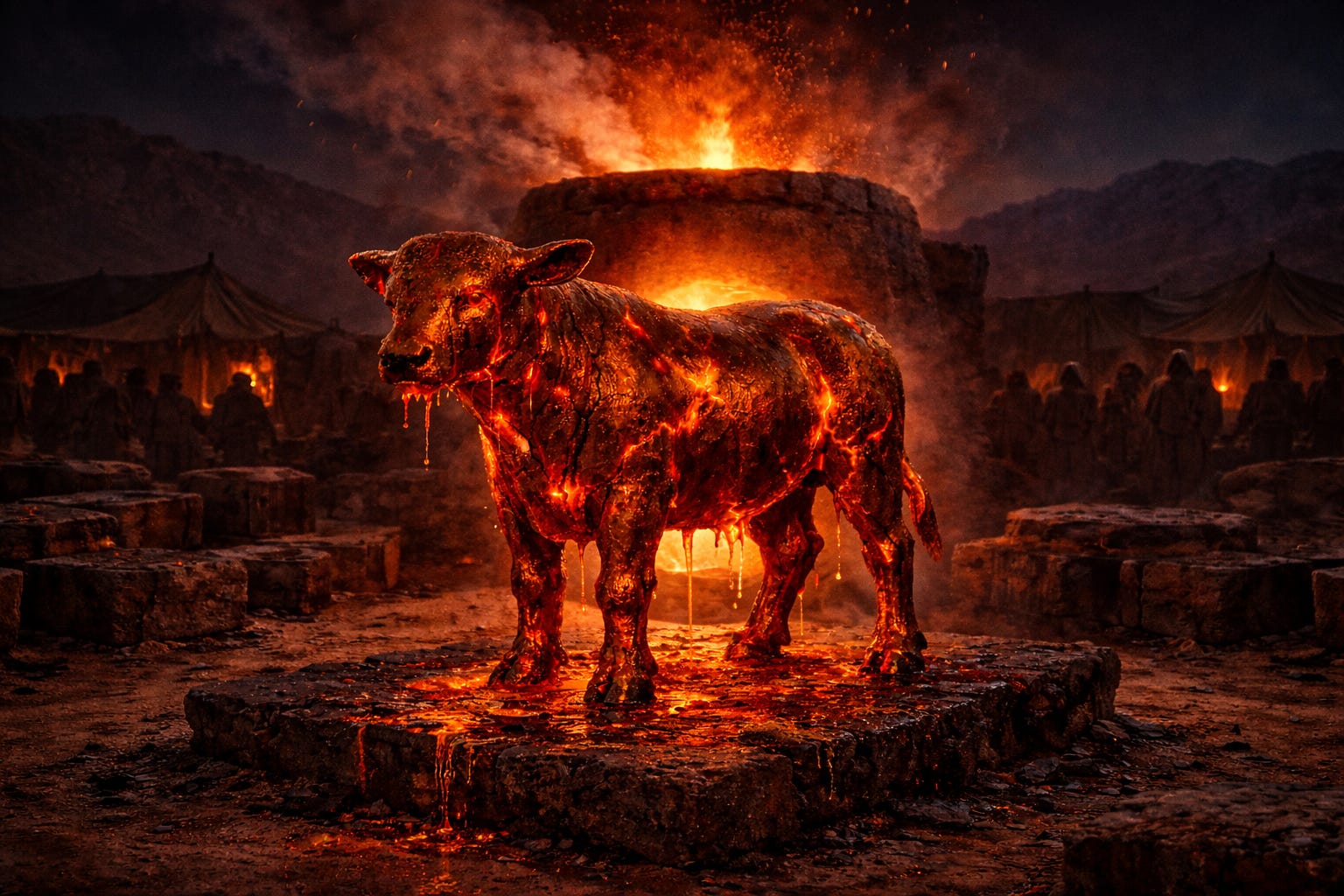
It is forty days later.
Forty days (and forty nights) after HaKadosh Baruch Hu told Moshe to go up the mountain to get the Luchos, the Torah, and the Mitzvah. And during this entire time, we have joined Moshe as he received the directive to build the Mishkan (while still keeping Shabbos).
And yet, we almost forgot something; namely, the Jewish people.
They’re not on the mountain with HaKadosh Baruch Hu. Nope. They are down below, in the camp, waiting.
And evidently, this is a problem. If not for all of them, then for at least some of them:
וַיַּרְא הָעָם כִּי בֹשֵׁשׁ מֹשֶׁה לָרֶדֶת מִן הָהָר…
And the people saw that Moshe was boshesh to come down from the mountain
But here’s my problem. What does this word mean — בֹשֵׁשׁ (boshesh)?
I have no idea.
And if I don’t know what the word means, I can’t know what the problem is. And if I don’t know what the problem is, how can I understand why the Jewish people responded the way they did?
But let’s read the rest of the verse:
וַיַּרְא הָעָם כִּי בֹשֵׁשׁ מֹשֶׁה לָרֶדֶת מִן הָהָר, וַיִּקָּהֵל הָעָם עַל אַהֲרֹן, וַיֹּאמְרוּ אֵלָיו: קוּם עֲשֵׂה לָנוּ אֱלֹהִים אֲשֶׁר יֵלְכוּ לְפָנֵינוּ, כִּי זֶה מֹשֶׁה הָאִישׁ אֲשֶׁר הֶעֱלָנוּ מֵאֶרֶץ מִצְרָיִם, לֹא יָדַענוּ מֶה הָיָה לוֹ.
The people saw that Moshe was boshesh to come down from the mountain, and the people gathered on Aharon and said to him: Get up, make us gods that will go before us — because this man Moshe who brought us up from the land of Egypt, we don’t know what happened to him.
They gather עַל (al) Aharon — the man Moshe left in charge — and tell him:
כִּי זֶה מֹשֶׁה הָאִישׁ אֲשֶׁר הֶעֱלָנוּ מֵאֶרֶץ מִצְרָיִם, לֹא יָדַעְנוּ מֶה הָיָה לוֹ
Ki zeh Moshe ha’ish asher he’elanu me’eretz Mitzrayim, lo yadanu meh hayah lo — this man Moshe who brought us up from the land of Egypt, we don’t know what happened to him.
They don’t think Moshe is coming back. He’s בֹשֵׁשׁ (boshesh) — whatever that word means.
Maybe he fled.
Maybe he died.
Maybe he wants to stay with G-d on the mountain.
However they understand it, the bottom line is the same: he’s not here, and they don’t think he’s coming back.
So they need a new Moshe.
Therefore, they command Aharon:
קוּם עֲשֵׂה לָנוּ אֱלֹהִים אֲשֶׁר יֵלְכוּ לְפָנֵינוּ
Get up and make for us an Elohim that will go before us.
Now honestly, I have no idea what they have in mind here. Moshe is gone, so therefore Aharon should make them a god or some sort of divine power which will go before them?
How exactly does that work? I don’t know, but that’s what they asked for.
And how exactly will this god or whatever it is replace Moshe? I also don’t know, but they think it will work.
And why don’t they just ask Aharon to take Moshe’s place? After all, if he is capable of making a replacement for Moshe, then why not just ask him to be the replacement?
None of it makes any sense.
Aharon’s Response: The Gold
Now, as strange as this request is, it’s even stranger that Aharon takes it seriously:
פָּרְקוּ נִזְמֵי הַזָּהָב
Take off the gold earrings.
And not just any gold earrings, but the gold earrings of your wife and kids:
פָּרְקוּ נִזְמֵי הַזָּהָב אֲשֶׁר בְּאָזְנֵי נָשֵׁיכֶם וּבְאָזְנֵי בָנֵיכֶם וּבְאָזְנֵי בְּנוֹתֵיכֶם, וּבִיאוּ אֹתָם אֵלַי.
Take off the gold earrings that are in the ears of your wives and your sons and your daughters, and bring them to me.
We’ll leave aside the question of how Aharon could make such a suggestion. Instead, we’ll just notice a seeming similarity.
We just had Parshas Terumah. And at the beginning of that parsha, HaKadosh Baruch Hu requests donations from the entire Jewish people to build the Mishkan.
And here is Aharon requesting donations from (most of) the Jewish people to build the golden calf.
But, as I note, it’s only most of the Jewish people.
The wives. And the sons. And the daughters.
One’s closest family members.
Why them specifically? Why only them?
And why their jewelry in general and their earrings in particular?
The Calf Emerges
Somehow or other, it actually worked. Either their wives and kids voluntarily gave up their golden jewelry — or they took it from them (my guess is the latter).
Either way, they bring the golden jewels to Aharon. And, surprise (again), he takes it from them.
וַיִּקַּח מִיָּדָם
And he took it from their hands.
And he shapes it.
וַיָּצַר אֹתוֹ בַּחֶרֶט
And he gave it shape with a cheret.
And he makes it into a molten calf.
וַיַּעֲשֵׂהוּ עֵגֶל מַסֵּכָה
And he made it into a molten calf.
This isn’t a golden calf.
This is a molten golden calf.
Fresh out of the oven. Burning hot. Glowing bright orange (or red).
Red. What an interesting color for a bovine (aka cattle aka baby cow).
So we have our golden (molten) calf. Singular. As in one.
And yet, note the next of the “people”:
אֵלֶּה אֱלֹהֶיךָ יִשְׂרָאֵל אֲשֶׁר הֶעֱלוּךָ מֵאֶרֶץ מִצְרָיִם.
“These are your gods, Israel, who took you up from the land of Egypt.”
These? Plural?
A moment ago everything was singular.
“Aharon formed it.” Aharon made a calf.”
So where did the plural suddenly come from?
I don’t know.
The Claim That Doesn’t Make Sense
But even before that, we have a much larger problem. What they say doesn’t make any sense.
Just a moment ago they themselves said that Moshe was the one who took them out of Egypt — and that they now needed someone or something to go before them because Moshe was gone.
But now things have changed. Now, it is no longer Moshe who took them out of Egypt.
Nope.
Instead, it is the calves. The singular turned plural, molten golden calves took the Jewish people out of Egypt.
This is their message. To the people who just came out of Egypt. Who saw all the plagues.
And the splitting of the sea. And manna. And who stood at Har Sinai some forty days earlier where G-d Himself told them that He took them out of Egypt.
You expect these people to believe that it was a calf that they just made that took them out of Egypt?
Evidently they do.
Why Rewrite History?
And there’s another question. Why is this even necessary? Why do these gods have to be the ones who took them out of Egypt?
If they need someone to lead them now — fine. That at least would make some sense.
But why rewrite the past? Why redefine history?
I still don’t know. But at least this time I have an idea.
Moshe hasn’t come down and now they “need” to replace him.
To do that, they are constructing a narrative. And for that to work, the people need to believe that these golden molten calves are responsible for their salvation.
Why? Still don’t know.
But if I had to guess...
If these are the ones who took you out of Egypt, then you owe them your allegiance. And if you give them your allegiance, then they can lead you.
Aharon’s Next Move
Aharon builds a mizbeach before it — before the calf — and proclaims:
חַג לַה׳ מָחָר.
“Tomorrow will be a festival for Hashem.”
And, indeed, the next morning comes and the people are up bright and early.
וַיַּשְׁכִּימוּ מִמָּחֳרָת.
And they offer sacrifices.
Olot (עלות) — burnt offerings. Shlamim (שלמים) — peace offerings.
And then they eat and drink. And then they “play”:
וַיָּקֻמוּ לְצַחֵק.
And all of this (except for the “playing” part) feels familiar
Let’s go back again to the end of Parshas Mishpatim. But this time to the story just before Moshe goes up the mountain. The covenant ceremony. When the Jewish people accept the covenant with Hashem.
Moshe writes the words of Hashem. He builds a mizbeach at the foot of the mountain. The young men of Israel bring olot and shlamim. Moshe takes the blood — half he places in bowls, half he throws on the mizbeach. He reads the Sefer HaBrit to the people. And they say:
נַעֲשֶׂה וְנִשְׁמָע.
We will do, and we will understand.
Then Moshe throws the blood on the people and declares:
הִנֵּה דַם הַבְּרִית אֲשֶׁר כָּרַת ה׳ עִמָּכֶם.
“This is the blood of the covenant.”
Then Moshe, Aharon, Nadav, Avihu, and the seventy elders ascend the mountain. They see the God of Israel. And what do they do? They eat and drink.
Now look again at what is happening with the calf.
Aharon builds a מִזְבֵּחַ (mizbeach). They rise early the next morning. They bring עֹלֹת (olot) and שְׁלָמִים (shlamim). They eat and drink.
The structure is almost identical.
Except for one detail. One extra phrase.
וַיָּקֻמוּ לְצַחֵק.
They rise to revel.
So what is going on here? Are they trying to recreate the covenant ceremony? Are they trying to reproduce what Moshe did — but now with a new covenant? If so, where is the covenant?
And here, I have another guess.
The most effective way to lead people astray is not to create something entirely new. It is to imitate what is real. To keep the same forms. The same rituals. The same language.
But give it an entirely different meaning.
You will act unjustly in the name of justice. You will oppress in the name of freedom. You will torture in the name of love.
Give it the same appearance. But direct it toward a completely different reality.
Is that what is happening here? All the trappings of the covenantal ceremony — but without the covenant?
Moshe on the Mountain
Moshe is still on the mountain when all of this is happening.
But not for long.
HaKadosh Baruch Hu sends him down — and soon enough he (and Yehoshua) approach the camp. And something is not right.
There is noise.
What kind. I do not know (but you knew that, right). But it is noteworthy:
וַיִּשְׁמַע יְהוֹשֻׁעַ אֶת קוֹל הָעָם בְּרֵעֹה.
I don’t know what that word means. בְּרֵעֹה (bere’o). I don’t know what they are doing.
But Yehoshua has an idea:
קוֹל מִלְחָמָה בַּמַּחֲנֶה.
It sounds like war in the camp.
Moshe responds:
אֵין קוֹל עֲנוֹת גְּבוּרָה.
It’s not the sound of victory.
וְאֵין קוֹל עֲנוֹת חֲלוּשָׁה.
It’s not the sound of defeat.
Instead:
קוֹל עֲנוֹת אָנֹכִי שֹׁמֵעַ.
I hear קוֹל עֲנוֹת (kol anot). What is kol anot? I have no idea.
So I have בֹשֵׁשׁ (boshesh) — I don’t know what that means.\ I have רֵעֹה (re’o) — I don’t know what that means.
And I have עֲנוֹת (anot) — I don’t know what that means either.
Starting to see a pattern?
Then They See
Moshe and Yehoshua continue on. And then, Moshe sees what is happening.
וַיַּרְא אֶת הָעֵגֶל וּמְחֹלֹת.
And he saw the calf and dancing
He sees the calf. And he sees dancing.
Dancing.
Before they were “playing”. Now they are dancing.
Are they worshipping the calf? Or is this just some sort of celebration?
Not clear.
But whatever it is, Moshe does not like it. Indeed, it angers him (as it had angered Hashem before):
וַיִּחַר אַף מֹשֶׁה וַיַּשְׁלֵךְ מִיָּדָיו אֶת הַלֻּחֹת וַיְשַׁבֵּר אֹתָם תַּחַת הָהָר.
And Moshe’s anger flared, and he cast the tablets from his hands, and he shattered them at the foot of the mountain.
Sounds like it is more than just a celebration.
The Destruction of the Calf
There is more breaking to be done.
Moshe takes the calf.
וַיִּקַּח אֶת הָעֵגֶל אֲשֶׁר עָשׂוּ.
He burns it in fire:
וַיִּשְׂרֹף בָּאֵשׁ.
Then he grinds it into golden dust:
וַיִּטְחַן עַד אֲשֶׁר דַּק.
Then Moshe scatters it over water:
וַיִּזֶר עַל פְּנֵי הַמָּיִם.
And then he makes the Israelites drink it:
וַיַּשְׁקְ אֶת בְּנֵי יִשְׂרָאֵל.
In short, their wives and kids are not getting their gold back. And the people are not getting their calf back.
Nope. It is gone. Totally and utterly destroyed.
I get all of that. It’s the last part I don’t quite get. Why make the nation drink it? Why not just scatter the dust to the wind or throw it into the sea?
Why must they drink it? Why must they consume it?
And yet, I once again hear an echo.
Again, to the covenantal ceremony. The one with the olot and shlamim and the eating and drinking which we mentioned above.
There was something else there. Not water, but blood. The blood of the sacrifices. And it was that blood which was used to formalize the covenant.
Half of it was thrown on the mizbeach. And the other half was thrown on the nation.
Blood. Water. And the nation.
Is it a stretch?
I don’t think so. But I also don’t know what it means.
The Levites
I have more questions — many more questions. But I’m going to skip them for now. Instead, I’ll focus on one last part of the story which I just don’t understand.
Moshe stands at the gate of the camp. And he calls out:
מִי לַה׳ אֵלָי.
Whoever is for Hashem — come to me.
The tribe of Levi gathers to him. And Moshe commands them:
שִׂימוּ אִישׁ חַרְבּוֹ עַל יְרֵכוֹ, עִבְרוּ וָשׁוּבוּ מִשַּׁעַר לָשַׁעַר בַּמַּחֲנֶה, וְהִרְגוּ אִישׁ אֶת אָחִיו וְאִישׁ אֶת רֵעֵהוּ וְאִישׁ אֶת קְרֹבוֹ.
Put every man his sword on his thigh, go back and forth from gate to gate throughout the camp, and strike down every man his brother, every man his fellow, and every man his relative.
Three thousand people die that day.
Why is this necessary? Moshe has already destroyed the calf. He already burned it, crushed it, made everybody drink it. No one seems to have stood up to him.
Was there still some sort of threat? If so, what was it? If not, then what is Moshe (and the Leviim) doing?
The Questions Remain
We’ve gone through the story.
It almost led to the destruction of the people as a whole.
It did lead to the destruction of the first tablets.
And it also led to the killing of some three thousand people.
And yet, despite its severity. I still have no idea what exactly the issue is. I understand it was bad. But I don’t understand the nature of the problem.
And in some ways I’m more confused about the story now that I read it closely, than I was before I delved into it.
So, how are we going to make sense of this?
By going back. By looking at the story again.
By trying to find answers and connections. And by looking at what Chazal and the mefarshim have to say.
What Did the Nation See?
So let us remind ourselves. Where did this all start:
וַיַּרְא הָעָם כִּי בֹּשֵׁשׁ מֹשֶׁה לָרֶדֶת מִן הָהָר.
The people saw that Moshe was boshesh to come down from the mountain.
What does this word mean? As you know, I don’t know.
But Rashi might.
Let’s see what he has to say:
כְּתַרְגּוּמוֹ — לְשׁוֹן אִחוּר
According to its translation — it means “delay.”
But Rashi does not stop there. He brings another place in Tanakh where the same word appears — in Sefer Shoftim.
Which means, we are going to take a little detour to Sefer Shoftim.
We are after the war with Sisera and Devorah and Barak sing their famous victory song. Towards the end of this song, we are presented with a vivid image:
בְּעַד הַחַלּוֹן נִשְׁקְפָה וַתְּיַבֵּב אֵם סִיסְרָא.
Through the window she looks out, and Sisera’s mother laments.
Why is Sisera’s mother looking out the window? Because she is waiting for her son to come home. We know that he is dead, but she does not yet know that.
And so, she sits, waits, worries and wonders:
מַדּוּעַ בֹּשֵׁשׁ רִכְבּוֹ לָבוֹא?
מַדּוּעַ אֶחֱרוּ פַּעֲמֵי מַרְכְּבוֹתָיו?
Why is his chariot delayed in coming? Why is the sound of his chariots late to arrive?
So here we have two words that seem to mean something similar: בֹּשֵׁשׁ and אֶחֱרוּ. Both seem to refer to delay.
But if we follow the approach of the Malbim, synonyms in Tanakh are rarely identical. There is usually some nuance separating them.
In other words, conceptually speaking, they are the same. But they each have a unique take (so to speak) on that concept.
That’s a bit abstract. So let’s see a concrete example from the Malbim himself as relates to these two words:
כִּי יֵשׁ הֶבְדֵּל בֵּין אִחֵר וּבֵין בּוֹשֵׁשׁ. בּוֹשֵׁשׁ הוּא הַמִּתְמַהְמֵהַּ יוֹתֵר מִן הָרָגִיל, וְהַמְאַחֵר מְאַחֵר זְמַן קָבוּעַ שֶׁהָיָה מְעוּתָּד לַחֲזוֹר
There is a difference between achar and boshesh. Boshesh is one who tarries more than is customary. Me’acher means being late past a fixed time when one was expected to return.
In other words, אִיחוּר (ichur) means simply being late. There was a time you were supposed to arrive, and you came later than that.
But בֹּשֵׁשׁ (boshesh) is something stronger. It is a delay that is far beyond what is normal or expected. Not just a little late. But significantly so.
It’s the difference between being 5 minutes late for an appointment and 5 hours.
In one case, they fit you in. In the other, you still pay for the appointment. And you still have to reschedule.
Another Example in Shoftim
Rashi brings another example from Sefer Shoftim. This time from the story of Ehud.
Ehud assassinates Eglon, the king of Moav, who had been oppressing Israel. After killing him, Ehud escapes. He locks the doors of the upper chamber behind him. Eglon’s servants arrive and see the locked doors. They assume the king is relieving himself. So they wait.
And they wait. And wait.
Eventually, they can’t wait any more:
וַיָּחִילוּ עַד בּוֹשׁ.
And they waited until bosh.
Bosh, very similar word. Essentially, our word but with just one shin instead of two. And according to Rashi, it also means waiting a long time:
עַד בּוֹשׁ. עַד עִכּוּב, כְּלוֹמַר זְמַן אָרוֹךְ:
Until bosh. Until a delay, meaning a long time.
So What Does “בֹּשֵׁשׁ” Mean?
So according to Rashi — and supported by these other examples — the word boshesh does not simply mean “late.” It means late beyond reason.
A delay so long that it begins to raise alarm.
Something is wrong. Something has happened. This is not normal.
So when the Torah says:
וַיַּרְא הָעָם כִּי בֹּשֵׁשׁ מֹשֶׁה.
It means the people believed Moshe had delayed far beyond what was reasonable. Not simply that he was late. But that he had been gone too long. Long enough to make them think something must have gone wrong.
The Satan and the Cognitive Yetzer Hara
So what went wrong?
According to Rashi, it was a miscalculation. I’ll spare us the math for now (but I’ll encourage you to look up and see Rashi’s calculation).
For now, we’ll note that Moshe was supposed to come down on the morning of the 17th of Tammuz and they thought he was supposed to come down on the 16th.
But that’s not the interesting part. Rather, what I want to focus on is the Satan (הַשָּׂטָן).
But be careful. We are not talking about a devil like creature. No, we are talking about something far more interesting.
Rashi writes:
בְּי”ו בָּא שָׂטָן וְעִרְבֵּב אֶת הָעוֹלָם, וְהֶרְאָה דְּמוּת חֹשֶׁךְ וַאֲפֵלָה וְעִרְבּוּבְיָה, לוֹמַר וַדַּאי מֵת מֹשֶׁה לְכָךְ בָּא עִרְבּוּבְיָא לָעוֹלָם,
On the 16th, the Satan came and mixed up the world, and showed a semblance of darkness and confusion, to say: Moshe must have died.
To understand this Rashi, let me use one of my favorite learning tools: the working hypothesis.
I have a working hypothesis about the Satan. I believe he is the intellectual yetzer hara (see, no devil in disguise).
Sometimes we have desires which when left unchecked lead us astray.
Sometimes we have emotions which do the same.
And sometimes we have cognitive distortions which are the culprit.
All of them are “inclinations”. We are not forced to go after them, but our default state is to follow them.
And all of them are destructive if we don’t properly channel or relate to them.
Thus the term, yetzer hara — a destructive inclination (I prefer destructive over evil).
And, as I mentioned above, not all inclinations are drives, desires or emotions. We may have certain inclinations on how to interpret or understand events.
Interpretations which are off one way or the other.
And that is where the Satan comes in.
HaKadosh Baruch Hu tells Avraham that through Yitzchak he will build up the Jewish people. And then He tells him to sacrifice Yitzchak.
And for three days the Satan tells him that it makes no sense.
And then there is Kashrus and Parah Adumah. The Satan and Umas Haoloam tell us that it makes no sense.
Or how about Sefer Iyov. Where the Satan sets Iyov up and orchestrates events that directly test Iyov’s intellectual understanding of G-d and how He operates in the world.
That is the Satan.
And, according to Rashi, he was at work here as well. He mixed things up. Led people to believe that Moshe was dead.
After all, he went up To the mountain without any food or water, and now the day that we expected him (erroneously) to arrive has come, but he has not.
He must be dead.
That was their unchecked interpretation. That was the darkness.
The fear.
We are now alone in the desert. We don’t know how to navigate the desert. We can’t split the sea. We can’t make bitter waters sweet. We can’t bring manna from the heavens.
We need someone. And we have no one. And we know of no one.
So we need something else.
Something divine.
Not G-d, but G-d like.
Like Moshe was G-d like.
Now things are starting to make sense. But honestly, I think there is another piece of the puzzle we should check out before we move on.
A Familiar Word
That word בֹשֵׁשׁ (boshesh) is interesting. It is so familiar. We have seen it before.
And not just in Sefer Shoftim.
No, here, in the Chumash. We have seen it. But we just didn’t see the connection.
But, I think it is there.
So, once again, we are going to go back to the garden. Because so much of the Chumash flows out from the garden.
Man has been created. As has woman. And they are in their natural state, as the Chumash notes:
וַיִּהְיוּ שְׁנֵיהֶם עֲרוּמִּים הָאָדָם וְאִשְׁתּוֹ וְלֹא יִתְבֹּשָֽׁשׁוּ.
And the two of them were naked, the man and his wife, and they were not yitboshashu.
Note that beautifully untranslated word — יִתְבֹּשָֽׁשׁוּ (yitboshashu).
Look at the root: ב-ש-ש.
It is the same root.
Moshe was בֹשֵׁשׁ (boshesh) from going down the mountain. The man and the women were not יִתְבֹּשָֽׁשׁוּ (yitboshashu) — even though they were naked.
Could it be that Moshe was embarrassed to come down the mountain? Because clearly, the word yitboshashu (יִתְבֹּשָֽׁשׁוּ) means embarrassed — as the targum and numerous mefarshim point out and as is clear from the context itself.
So, could Moshe have been embarrassed to come down the mountain? Or, more accurately, could it be that the people (through the influence of the Satan) thought that Moshe was embarrassed to come down the mountain?
Indeed, before I make this case, can I note the following midrash:
שְׁלוֹשָׁה הֵן שֶׁלֹּא הִמְתִּינוּ בִּשְׁלוֹתָן שֵׁשׁ שָׁעוֹת, וְאֵלּוּ הֵן: אָדָם וְיִשְׂרָאֵל וְסִיסְרָא.
Three are those who did not endure six hours in their tranquility: Adam, Israel, and Sisera.
Adam, as it is stated: “and they were not ashamed [velo yitboshashu]” — not even six hours passed with him being in peace.
Israel, as it is stated: “The people saw that Moses tarried [boshesh]” (Shemos 32:1) — six hours had passed, and Moses had not come.
Sisera, as it is stated: “Why does his chariot tarry [boshesh] to arrive” (Shoftim 5:28) — every day he was accustomed to come home during the third or fourth hour, but now the sixth hour had passed and he had not come. That is the meaning of “velo yitboshashu.”
Did you catch that?
The Midrash explicitly links all three verses — Bereishis 2:25, Shemos 32:1, and Shoftim 5:28 — through the same word. The doubled shin contains שֵׁשׁ (shesh) — six. Three cases of people who could not endure past the sixth hour. Adam in the garden. Israel at the mountain. Sisera’s mother at the window.
Now, the Midrash is giving a classic midrashic reading of the word — a sort of play on words.
But what is meaningful for us is the connection. That the Midrash connects these three verses and these three words.
Back to Shoftim with New Eyes
Now let us take a detour back to Shoftim before we return to our verse with Moshe and the mountain.
Do we remember what it said? Sisera’s mother is looking through the window.
מדוע בשש רכבו לבוא?
We translated it, we understood it as Rashi said: why does his chariot tarry to come?
Let’s look at it again with our new understanding of the word בֹּשֵׁשׁ (boshesh).
Could she be asking a (slightly) different question — why is he embarrassed to come home?
Did he perhaps lose the war and is ashamed to come home?
Or maybe we can combine the two words — בֹּשֵׁשׁ (boshesh) and אֶחֱרוּ (acheru). Maybe it is the type of delay that happens because of embarrassment.
He is late — purposely late because he is embarrassed. Perhaps hesitate is a better word than delay.
She asks — why does he hesitate to come home? Why is he reluctant?
Indeed, now the story with Eglon makes more sense as well. They waited עד בּוֹשׁ (ad bosh).
They waited until it became embarrassing to wait any longer.
Moshe’s (Assumed) Hesitation
Now let’s go back to our story.
Let me try and get into the people’s mind. Into that confusion caused by their miscalculation.
Moshe has gone up to the heavens to get the Torah.
Who says that he is going to succeed. Perhaps he failed. Perhaps he has nothing to give us and is בֹּשֵׁשׁ (boshesh) — embarrassed. He promised so much and in the end will deliver so little.
True, when it came to taking us out of Egypt and guiding us in the desert, he succeeded. But this was the whole point. All of that was about all of this.
And now he has failed.
Maybe that is why he is not coming down the mountain. Indeed, perhaps he will never come down, unable or unwilling to face the certain shame he would feel when facing the nation.
And so, we are alone. And in the desert. And the Torah — it will eternally remain in heaven.
Only Moshe can bring it down, and he is not coming back. So we need a substitute. Not one that can bring us the Torah, but one that can just keep us alive.
The problem is, no man can take Moshe’s place.
And they don’t believe that they can connect to G-d without Moshe.
And so, they need something that is neither G-d nor man.
And perhaps also, that is not an idol either (albeit a close cousin).
The Gold
Let’s take a closer look at that gold.
Aharon tells the people to bring gold:
פָּרְקוּ נִזְמֵי הַזָּהָב אֲשֶׁר בְּאָזְנֵי נְשֵׁיכֶם בְּנֵיכֶם וּבְנֹתֵיכֶם וְהָבִיאוּ אֵלָי.
Remove the golden rings that are in the ears of your wives, your sons, and your daughters, and bring them to me.
Not just any gold, but נִזְמֵי הַזָּהָב (nizmei hazahav) — golden rings. And not just any earrings, but from their wives and children.
And note the word: בְּאָזְנֵי (b’oznei) — in the ears of.
Why?
One common explanation (one that I like) is that this was a delay tactic. Aharon expects resistance. He expects the wives and kids to hold the men at bay — long enough for Moshe to return.
That, indeed, is why he said that there would be a chag for Hashem tomorrow.
Tomorrow. The day Moshe is actually supposed to (and going to) return.
But still. The people aren’t foolish. They aren’t going to fall for just any old delay tactic. It seems to me that there must be something substantial about Aharon’s suggestion. Something that has appeal for those who want his assistance.
This is the brilliance (and problem) of his response. He relates to their request in a way that speaks to them, but also buys him (and them) time.
So what is that something substantial?
I have a thought. But, I have to admit, it is only a thought. Meaning, I don’t have any sources to back it up.
So I offer as an initial attempt to come up with a substantive answer. But not a final one. It is, I hope, at the very least a decent start.
So, let’s think about wives and earrings and gold (not in that order). This isn’t just any old gold. It has value beyond its financial worth.
It is a symbol of family. Of love. Of connection. It means something to the wives and the kids.
And it means something to the husbands and fathers as well.
And it is that extra something that Aharon is suggesting they give. Of course, he is not suggesting that they give only that extra something.
It does need to be gold. Something of financial value and aesthetic beauty and appeal.
But that is not enough.
Rather, it is all of them (and more) combined. Financial value. Aesthetic beauty. Emotional connection. And hard work (as represented by the calf). And untapped potential (as represented by the fact that it is a calf and not a full grown ox).
That is what is going to lead them through the desert. These values, the possessions, these capabilities. If they can tap into and develop them, then they can make it through.
That is the substitute for Moshe Rabbeinu.
And that was the appeal of Aharon’s idea.
It wasn’t an idol, but a symbol.
They were not worshipping the calf or using it to channel some sort of divine power. Rather, they were using it as a means of concentrating all of the above values in one unifying symbol.
What About the Ear
And so, they run with Aharon’s idea. And to Aharon’s dismay, they succeed.
But there was something else in Aharon’s suggestion. Something subtle which they did not pick up on.
And that is the ear.
Aharon didn’t suggest that they take gold necklaces or bracelets or even nose rings. No, specifically earrings.
Perhaps as a (not so) subtle reference. Those ears that heard HaKadosh Baruch Hu say:
אָנֹכִי ה׳ אֱלֹקֶיךָ אֲשֶׁר הוֹצֵאתִיךָ מֵאֶרֶץ מִצְרַיִם.
I am Hashem your G-d who took you out of the land of Egypt.
Those ears should wait. They should have faith and believe that the same G-d who took them out of Egypt will give them the full Torah.
Similar to the symbolism of that very first Mitzvah given in Parshas Mishpatim — that a slave who wants to remain a slave should have his ear pierced at the doorpost:
וְרָצַע אֲדֹנָיו אֶת אָזְנוֹ בַּמַּרְצֵעַ
And his master shall pierce his ear with an awl.
And Rashi asks: why the ear? Why not any other part of the body?
אֹזֶן שֶׁשָּׁמְעָה עַל הַר סִינַי “לֹא תִגְנֹב” — וְהָלַךְ וְגָנַב, תֵּרָצַע.
The ear that heard at Mount Sinai “You shall not steal” — and went and stole — shall be pierced.
The ear that heard at Sinai. That is the ear Aharon is pointing to.
But, as we know, they didn’t get the hint.
The Reinterpretation of History
So far, so good (at least I think so).
But what happened next?
Why the switch once the calf came out of the fire?
Why did they turn to the rest of the nation and say:
אֵלֶּה אֱלֹהֶיךָ יִשְׂרָאֵל אֲשֶׁר הֶעֱלוּךָ מֵאֶרֶץ מִצְרָיִם.
These are your gods, Israel, who brought you up from the land of Egypt.
Remember what they originally asked for:
קוּם עֲשֵׂה לָנוּ אֱלֹהִים אֲשֶׁר יֵלְכוּ לְפָנֵינוּ
Get up and make for us gods that will go before us.
The first was forward-looking — יֵלְכוּ לְפָנֵינוּ (yelchu lefaneinu), “will go before us.” The second is retroactive — הֶעֱלוּךָ (he’elucha), “brought you up.” That is a significant shift.
I have a guess. That there was a switch once they actually saw the calf. Originally, it was about making it through the desert.
But once they actually beheld it — and all that it represented — they reinterpreted their history. They started to wonder, perhaps it really was these values that brought us out of Egypt.
At the very least, it was these values that helped us to survive Egypt. Long before Moshe came on the scene we already blossomed in Egypt. And no matter how much they tried to keep us down, we kept rising up.
Maybe it wasn’t really Moshe Rabbeinu (or even HaKadosh Baruch Hu) after all. Perhaps this is all we really need.
Is that what it means? I don’t know. It’s just a suggestion. But it’s something to work with and/or think about.
The Mother and the Son
Now we arrive at the destruction of the egel.
We already listed the five steps in the first pass. Moshe takes the calf. Burns it in fire. Grinds it to powder. Scatters it on water. Makes the people drink.
But there is another process in the Torah that follows an eerily similar sequence. The parah adumah — the red cow, described in Bamidbar 19.
And the parah adumah is not a latecomer to the story. Rashi on Shemos 15:25 tells us:
בְּמָרָה נָתַן לָהֶם מִקְצָת פָּרָשִׁיּוֹת שֶׁל תּוֹרָה שֶׁיִּתְעַסְּקוּ בָהֶם, שַׁבָּת וּפָרָה אֲדֻמָּה וְדִינִין
At Mara, He gave them some sections of the Torah to engage in: Shabbat, the red cow, and civil law.
The parah adumah was already part of the Torah given before Sinai. It was already in their hands.
The process: Take a red cow. Burn it entirely outside the camp. Reduce it to ash. Mix the ash with water. Apply to the person who needs purification.
Take. Burn. Reduce to ash. Mix with water. Apply to the people.
Now go back to what Moshe did with the egel.
He took the calf. He burned it in fire. He ground it to powder. He scattered it on water. He made the people drink.
Take. Burn. Grind to powder. Mix with water. Apply to the people.
The structure is the same (see Rashi to Bamidbar 19:22).
And then there is the mashal. The Midrash Tanchuma (Chukat 8) and Bamidbar Rabbah (19:8) both bring it:
תָּבוֹא אִמּוֹ וּתְקַנֵּחַ אֶת הַצּוֹאָה... תָּבֹא פָּרָה וּתְכַפֵּר עַל מַעֲשֵׂה הָעֵגֶל
Let the mother come and clean up the excrement of the son. Let the cow come and atone for the deed of the calf.
The parah — the cow — is the mother. The egel — the calf — is the son. The mother comes to clean up the mess the son made.
And remember what I noted earlier about molten gold? If you’ve ever seen gold at high temperatures, it glows with a deep red-orange color. Striking. Beautiful.
The same color as a parah adumah — a red cow. There is more to say here. But (once again), I’m out of time.
What Remains
Why were the Levites needed?
The egel was already destroyed. Everyone had already drunk the water. No one seems to have stood up to Moshe. So what was still going on? What was Moshe seeing when he saw that the nation was פָרֻעַ (parua) — out of control, exposed?
I don’t know.
These are open questions. And I’m comfortable with that. But as I learned many years ago in Yeshiva — no one’s ever died of a kasha.