

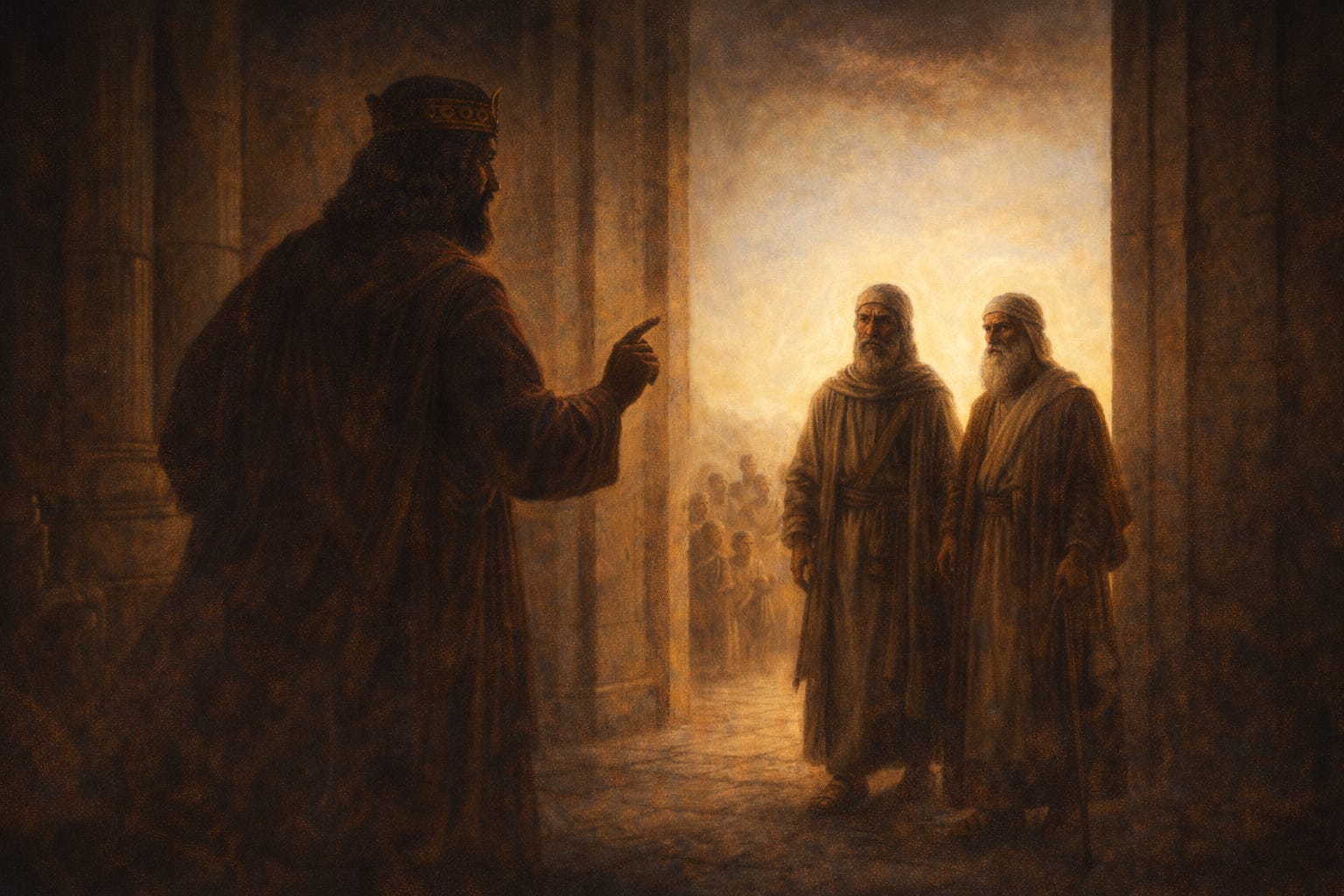
We begin this week's Parsha with a declaration by God to Moshe about Paro. He's going to harden Paro's heart and the heart of his ministers. And there's a purpose to this, but it's not that purpose that we're interested in right now. It's the hardening that we'd like to focus on. Not in general, but one particular type of hardening, one particular instance.
That instance begins with Moshe and Aharon going to Paro and making yet another declaration in the name of HaKadosh Baruch Hu. This time it is locusts — and, I have to admit, it doesn’t sound like a lot of fun.
A swarm of locusts so massive that one won’t be able to see the land. And not just in any one spot, but throughout the entire land of Egypt. And when they are done -- any and everything that grows in the field will be consumed.
But it doesn’t end there -- they will be in the houses. Everyone’s houses. Paro’s, his ministers -- and the rest of the nation.
In short -- it will be a swarm the likes of which they had never seen before.
And it’s not just me who doesn’t think that this sounds like a good time. Paro’s advisors also weren’t too keen on this idea. As such, they make a plea to Paro — the essence of which goes something like this: “enough is enough”.
Yes, they didn’t quite phrase it like that — but that was the gist of it. And, for a moment, it worked. Paro agreed. It was enough. He and his advisors had gotten the message. They would let the Jews worship HaKadosh Baruch Hu in the desert.
Finally.
An Interesting Question
Well, almost finally.
As we know, it didn’t work out that way. True, Paro did call back Moshe and Aharon and let them know that they can go. But then he asked a rather interesting question:
מִ֥י וָמִ֖י הַהֹלְכִֽים
Loose translation: “Who is going?”
Literal translation: “Who and who is going?”
Now I have to admit, I do not understand this question. What does Paro mean “who is going”? Moshe and Paro (and HaKadosh Baruch Hu) have literally been fighting about this for 7 plagues now. Through all the blood and boils and lice and (now) locusts Paro does not yet know who wants to go.
This topic never came up before?
What did Paro think when Moshe first stated: send my nation and they will hold a festival for me in the desert:
שַׁלַּח֙ אֶת־עַמִּ֔י וְיָחֹ֥גּוּ לִ֖י בַּמִּדְבָּֽר
When Moshe said let us travel three days in the desert and offer sacrifices to Hashem, Our G-d — who did Paro think that “us” referred to:
נֵ֣לְכָה נָּ֡א דֶּ֩רֶךְ֩ שְׁלֹ֨שֶׁת יָמִ֜ים בַּמִּדְבָּ֗ר וְנִזְבְּחָה֙ לַֽיהֹוָ֣ה אֱלֹהֵ֔ינוּ
At the very least, Paro thought it included the male slaves. After all, let us note his response to Moshe’s request:
וַיֹּ֤אמֶר אֲלֵהֶם֙ מֶ֣לֶךְ מִצְרַ֔יִם לָ֚מָּה מֹשֶׁ֣ה וְאַהֲרֹ֔ן תַּפְרִ֥יעוּ אֶת־הָעָ֖ם מִֽמַּעֲשָׂ֑יו לְכ֖וּ לְסִבְלֹתֵיכֶֽם
English translation: “And the king of Egypt said to them: Why, Moshe and Aharon, do you disrupt the people from their work? Go back to your burdens.”
By the people, Paro seems to mean at the very least the male slaves — as the very next line from Paro indicates:
וַיֹּ֣אמֶר פַּרְעֹ֔ה הֵן־רַבִּ֥ים עַתָּ֖ה עַ֣ם הָאָ֑רֶץ וְהִשְׁבַּתֶּ֥ם אֹתָ֖ם מִסִּבְלֹתָֽם
English translation: “And Paro said: Look, the people of the land are now many, and you are stopping them from their burdens.”
“The people of the land” (the Am HaAretz — עַ֣ם הָאָ֑רֶץ) — think the people who work the land — which is why immediately afterwards he stops giving straw to the nation (לעם). Because they — read, the nation, read, the (male) slaves — have too much free time on their hands. That is why they are requesting to partake in a national sacrifice to HaKadosh Baruch Hu:
כִּֽי־נִרְפִּ֣ים הֵ֔ם עַל־כֵּ֗ן הֵ֤ם צֹֽעֲקִים֙ לֵאמֹ֔ר נֵלְכָ֖ה נִזְבְּחָ֥ה לֵאלֹהֵֽינוּ
English translation: “…for they are too idle; therefore they cry out, saying: ‘Let us go and offer sacrifices to our G-d’.
Therefore, Paro loads up the male slaves with an even heavier burden:
תִּכְבַּ֧ד הָעֲבֹדָ֛ה עַל־הָאֲנָשִׁ֖ים וְיַעֲשׂוּ־בָ֑הּ וְאַל־יִשְׁע֖וּ בְּדִבְרֵי־שָֽׁקֶר
English translation: “Let the work be made heavier upon the men, so that they engage in it and do not pay attention to false words.”
Again, by “men”, Paro means the male slaves. Because they — the male slaves — are paying attention to the false words of Moshe.
And as it was at that very first meeting, so was it plague after plague.
Before the first plague, Moshe went to Paro and requested in the name of HaKadosh Baruch Hu: “send my nation and they will serve me in the desert” (שַׁלַּח֙ אֶת־עַמִּ֔י וְיַֽעַבְדֻ֖נִי בַּמִּדְבָּ֑ר).
Or how about before the frogs — when Paro had finally had enough, he sent for Moshe and Aharon and asked them to beseech Hashem to remove the frogs in which case he (Paro) would “send the nation and they could offer sacrifices to Hashem”.
Now, who did Paro have in mind at this point? Who did Paro think that Moshe had in mind at this point? We don’t know — but presumably that very same group of Jews that Paro understood Moshe was referring to from the very beginning.
And note — there is no questions here from Paro. He doesn’t say: “who do you want to send — let me know and I’ll send them”.
And as it was with the frogs, so it was with the rampage of wild-animals. Once again, Paro proclaims: “go, sacrifice to your G-d in the land” (לְכ֛וּ זִבְח֥וּ לֵאלֹֽהֵיכֶ֖ם בָּאָֽרֶץ).
I could go on, but I think the point has clearly been made — by this time Paro should have a rather clear idea who exactly Moshe has in mind when he says “send my nation and they will offer sacrifices to me in the desert”.
And yet — Paro asks.
Why does he ask?
What does he mean?
But it’s not just the content of the question that is strange, it’s also the way that it is phrased. Literally, “who and who is going” (מִ֥י וָמִ֖י הַהֹלְכִֽים). Why doesn’t he simply ask: “who is going (מִ֖י הַהֹלְכִֽים)”?
All in all, Paro is asking a question which presumably he already has the answer to — and he is asking it in a way that seems rather strange and convoluted.
An Interesting Answer
However strange we may find the question, Moshe Rabbeinu seemed to have no problem with it. Indeed, he had a ready made answer — everyone. And by everyone — he really meant everyone.
Our young men and our elders (בִּנְעָרֵ֥ינוּ וּבִזְקֵנֵ֖ינוּ).
Our sons and our daughters (בְּבָנֵ֨ינוּ וּבִבְנוֹתֵ֜נוּ).
Our flock and our cattle (בְּצֹאנֵ֤נוּ וּבִבְקָרֵ֙נוּ֙).
Now, I have to admit — I am a bit surprised by this answer. When Moshe — speaking in Hashem’s name — first stated “send my nation and they will hold a festival for me in the dessert (שַׁלַּח֙ אֶת־עַמִּ֔י וְיָחֹ֥גּוּ לִ֖י בַּמִּדְבָּֽר)” — what did he (Moshe) have in mind.
At that point in time did he have every man, women and child (and every cow, sheep and goat)? If so, did he make that clear to Paro when he made that first request? It doesn’t seem so — because Paro seems to immediately give a more limited understanding of that phrase “my nation”. An interpretation that Moshe does not correct.
Now, on a practical level, we can understand why Moshe wouldn’t want to correct Paro. Paro’s immediate reaction was to lash out against the male slaves. It would be quite foolish for Moshe to point that actually he meant more than just the male slaves — that would just needless invite Paro to create even greater suffering for the Jewish people.
But that’s not my real question — my question is before Paro lashed out, what did Hashem and Moshe have in mind? With that first, more limited request of a three day journey, were they requesting that every man, women and child go serve Hashem in the desert?
If so, why didn’t Paro understand that? Did Moshe not clearly articulate the request? If so, was that a “mistake” — or purposeful? If purposeful, why? Why be purposely ambiguous?
On the other hand, if Moshe was only asking permission for the men to be granted permission, then what changed? Why at the very moment that Paro finally agrees to Moshe’s request does he (Moshe) change it in such a way as to undermine his original request?
Fully Against
Whatever Moshe originally had in mind, it’s clear what he is asking for now — and that is a request that Paro is not (yet) willing to accept.
And let us understand Paro’s objection in full context. Paro understands what is coming next — a swarm of locust beyond anyone’s imagination. A devastation of untold horrors for Egypt. And yet, Paro prefers that horror to the “horror” of sending all of the Jewish people on a short, limited excursion into the desert for a national festival.
True, his preferences will magically shift 180 degrees once he actually experiences that horror — then he will admit that he has sinned and will be willing to send the full nation (man, women, child — cow, sheep and goat):
וַיְמַהֵ֣ר פַּרְעֹ֔ה לִקְרֹ֖א לְמֹשֶׁ֣ה וּֽלְאַהֲרֹ֑ן וַיֹּ֗אמֶר חָטָ֛אתִי לַיהֹוָ֥ה אֱלֹֽהֵיכֶ֖ם וְלָכֶֽם׃ וְעַתָּ֗ה שָׂ֣א נָ֤א חַטָּאתִי֙ אַ֣ךְ הַפַּ֔עַם וְהַעְתִּ֖ירוּ לַיהֹוָ֣ה אֱלֹהֵיכֶ֑ם וְיָסֵר֙ מֵֽעָלַ֔י רַ֖ק אֶת־הַמָּ֥וֶת הַזֶּֽה׃
English translation:
And Paro hurried to summon Moshe and Aharon, and he said: ‘I have sinned against the L-RD your G-d, and against you. And now, please, bear my sin just this once, and plead with the L-RD your G-d, that He remove from upon me only this death.
At that point Paro will have been broken — and is 100% willing to send out the full Jewish nation. And at that point, HaKadosh Baruch Hu will have to harden his heart so as to prevent Paro from actually sending out that the full nation.
But all of that was after the plague actually occurs.
But at this point, Paro is not yet broken. At this point, HaKadosh Baruch Hu does not need to harden his heart. And here, with will not yet broken and heart not yet hardened, Paro has a clear preference — I would rather face the death and destruction of the locusts than send the full nation on a limited, one-time journey into the desert.
And that is remarkable.
Why is Paro so completely and absolutely against this idea? Indeed, in just a moment he is going to exile Moshe and Aharon from his presence:
וַיְגָ֣רֶשׁ אֹתָ֔ם מֵאֵ֖ת פְּנֵ֥י פַרְעֹֽה
English translation: “And he forcibly expelled them from Paro’s presence”.
Forcibly expelled (גשר), like when HaKadosh Baruch Hu forcibly expelled (גרש) Adam and Chava from Gan Eden.
And like when Avraham forcibly expelled (גרש) Yishmael from his (Avraham’s) home.
And like when Paro will forcibly expel (גרש) the Jewish people from the land of Egypt after the death of the first born.
Paro didn’t just reject the scope of Moshe and Aharon’s request — he utterly rejected it with all of his being. He is so totally and absolutely against this request that he has Moshe and Aharon forcibly removed from his presence — presumably with the intent that they will never be allowed to see him again (and intent temporarily undermined by the severity of the plague of darkness).
After all — when HaKadosh Baruch Hu forcibly expelled Adam and Chava, he did so permanently. So too, when Avraham forcibly expelled Yishmael from his home and Paro the Jews from Egypt. In all of those cases, the exile was permanent.
Presumably, that was the intent here also.
Which leads us to wonder — why does this request so greatly “insult” Paro. Why is he so fundamentally against this idea that he is willing to put up with the death and destruction of the locusts and to permanently ban Moshe and Aharon from his presence?
An Interesting Response
Well, interestingly enough, Paro himself articulates his objection:
וַיֹּ֣אמֶר אֲלֵהֶ֗ם יְהִ֨י כֵ֤ן יְהֹוָה֙ עִמָּכֶ֔ם כַּאֲשֶׁ֛ר אֲשַׁלַּ֥ח אֶתְכֶ֖ם וְאֶֽת־טַפְּכֶ֑ם רְא֕וּ כִּ֥י רָעָ֖ה נֶ֥גֶד פְּנֵיכֶֽם׃ לֹ֣א כֵ֗ן לְכֽוּ־נָ֤א הַגְּבָרִים֙ וְעִבְד֣וּ אֶת־יְהֹוָ֔ה כִּ֥י אֹתָ֖הּ אַתֶּ֣ם מְבַקְשִׁ֑ים
English translation: not yet.
I have to be honest, it’s not so easy to translate what Paro is saying — for one simple reason, it’s not at all clear what he is saying. True — I could translate the words. But there is so much more to meaning and understanding than the mere words.
Take, for example, the following sentence:
You believe that
What is being said here? Well, it could be a statement - as in someone reminding someone of what they actually believe:
You believe that.
But it could be a question - as in someone wondering if their friend actually believes what they are saying:
You believe that?
It could be a statement of wonder or awe — like when witnessing something that is seemingly impossible:
You believe that!
Or a sarcastic statement — as in (eyes rolling) right - sure you do:
You believe that?!
And I’m sure there are more possibilities.
In short, there is so much more to meaning than just words. And one indication of meaning is intonation — how we say the words. The pitch or tone says as much as the words themselves. Of course, intonation is something we say and hear. In the written word, there is a close cousin — called punctuation. That is something we read and see.
And none of this exists in the written Torah. Open up a Sefer Torah. There is no punctuation. No commas, no periods, no question marks, no exclamation points. And obviously, whatever intonation Paro had was not preserved in the text of the Torah itself — text can’t preserve intonation.
Which means that there is a certain inherent ambiguity when it comes to reading and understanding the Torah. It’s not just that the text itself doesn’t reveal everything (although that at times is clearly true), it’s that it can’t reveal everything.
Ambiguity is built into its very structure.
And, as they say in the vernacular — that is a feature, not a bug. The Torah loves playing with lack of clarity, of hiding more than it reveals, of limiting rather than expanding. Because of the intellectual (and other) opportunities that this creates.
Now, initially, this is a prospect that is difficult for many of us to accept. We are used to difficult ideas and concepts being clarified so that we can understand them. From boring textbooks to engaging speakers — modern education thrives on the concept of helping us to providing us with all the relevant information, clearly laid out and explained.
And even in those areas where modern education likes a little bit of ambiguity (such as the engaging question) it likes to quickly resolve that ambiguity.
And this makes sense to us.
What does not make sense to us is to take an idea or statement is clear and muddying it up. Of purposely confusing us. Of hiding rather than revealing.
But there is an exception — art.
In the world of art — clarity is not always the goal.
Who wants to read a murder mystery where it is obvious who did it?
Who wants to watch a thriller where you know how the hero will save the day?
And even if the murder mystery will eventually tell you who did it, not every movie or novel closes every open question or issue. Moral questions are left as questions. The deepest motivations and drives of characters actions are never resolved.
Purposely so.
And it’s not just in stories.
In music, songs can end “unresolved” — on a haunting note or chord.
Abstract paintings are — well — abstract.
In photography — motion (and those who are moving) can be blurred.
And so on.
In art — it is the ambiguity that creates the curiosity.
And it is the curiosity that creates the personal and intellectual investigation.
And it is the investigations that leads us to new ideas and insights.
In short, skillful use of ambiguity leads to skillful use of our minds. And that is something that HaKadosh Baruch Hu wants us to do.
And so, He skillfully injects purposeful ambiguity into the Torah. Not just into the narratives and how they are told, but into the very structure of the Chumash itself.
And so — no punctuation. No intonation.
Meaning, we have to provide the punctuation and intonation.
We have to figure it out.
That’s true in general.
And it’s true here with Paro’s statement.
We are going to have to figure out what he means.
But to do that — we first have to explore the difficulty in what he says. To enjoy that difficulty and sit with the questions — rather than run towards the answers.
Filling in the Blanks
As such, let’s take a deeper look at what Paro says. We’ll start with the first phrase
יְהִ֨י כֵ֤ן יְהֹוָה֙ עִמָּכֶ֔ם כַּאֲשֶׁ֛ר אֲשַׁלַּ֥ח אֶתְכֶ֖ם וְאֶֽת־טַפְּכֶ֑ם
Let’s first ask — is this a statement or a question? Is Paro being serious or sarcastic? Not sure, so let’s consider our options.
Statement: Hashem will be with you when I send you and your ‘dependent ones’.
That doesn’t seem right. It’s not like Paro is giving Moshe and Aharon a beracha (blessing). It fits into the words, but not the content. Initial verdict — doesn’t work.
Question: Will Hashem be with you when I send you and your ‘dependent ones’?
If we take this as a literal question, then it’s still hard to understand. Paro is not curious about how serving HaKadosh Baruch Hu works. He’s not a talmid asking his Rebbe how to best prepare for the chagim.
So, let’s try again.
Rhetorical question: Will Hashem be with you when I send you and your ‘dependent ones’?!
OR
Sarcastic question: Hashem will be with you when I send you and your ‘dependent ones’?!
Now note — you really need to intone this line to make it work. I can give you the direction, but only you can sound it out (either in your head or out loud). My recommendation, try and put as much ridicule and derision in this reading as possible — that is how I imagine Paro saying it.
With that said, this reading is more plausible. We may not yet know what Paro’s point is — but having him make a cynical or sarcastic comment works with the general “feel” of the story. It would certainly fit with him following up by forcibly removing Moshe and Aharon.
But what does it mean? For that, we need to focus on one particular word (or phrase) in Paro’s statement: “dependent ones (טַפְּכֶ֑ם)”
That word is interesting, because Moshe Rabbeinu didn’t explicitly use that word. Rather, he talked about “our sons and our daughters (בְּבָנֵ֨ינוּ וּבִבְנוֹתֵ֜נוּ)”. True, he did mention na’areinu (בִּנְעָרֵ֥ינוּ) — but that is a difficult word to translate and I don’t think that it means toddlers or infants (i.e., those who are dependent on their parents).
Binyamin was called a ne’ar (נער) at a time when he had 10 kids.
Yehoshua is called a ne’ar at a time that he was Moshe’s right hand man.
The ne’arim were punished for gazing upon the Divinity at Har Sinai while they ate and drank (hard to imagine we are referring to infants or toddlers there).
As such, the only reference to “dependent ones” is in Moshe’s general statement about our sons and daughters.
But even so — there is a deeper issue. Why does Paro solely focus on the toddlers and infants? Why not mention the senior citizens (וּבִזְקֵנֵ֖ינוּ) or the ne’arim that we just mentioned? Or the cattle and flocks?
Why single out the young ones?
And why does Paro care whether or not Hashem will be with them when he sends these babies? Has Paro gone from I don’t know who Hashem is to worrying about how the Divine presence will rest upon the Jewish people?
Some how or other I doubt it.
So what’s the issue?
Indeed, let’s modify for a moment Moshe’s request. Instead of a festival to the Creator of the Universe, imagine that Moshe wanted to have a national festival to the Tooth Fairy — and that he needs the entire nation there (even those little babies who don’t yet have teeth).
To which Paro replies: “Will the Tooth Fairy really be with you when you take your babies?”
That wouldn’t make any sense. Paro doesn’t believe in the Tooth Fairy. He doesn’t care about the Tooth Fairy. Paro just wants the plagues to stop — and he believes that somehow or other sending out the Jewish people to their “festival” will help with that.
The point is, it’s not an issue that Paro is personally invested in.
But that does not seem to be the case here. Paro’s sarcasm comes from a place of deep caring (as I hope to point out). It is the idea that bothers him.
In the Tooth Fairy example, it would be the idea that the Tooth Fairy would be with the Jewish people if he sends the infants that bothers him.
In the real world, it is the idea that HaKadosh Baruch Hu would be with the Jewish people if he sends the infants that bothers him.
That is the reading which I want to read into the ambiguity of the Torah. There are other readings (I’ll present one). But I think that this reading is there — in this text. And we can discover it.
But I get ahead of myself.
See What?
Paro continues:
רְא֕וּ כִּ֥י רָעָ֖ה נֶ֥גֶד פְּנֵיכֶֽם
English translation: well — you know the drill.
Let’s start with the obvious — Paro is not asking Moshe and Aharon to physically see the “evil” that is “opposite” their faces.
So what kind of “seeing” does Paro want them to do.
Here’s one possibility — see as in acknowledge or admit. In this case, Paro would be talking about Moshe and Aharon’s intentions. It’s as if Paro was saying to them — I see what you are doing. Your evil intent is written all over your faces.
You want to flee, to escape — to permanently leave Egypt. This is all a ruse. That is why you want to take the kids. In English, we have semi-equivalents — such as: “You see perfectly well what you’re doing”.
But, I have to admit — I don’t see it as the easiest read.
Nonetheless, it does seem to have backing from Onkelos as understood by the Ramban (according to one of the extant versions of Onkelos).
And honestly, this reading would fit quite well with the story and what Paro says next:
לֹ֣א כֵ֗ן לְכֽוּ־נָ֤א הַגְּבָרִים֙ וְעִבְד֣וּ אֶת־יְהֹוָ֔ה כִּ֥י אֹתָ֖הּ אַתֶּ֣ם מְבַקְשִׁ֑ים
English translation: “Not so. Go now — the men — and serve the LORD, for that is all you are asking for.”
Meaning: only the men.
No kids.
No toddlers.
No infants.
No wives.
Just the men.
This would line up beautifully with everything that we noted about Paro’s initial understanding of Moshe and Aharon’s initial request.
In other words — I will let the men go if (and only if) they have some serious incentive to come back. So let their wives and kids stay here — and then (and only then) they can go.
Why?
Presumably because Egypt needed these slaves. They were fundamental to their economy. As such, as bad as the locusts will be (and they will be bad) — it’s still just a one-time disaster.
But losing one’s labor force. That’s not something that can so easily be replaced. That’s a long-term problem. And so, if forced to choose — Paro would choose the short-term pain over the long-term loss.
Indeed, from this perspective — there is a certain rational and logic to Paro’s position (however immoral it may be).
And I have to admit — I like this reading. It sounds to me like one of the layers of meaning inherent in the verse. Remember, skillful use of ambiguity can skillfully insert multiple readings into the same text.
And so while I like this reading — it’s not the one I want to explore right now. No, there is a different reading — one that I think also works that I would like to develop.
And that depends on a different understanding of the word “see” (רְא֕וּ).
Back to the Snake
Let’s take a slight detour. For just a moment, I want to revisit Gan Eden and the snakes seduction of Chava. The snake, we all know, was cunning — and he managed to convince Chava to do that which she knew was forbidden.
But how?
By asking her to open her eyes.
“G-d knows,” said the snake, “that on the day you two eat from it, your eyes will be open and you will be like G-d — knowing good and bad”.
כִּ֚י יֹדֵ֣עַ אֱלֹהִ֔ים כִּ֗י בְּיוֹם֙ אֲכׇלְכֶ֣ם מִמֶּ֔נּוּ וְנִפְקְח֖וּ עֵֽינֵיכֶ֑ם וִהְיִיתֶם֙ כֵּֽאלֹהִ֔ים יֹדְעֵ֖י ט֥וֹב וָרָֽע
And, at that moment — when the snake used those words — Chava then saw the tree differently.
She saw that it was good for eating.
She saw that it was desirable to the eyes.
She saw that it was pleasant for gaining understanding.
And so she took and she ate (and convinced her husband to do the same):
וַתֵּ֣רֶא הָֽאִשָּׁ֡ה כִּ֣י טוֹב֩ הָעֵ֨ץ לְמַאֲכָ֜ל וְכִ֧י תַֽאֲוָה־ה֣וּא לָעֵינַ֗יִם וְנֶחְמָ֤ד הָעֵץ֙ לְהַשְׂכִּ֔יל וַתִּקַּ֥ח מִפִּרְי֖וֹ וַתֹּאכַ֑ל וַתִּתֵּ֧ן גַּם־לְאִישָׁ֛הּ עִמָּ֖הּ וַיֹּאכַֽל
In other words — she understood that which she did not understand before. And it is in this sense of the word “see” that I want to try and understand Paro’s words:
Understand Moshe and Aharon — evil is facing you.
In this reading — Paro is not accusing Moshe and Aharon of duplicity. He’s not worried about some sort of economic loss. Rather, he’s worried about Moshe and Ahron’s naivite — which, of course, seems to make no sense.
But bear with me.
Through the Eyes of Rashi
Let’s take a look at Rashi:
וּמִ”אַ שָׁמַעְתִּי, כּוֹכָב אֶחָד יֵשׁ שֶׁשְּׁמוֹ רָעָה, אָמַר לָהֶם פַּרְעֹה, רוֹאֶה אֲנִי בָּאִצְטַגְנִינוּת שֶׁלִּי אוֹתוֹ כוֹכָב עוֹלֶה לִקְרַאתְכֶם בַּמִּדְבָּר, וְהוּא סִימַן דָּם וַהֲרִיגָה; וּכְשֶׁחָטְאוּ יִשְׂרָאֵל בָּעֵגֶל וּבִקֵּשׁ הַקָּבָּ”ה לְהָרְגָם, אָמַר מֹשֶׁה בִּתְפִלָּתוֹ, לָמָּה יֹאמְרוּ מִצְרַיִם לֵאמֹר “בְּרָעָה” הוֹצִיאָם (שמות ל”ב), זוֹ הִיא שֶׁאָמַר לָהֶם, רְאוּ כִּי רָעָה נֶגֶד פְּנֵיכֶם; מִיָּד וַיִּנָּחֶם ה’ עַל הָרָעָה וְהָפַךְ אֶת הַדָּם לְדַם מִילָה, שֶׁמָּל יְהוֹשֻׁעַ אוֹתָם, וְזֶהוּ שֶׁנֶּ’ “הַיּוֹם גַּלּוֹתִי אֶת חֶרְפַּת מִצְרַיִם מֵעֲלֵיכֶם” (יהושע ה’), שֶׁהָיוּ אוֹמְרִים לָכֶם, דָּם אָנוּ רוֹאִין עֲלֵיכֶם בַּמִּדְבָּר:
There’s a lot here — so I won’t translate. Rather, I’ll explain.
Let’s start with the word “evil”. Rashi is giving a Midrashic explanation. There is a certain star called “ra’ah” (רעה). Yes, the word רעה technically means “evil”, but in this case it is the name of a constellation which has the same name.
Now, I don’t know if this is connected — but the name of the Egyptians son god was ra. Linguistically, I don’t think there is any connection to the Hebrew word רעה. But phonetically it may sound quite similar (certainly it does in the English transliteration).
Is ra, then, the “star” that the Midrash is referencing here? Is Paro perhaps making a play on words — using the Hebrew word for “evil” which sounds like the Egyptian word for their son god in order to make two points at once?
I don’t know — but I think it’s an interesting idea to explore.
Either way — let’s get to Paro’s main point (as understood by the Midrash). This star, Paro claimed (in the name of his astrologers), is going to rise up and “meet” you in the desert. And that is a sign of blood and death.
That is what Paro meant by:
see [i.e., understand]
that ra [the star named ra]
is opposite your faces [i.e., is rising up to greet you in the desert].
And (continues the Midrash) — this accusation stuck with the Jewish people. This notion that they would die in the desert followed them all the way until the land of Israel itself.
At the Chet HaEgel, when G-d sought to kill off the Jewish people and start over, Moshe Rabbeinu (according to the Midrash), made a reference back to this claim of Paro’s.
“Why,” asked Moshe “should Egypt say He brought them out with רעה.” In the Midrashic reading, Moshe is referencing this line here made by Paro — that according to the Egyptian astrologers, the Jewish people were destined for death in the desert. As such, if HaKadosh Baruch Hu punishes the Jewish people with death, then He (HaKadosh Baruch Hu) is validating the Egyptian world-view.
How, asks Moshe, can HaKadosh Hu take an action which would validate Egyptian idolatry as Paro publicly declared when he said that רעה was rising to greet us?
What’s more, says Rashi (in the name of the Midrash), it wasn’t until we actually entered the land of Israel that the shadow of this claim finally left us. Until we actually made it, it was not clear who was right. After all, death and destruction could hit at any moment — and, as we know, there were plenty of opportunities along the way:
The lack of water at Marah
The hunger crisis in the wilderness and the complaints about food
The war with Amalek
The sin of the Spies
The rebellion of Korach
The plague after the sins with the Midianite women
But, once they crossed into Eretz Yisrael — and circumcised everyone — then that shadow lifted. Or, as the verse in Yehoshua phrased it — the “shame” of Egypt had been removed:
הַיּוֹם גַּלּוֹתִי אֶת חֶרְפַּת מִצְרַיִם מֵעֲלֵיכֶם
In other words — there was blood in the desert. But it was the blood of mila (circumcision). So, in a sense — Paro and his astrologers were right. There was blood in the desert. But they were also wrong — it wasn’t the blood of death, but the blood of circumcision.
Putting the Midrash into Peshat
Let’s take the point of the Midrash and see if we can fit it into the words of the Chumash — that is, read it into peshat.
First, the essence (in terms of pesha) of what Paro is saying. Do you really think that G-d will be with you if I send you and your children into the desert? Don’t you see the evil that will befall you?
Where are you going to get food to feed everyone?
Where will you get water for them to drink?
How will you deal with the infighting that arises when you can’t provide them with their basic needs?
How will you deal with the external threats of those who wish to physically attack you?
In short, what you want to do is insane. The world does not work this way! You are being naive!
With that in mind, let’s read our verse again:
יְהִ֨י כֵ֤ן יְהֹוָה֙ עִמָּכֶ֔ם כַּאֲשֶׁ֛ר אֲשַׁלַּ֥ח אֶתְכֶ֖ם וְאֶֽת־טַפְּכֶ֑ם רְא֕וּ כִּ֥י רָעָ֖ה נֶ֥גֶד פְּנֵיכֶֽם׃ לֹ֣א כֵ֗ן לְכֽוּ־נָ֤א הַגְּבָרִים֙ וְעִבְד֣וּ אֶת־יְהֹוָ֔ה כִּ֥י אֹתָ֖הּ אַתֶּ֣ם מְבַקְשִׁ֑ים
English translation:
“Will Hashem really be with you if I send you and your children out [into the desert]? See the evil that is awaiting you. Not this way. Please, let the men go and serve Hashem — because that is (after all) what you are asking for.”
Read this way, one almost gets the impression that Paro cares for the Jewish people (which seems a bit hard to believe). Of course, one could translate the word נא as “now” (like I originally did).
Either way, that’s not the main point. The main point is the nature of what Paro is saying that Moshe and Aharon are out of touch with reality. That the world does not work according to their assumptions. That it is not possible to do what they are now requesting to do.
And it is this worldview which threatens Paro. Behind the request is an assumption of how the world works — one which evidently challenges Paro’s worldview and (perhaps) the worldview upon which Egyptian society itself is set up.
That is why he is willing to risk the wrath of G-d’s locusts rather than accede to Moshe’s terms.
Putting it All Together
We still have a few loose ends. Let’s see if we can put it all together.
Let us remember our first question about Paro’s question. About why he didn’t know who Moshe and Aharon wanted to send. And why he phrased it as who and who will be going.
As I see it, it was obvious to Paro all along that only the men would be going. And by asking “who and who” will be going — he was essentially asking, which of the slaves would be going. He never imagined that Moshe and Aharon had in mind the entire nation.
Rather, he assumed that it would be a subset of the slave population. And so now that he is finally willing to send a congregation to go serve G-d in the dessert, he needs to know which slaves.
But that is not what Moshe and Aharon (or HaKadosh Baruch Hu) had in mind. But it is what they allowed Paro to believe. Not because they mislead them, but because Paro mislead himself.
In Paro’s worldview — even a small congregation going to a small, limited celebration nearby was unfathomable. For whatever reason, it was something that he fundamentally objected to — to the point that he was willing to put up with plague after plague (before G-d hardened his heart) so as to not even grant this small request.
But G-d’s vision was much grandeur than Paro’s narrow worldview. G-d imagined an entire exodus of the entire slave population permanently leaving Egypt.
But how was G-d going to bridge that gap?
I’m not 100% sure — but I do find it striking that it is G-d Himself who instructs Moshe and Aharon to make this more limited request of a three day journey into the desert. The same G-d Who lets Moshe and Aharon know that He is going to redeem the Jewish people from the land of Egypt, instructs them to make this small, limited request.
And the entire battle with Egypt is over this request. Paro isn’t fighting against a mass exodus, he is fighting against a mini “vacation”.
And yet, through Paro’s battle, the stage is set for the full exodus.
After all, what would have happened if Paro had originally agreed to a small contingency of slaves to worship Hashem in the desert? Would we have had all of these plagues?
What if had negotiated with Moshe rather than constantly resisted him? Would G-d have hardened his heart?
It’s hard to know — but my suspicion is no. My suspicion is that the plagues came because of the absolute opposition of Paro to any slave going for any period of time outside of Egypt. Because behind that opposition was a worldview fundamentally opposed to the moral monotheism that Moshe and Aharon represented.
In Moshe and Aharon’s worldview — you can just enslave a nation because you want to. You can’t just kill babies in the womb or throw them in the nile because you want to. There are limits. There are rights and there are wrongs.
And, as such, Paro could not allow himself to give an inch to Moshe and Aharon.
And, as such he totally and utterly rejected their claim. And so, the plagues got stronger and stronger — so much so that not only did Paro kick out the Jewish people, but so to did the entire Egyptian nation:
וַתֶּחֱזַ֤ק מִצְרַ֙יִם֙ עַל־הָעָ֔ם לְמַהֵ֖ר לְשַׁלְּחָ֣ם מִן־הָאָ֑רֶץ כִּ֥י אָמְר֖וּ כֻּלָּ֥נוּ מֵתִֽים
English translation: Get out!
Okay, that’s a loose translation — but you get the idea.