
Why Sefer Shemos Begins Where It Shouldn’t | Parshas Shemos
Why the opening of Sefer Shemos interrupts the narrative flow to repeat what we already know

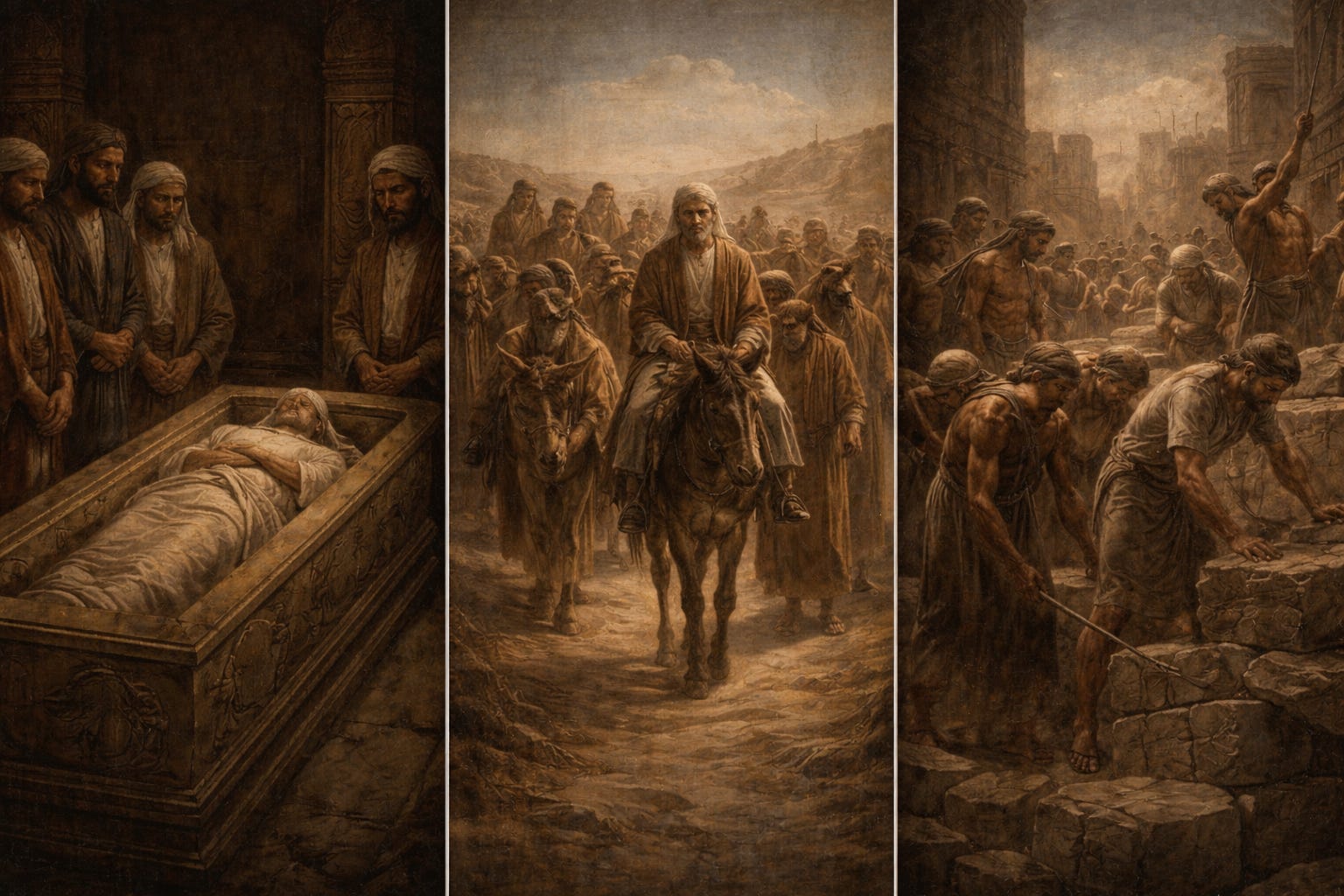
Before we even look at the beginning of Sefer Shemos, we need to stop and take a closer look at how Sefer Bereishis actually ends. After all, Sefer Shemos is the continuation of the narrative that ends in Sefer Bereishis. As such, understanding how Sefer Bereishis ends can help us get some clarity on how and why Sefer Shemos begins the way it does.
And yet, when we take that closer look, we get the sense that Sefer Bereishis ends rather abruptly — and that the beginning of Sefer Shemos really belongs at the end of Sefer Bereishis.
To see why that is the case, we need to revisit the last chapter of Sefer Bereishis. We’ll start with the death — or rather burial — of Yaakov.
Not Yet Slaves
There is something disturbing about Yaakov’s last request. Why does he need Yosef to take an oath to bury him in Eretz Yisrael? Why does he have to command the brothers to do so? What is this so complicated?
Already at this stage, we see a certain limitation. It’s not so simple or obvious that Yaakov can be buried outside of Egypt. Rather, he needs Yosef’s political standing and stature and the brothers special dedication. In particular, he needs permission from Paro. That is why he needs Yosef — so that Yosef can intercede on his behalf and request special dispensation from Paro.
Why is that necessary?
Why can’t Yaakov, the patriarch of the family, simply decide where he will be buried? Evidently, the family is no longer as free as it once was. A decision that should have been private now requires state approval.
And when we look at Yosef, the situation is even more striking.
Yosef mirrors his father and also makes his brothers swear that he will be buried in Eretz Yisrael. And yet, when we look a bit closer at this request, we notice that it’s not quite the same as his fathers.
For starters, his actual brothers brothers are not going to bury him in Eretz Yisrael. No will anyone that he currently knows. No, this request will be carried out far in the future — when all that is left of Yosef’s physical presence in this world are his bones.
If all that is left are his bones — then that means quite a bit of time must have. So, unlike Yaakov, Yosef will have to wait a while to be buried in Eretz Yisrael.
Why?
Perhaps because with the passing of Yosef, the political clout of the Jewish people also starts to pass away. Yosef does not leave behind a political equivalent of himself to the Jewish people. He was a one-time phenomenon.
As such, there is no one left who can intercede on Yosef’s behalf. No one who can go to Paro and request that he be buried in Eretz Yisrael. As such, for now, Yosef will have to contend with the reality that he will be buried in Egypt and that his remains will remain there until the Geulah (some 71 years later).
In short — when Yaakov passed away, the Jewish people lost their spiritual center. With Yosef’s death, they now lose much of (if not all) of their political clout. And with that, they are even less free now than before he passed away.
In short, they are not yet slaves, but they are also no longer free. They are somewhere in-between — a state we can call subjugation (שעבוד — shibud).
Slavery Comes Next
But, as we know, this is not a static state. The loss of freedom does not stop and stay at the state of being subjugated. It deteriorates even more until the point that they are fully enslaved.
And, as we also know, that story is told in the opening chapter of Sefer Shemos. There we here about a new king — one who does not know Yosef. This king is suspicious of the Jewish people, worried about them, threatened by them. And he begins a process of enslavement and affliction.
And what is striking is that this story flows perfectly out of the end of Bereishis.
Yaakov dies. There is still a Pharaoh who knows Yosef and respects him. As such, Yaakov is allowed to be buried.
Yosef dies. There is no Yosef-equivalent left to intercede. Yes, Paro still knows Yosef — but they have no access to him. And it’s not even clear that he would grant Yosef’s request if it was made. As such, Yosef (for now) will be buried in Egypt.
And now — there is a new Pharaoh arises. This Paro either doesn’t know Yosef or doesn’t respect or care about him and all that he did for Egypt. And this Paro doesn’t merely refuse to grant certain rights to the Jewish people, but rather actively takes them away. In short — he turns the subjugation (שעבוד — shibud) into slavery (עבדות — avdus).
As a narrative — the story of the new king flows so naturally from the previous one, that its proper place actually seems to be the end of Sefer Bereishis.
Which leads to the first question.
Why not continue the story of the last chapter of Sefer Bereisish to its natural conclusion inside of Sefer Bereishis?
Why not end Sefer Bereishis with the Jewish people actually becoming enslaved, and then begin Sefer Shemos with the story of redemption—with the birth of Moshe, with “וילך איש מבית לוי”?
Thematically Fits
That structure would also align beautifully with Brit Bein HaBesarim. At that moment, Avraham received a particular nevuah (prophecy) — and in many ways the rest of Sefer Bereishish and the beginning of Sefer Shemos tell the story of the content of that prophecy.
Let’s note the relevant lines:
וַיֹּ֣אמֶר לְאַבְרָ֗ם יָדֹ֨עַ תֵּדַ֜ע
כִּי־גֵ֣ר ׀ יִהְיֶ֣ה זַרְעֲךָ֗ בְּאֶ֙רֶץ֙ לֹ֣א לָהֶ֔ם
וַעֲבָד֖וּם
וְעִנּ֣וּ אֹתָ֑ם
אַרְבַּ֥ע מֵא֖וֹת שָׁנָֽה׃וְגַ֧ם אֶת־הַגּ֛וֹי אֲשֶׁ֥ר יַעֲבֹ֖דוּ דָּ֣ן אָנֹ֑כִי
וְאַחֲרֵי־כֵ֥ן יֵצְא֖וּ בִּרְכֻ֥שׁ גָּדֽוֹלAnd he said to Avram
Know that your offspring
Will be strangers in a land that is not theirs
And they will enslave them
And afflict them —
Four hundred yearsAnd also, the nation that will enslave them — I will judge
And afterwards they will go out with great wealth
Let’s group this prophecy into two separate themes.
The first are the trials and tribulations that the Avos and Shevatim have to go through.
The second is the redemption that will take place afterwards.
In terms of the first theme — the trials and tribulations — there are three aspects:
Being geirim (strangers) in a land that is not theirs
Slavery
Affliction
Now — by the time we get to the end of Sefer Bereishis, we have already told the story of geirus. And we also see the first signs of slavery. In other words, we are well into the first theme and have only one more chapter until we complete the story of this particular theme.
In other words, it’s not just the first chapter of Sefer Shemos flows naturally from a narrative perspective, but it fits in beautifully from a thematic perspective also — as indicated by the prophecy in the Brit Bein HaBesarim.
As such, we once again wonder — why stop in the middle. Why not tell the full story of the trials and tribulations of the Jewish people — as would make thematic sense?
The “Right” Way to Start Sefer Shemos
Let’s grant for a moment that for some reason or other Sefer Bereishish should end exactly where it does. That despite the narrative and thematic reasons for continuing, the story should end with Yosef dead and buried in a coffin.
Sefer Shemos itself could still preserve the narrative flow. It could begin with the natural continuation of the story — namely, with a new king arising in Egypt who did not know Yosef. That is, indeed, the next stage in the narrative.
Instead, the Torah opens with a section that does not move the story forward at all:
וְאֵ֗לֶּה שְׁמוֹת֙ בְּנֵ֣י יִשְׂרָאֵ֔ל הַבָּאִ֖ים מִצְרָ֑יְמָה
אֵ֣ת יַעֲקֹ֔ב אִ֥ישׁ וּבֵית֖וֹ בָּֽאוּ׃
רְאוּבֵ֣ן שִׁמְע֔וֹן לֵוִ֖י וִיהוּדָֽה׃
יִשָּׂשכָ֥ר זְבוּלֻ֖ן וּבִנְיָמִֽן׃
דָּ֥ן וְנַפְתָּלִ֖י גָּ֥ד וְאָשֵֽׁר׃וַֽיְהִ֗י כׇּל־נֶ֛פֶשׁ יֹצְאֵ֥י יֶֽרֶךְ־יַעֲקֹ֖ב שִׁבְעִ֣ים נָ֑פֶשׁ
וְיוֹסֵ֖ף הָיָ֥ה בְמִצְרָֽיִם׃
וַיָּ֤מׇת יוֹסֵף֙ וְכׇל־אֶחָ֔יו וְכֹ֖ל הַדּ֥וֹר הַהֽוּא׃וּבְנֵ֣י יִשְׂרָאֵ֗ל פָּר֧וּ וַֽיִּשְׁרְצ֛וּ וַיִּרְבּ֥וּ וַיַּֽעַצְמ֖וּ בִּמְאֹ֣ד מְאֹ֑ד
וַתִּמָּלֵ֥א הָאָ֖רֶץ אֹתָֽם׃And these are the names of the children of Israel who came to Egpyt
with Yaakov — each man and his household came
Reuven, Shimon, Levy, Yehuda
Yissachar, Zevulen, and Binyamin
Dan and Naftali, Gad and AsherAll the souls who came out of the loins of Yaakov were seventy souls
But Yosef was in Egypt
And Yosef passed away — and all of his brothers — and all of that generationAnd the children of Yisrael were fruitful and swarmred and multiplied and became exceedingly mighty
This whole section makes no sense.
For starters, it repeats information we already know (as the major commentaries point out).
We already know the names of the children of Israel. Not only did we have story after story about them in the Sefer Bereishis, but we had a story about the birth of each and every one and an explanation for the name that was given to them. We don’t need to be retold their names.
And we already know that they all came to Egypt — that story was told also — in great detail.
And we already know that in total, seventy souls (all the offspring of Yaakov) came down to Egypt.
And we already know that Yosef was in Egypt — that story too has been told in great detail.
And we know that he died — that was the very last narrative told in Sefer Bereishis.
And we even know that Bnei Yisrael were fruitful and multiplied. That was the very last line of Parshas Vayigash:
וַיֵּ֧שֶׁב יִשְׂרָאֵ֛ל בְּאֶ֥רֶץ מִצְרַ֖יִם בְּאֶ֣רֶץ גֹּ֑שֶׁן וַיֵּאָחֲז֣וּ בָ֔הּ וַיִּפְר֥וּ וַיִּרְבּ֖וּ מְאֹֽד׃
And Yisrael settled in the land of Egypt — in the land of Goshen — and they took possession of it and were fruitful and tremendously increased.
There is only one bit of information that is actually new — that all of the brothers had passed away and the entire generation. But that we could have either added at the end of Sefer Bereishis:
And Yosef and his brothers and the entire generation passed away. And Yosef was110 years old when he passed away — and he was embalmed and put into a coffin in Egypt.
Or we could have mentioned it at the very beginning of Sefer Shemos:
Yosef and his brothers and the entire generation passed away and a new king arose in Egypt — one who did not know Yosef.
More than Just Unnecessary
The point is — this is entire section is totally unnecessary from an information point of view — with the exception of one line. So why start the Sefer with it?
But what’s worse — not only is this information unnecessary, but by adding it Sefer Shemos interrupts the narrative flow. Instead of naturally flowing from Yosef passing away to a new king who did not know Yosef — it instead takes us back to the time that Yaakov and his sons came down to Egypt.
And there is yet another problem with this opening section. Sefer Bereishis, for the most part, tells the story of the Avos and the Shevatim. Sefer Shemos tells the story of the Am Yisrael.
In other words — the subjects of the two sefarim (books) are totally different. So why reopen Sefer Shemos by returning to a group of people who are no longer the subject of the narrative?
Why temporarily step backward to Yaakov and the Shvatim, when the Torah itself is about to move into an entirely new era?
What Kind of Answer Are We Looking For?
Before trying to answer these questions, we need to be clear about what would count as a real answer. In my mind, a real answer will offer an explanation of the benefit of adding this section.
In particular, I have in mind some idea or concept that adds something to the telling of the story that we would lack otherwise. That is why the Torah was willing to:
a) sacrifice the narrative flow
b) abandon the thematic consistency and
c) reference characters who are not central to the story of Sefer Shemos.
I have an idea — semi developed. I think it’s good enough, though to finally share. And we’ll start by changing one of our questions into the beginning of an answer — namely the point about the central characters.
As we noted above, Sefer Shemos is not about the Avos or the Shvatim — rather it is about Am Yisrael (the nation of Yisrael). But at this point, it my be more accurate to say Bnei Yisrael (the children of Yisrael). Children in terms of ancestors — a few generations on, but still the inheritors of what Yaakov and his sons bequeathed to the budding nation.
And one of those gifts that they had to offer were there very names. Because those names are not merely labels or means of technically referencing a particular person. No, the names of the Shevatim carry meaning — meaning based on a particular worldview. A worldview that was articulated by the Imahos (the founding mothers) the moment they were born.
In particular, the Imahos took their particular experiences and used them to understand and express a particular perspective of how G-d interacts with man — and how man relates to G-d’s world. They took their pain, longing, gratitude and hope and transformed those personal experiences and desires into the particular names that they gave their children.
And that perspective on how to relate to their experience was brought down to Egypt. That is what it means by “These are the names of the children of Yisrael who came to Egypt.” Put otherwise, these are the worldview and perspectives that the children of Yisrael brought down to Egypt.
And that is significant — because they were going to need that worldview and perspective while in Egypt.
The Names in Egypt
For example — let’s take a look at Reuven. Not just the name, but the context of the name — and how that context lead to the name:
וַיָּבֹא֙ גַּ֣ם אֶל־רָחֵ֔ל וַיֶּאֱהַ֥ב גַּֽם־אֶת־רָחֵ֖ל מִלֵּאָ֑ה
…
וַיַּ֤רְא יְהֹוָה֙ כִּֽי־שְׂנוּאָ֣ה לֵאָ֔ה
וַיִּפְתַּ֖ח אֶת־רַחְמָ֑הּ
…
וַתַּ֤הַר לֵאָה֙ וַתֵּ֣לֶד בֵּ֔ן
וַתִּקְרָ֥א שְׁמ֖וֹ רְאוּבֵ֑ן
כִּ֣י אָֽמְרָ֗ה כִּֽי־רָאָ֤ה יְהֹוָה֙ בְּעׇנְיִ֔י
…And he came also to Rachel — and he loved Rachel more than Leah…
And Hashem saw that Leah was hated
And He opened her womb…And Leah became pregnant and gave birth to a son
and called his Reuven
Because she said that Hashem has seen my affliction
It’s right there — in the name. Hashem sees that Leah is hated and Leah recognizes that Hashem sees her affliction.
And soon enough, the Jewish people would be in a place of affliction (remember the prophecy of the Bris Bein HaBetarim — about slavery and affliction). And when that happens — Hashem will see that affliction:
וַיְהִי֩ בַיָּמִ֨ים הָֽרַבִּ֜ים הָהֵ֗ם וַיָּ֙מׇת֙ מֶ֣לֶךְ מִצְרַ֔יִם
וַיֵּאָנְח֧וּ בְנֵֽי־יִשְׂרָאֵ֛ל מִן־הָעֲבֹדָ֖ה
וַיִּזְעָ֑קוּ וַתַּ֧עַל שַׁוְעָתָ֛ם אֶל־הָאֱלֹהִ֖ים מִן־הָעֲבֹדָֽה׃וַיִּשְׁמַ֥ע אֱלֹהִ֖ים אֶת־נַאֲקָתָ֑ם
…
וַיַּ֥רְא אֱלֹהִ֖ים אֶת־בְּנֵ֣י יִשְׂרָאֵ֑ל
וַיֵּ֖דַע אֱלֹהִֽים׃And those numerous days, the King of Egypt died
And the children of Yisrael groaned from the slave labor
And they cried out and their pleas reached the Divinity from the slave laborAnd G-d heard their moans…
And G-d saw the children of Yisrael
And G-d was aware
He are the Jewish people reaching their breaking point under the affliction of Egypt. And when that happens — G-d sees. Whether or not the Jewish people were aware then that G-d saw — or afterwards is not the issue. The point is that at some point that fact became none to us. And my claim is that it was these names — and the worldview that they carried — which helped us understand that fact.
But it’s not just the seeing. Take a closer look at this passage. G-d also hears. And that leads us to Shimon (Leah’s second son). Which reminds us of Shimon — named because Leah recognized that G-d saw that she was hated. And we remember that the Egyptians could not stand the Jewish people:
וַיָּקֻ֕צוּ מִפְּנֵ֖י בְּנֵ֥י יִשְׂרָאֵֽל
And they sickened because of the children of Yisrael
And as I look further, I feel like I find more and more connections. With Levy, Leah expresses the hope that her husband will “accompanying” her. And we note — that Moshe came about because a man from the house of Levy went and took a daughter of Levy. And we read the Rashi and all that that union entailed — and we see that the principle of that connection lead to our salvation.
We read that with Yehuda, Leah finally offers thanks and recognition to Hashem. And we remember Shiras HaYam — the song of thanks and recognition that we sang when the redemption was finally and ultimately fulfilled.
And then we hear about Dan — and Rachel’s proclamation that G-d is judging her cause. And we remember that at Bris Bein HaBesarim that Hakadosh Baruch Hu promised that he would judge the nation that oppressed us. And, of course, we remember the story of that judgement — the ten plagues.
I do not have them all worked out yet — but here is are (potentially) two more. Yissachar — where Leah notes that G-d gave Leah the wages that were due to her. And, of course, we remember that Bnei Yisrael went out with the wealth of Egypt — which Geviah ben Pesisa argued were simply the wages due to the Jewish people for all the slave labor that they were forced to perform.
And finally — we have Binyamin. The son of her affliction — who was also the son of her right hand. And we see that the affliction of Egypt turned into the right hand of Hashem (as noted in Shiras HaYam).
What This Means for Sefer Shemos
We can now return to our original questions.
Why does Sefer Bereishis end where it does?
Because it has completed the story of the family.
Why does Sefer Shemos not simply continue the narrative?
Because before telling the story of slavery and redemption, the Torah must define who this nation is.
Why return to the Shvatim when the story is now about Am Yisrael?
Because Am Yisrael does not emerge out of nowhere. It emerges carrying these names—these worldviews—into history.
These names came down to Egypt for a reason.
They shaped how slavery was endured.
They shaped how redemption was experienced.
And they shaped how the opportunities created by redemption—Torah, covenant, nationhood—could eventually be realized.