An Interesting Question
We begin this week's Parsha with a declaration by God to Moshe about Paro. He's going to harden Paro's heart and the heart of his ministers. And there's a purpose to this, but it's not that purpose that we're interested in right now. It's the hardening that we'd like to focus on. Not in general, but one particular type of hardening, one particular instance.
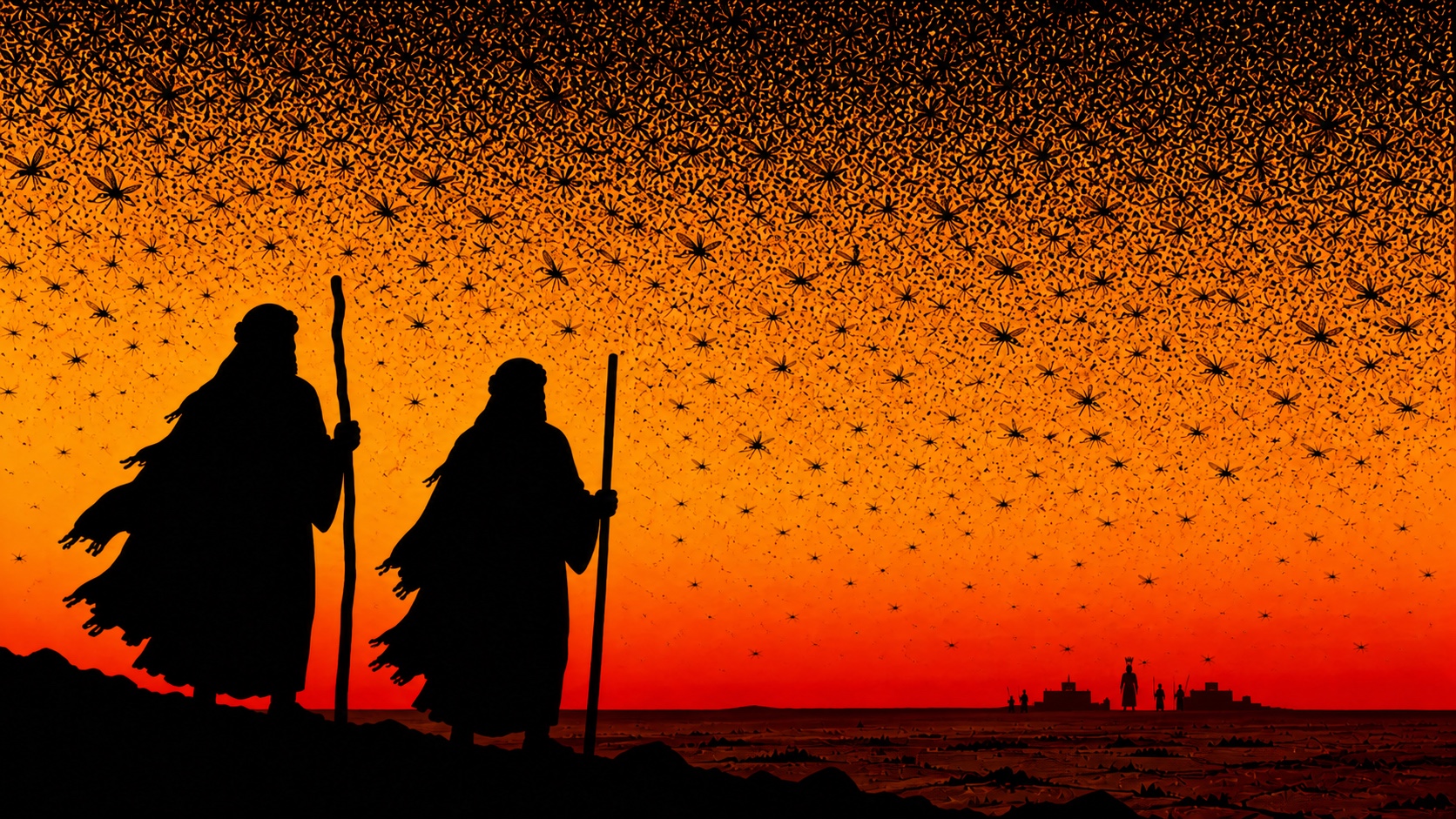
That instance begins with Moshe and Aharon going to Paro and making yet another declaration in the name of HaKadosh Baruch Hu. This time it is locusts — and, I have to admit, it doesn't sound like a lot of fun.
A swarm of locusts so massive that one won't be able to see the land. And not just in any one spot, but throughout the entire land of Egypt. And when they are done -- any and everything that grows in the field will be consumed.
But it doesn't end there -- they will be in the houses. Everyone's houses. Paro's, his ministers -- and the rest of the nation.
In short -- it will be a swarm the likes of which they had never seen before.
And it's not just me who doesn't think that this sounds like a good time. Paro's advisors also weren't too keen on this idea. As such, they make a plea to Paro — the essence of which goes something like this: "enough is enough".
Yes, they didn't quite phrase it like that — but that was the gist of it. And, for a moment, it worked. Paro agreed. It was enough. He and his advisors had gotten the message. They would let the Jews worship HaKadosh Baruch Hu in the desert.
Finally.
Top of Form
Bottom of Form
Well, almost finally.
As we know, it didn't work out that way. True, Paro did call back Moshe and Aharon and let them know that they can go. But then he asked a rather interesting question:
מִ֥י וָמִ֖י הַהֹלְכִֽים
Loose translation: "Who is going?" Literal translation: "Who and who is going?"
Now I have to admit, I do not understand this question. What does Paro mean "who is going"? Moshe and Paro (and HaKadosh Baruch Hu) have literally been fighting about this for 7 plagues now. Through all the blood and boils and lice and (now) locusts Paro does not yet know who wants to go.
This topic never came up before?
What did Paro think when Moshe first stated: send my nation and they will hold a festival for me in the desert:
שַׁלַּח֙ אֶת־עַמִּ֔י וְיָחֹ֥גּוּ לִ֖י בַּמִּדְבָּֽר
When Moshe said let us travel three days in the desert and offer sacrifices to Hashem, Our G-d — who did Paro think that "us" referred to:
נֵ֣לְכָה נָּ֡א דֶּ֩רֶךְ֩ שְׁלֹ֨שֶׁת יָמִ֜ים בַּמִּדְבָּ֗ר וְנִזְבְּחָה֙ לַֽיהֹוָ֣ה אֱלֹהֵ֔ינוּ
At the very least, Paro thought it included the male slaves. After all, let us note his response to Moshe's request:
וַיֹּ֤אמֶר אֲלֵהֶם֙ מֶ֣לֶךְ מִצְרַ֔יִם לָ֚מָּה מֹשֶׁ֣ה וְאַהֲרֹ֔ן תַּפְרִ֥יעוּ אֶת־הָעָ֖ם מִֽמַּעֲשָׂ֑יו לְכ֖וּ לְסִבְלֹתֵיכֶֽם
English translation: "**And the king of Egypt said to them: Why, Moshe and Aharon, do you disrupt the people from their work? Go back to your burdens."
By the people, Paro seems to mean at the very least the male slaves — as the very next line from Paro indicates:
וַיֹּ֣אמֶר פַּרְעֹ֔ה הֵן־רַבִּ֥ים עַתָּ֖ה עַ֣ם הָאָ֑רֶץ וְהִשְׁבַּתֶּ֥ם אֹתָ֖ם מִסִּבְלֹתָֽם
English translation:** "And Paro said: Look, the people of the land are now many, and you are stopping them from their burdens."
"The people of the land" (the Am HaAretz — עַ֣ם הָאָ֑רֶץ) — think the people who work the land — which is why immediately afterwards he stops giving straw to the nation (לעם). Because they — read, the nation, read, the (male) slaves — have too much free time on their hands. That is why they are requesting to partake in a national sacrifice to HaKadosh Baruch Hu:
כִּֽי־נִרְפִּ֣ים הֵ֔ם עַל־כֵּ֗ן הֵ֤ם צֹֽעֲקִים֙ לֵאמֹ֔ר נֵלְכָ֖ה נִזְבְּחָ֥ה לֵאלֹהֵֽינוּ
English translation:** "...for they are too idle; therefore they cry out, saying: 'Let us go and offer sacrifices to our G-d'.
Therefore, Paro loads up the male slaves with an even heavier burden:
תִּכְבַּ֧ד הָעֲבֹדָ֛ה עַל־הָאֲנָשִׁ֖ים וְיַעֲשׂוּ־בָ֑הּ וְאַל־יִשְׁע֖וּ בְּדִבְרֵי־שָֽׁקֶר
English translation:** "Let the work be made heavier upon the men, so that they engage in it and do not pay attention to false words."
Again, by "men", Paro means the male slaves. Because they — the male slaves — are paying attention to the false words of Moshe.
And as it was at that very first meeting, so was it plague after plague.
Before the first plague, Moshe went to Paro and requested in the name of HaKadosh Baruch Hu: "send my nation and they will serve me in the desert" (שַׁלַּח֙ אֶת־עַמִּ֔י וְיַֽעַבְדֻ֖נִי בַּמִּדְבָּ֑ר).
Or how about before the frogs — when Paro had finally had enough, he sent for Moshe and Aharon and asked them to beseech Hashem to remove the frogs in which case he (Paro) would **"**send the nation and they could offer sacrifices to Hashem".
Now, who did Paro have in mind at this point? Who did Paro think that Moshe had in mind at this point? We don't know — but presumably that very same group of Jews that Paro understood Moshe was referring to from the very beginning.
And note — there is no questions here from Paro. He doesn't say: "who do you want to send — let me know and I'll send them".
And as it was with the frogs, so it was with the rampage of wild-animals. Once again, Paro proclaims: "go, sacrifice to your G-d in the land" (לְכ֛וּ זִבְח֥וּ לֵאלֹֽהֵיכֶ֖ם בָּאָֽרֶץ).
I could go on, but I think the point has clearly been made — by this time Paro should have a rather clear idea who exactly Moshe has in mind when he says "send my nation and they will offer sacrifices to me in the desert".
And yet — Paro asks.
Why does he ask? What does he mean?
But it's not just the content of the question that is strange, it's also the way that it is phrased. Literally, "who and who is going" (מִ֥י וָמִ֖י הַהֹלְכִֽים). Why doesn't he simply ask: "who is going (מִ֖י הַהֹלְכִֽים)"?
All in all, Paro is asking a question which presumably he already has the answer to — and he is asking it in a way that seems rather strange and convoluted.
An Interesting Answer
However strange we may find the question, Moshe Rabbeinu seemed to have no problem with it. Indeed, he had a ready made answer — everyone. And by everyone — he really meant everyone.
Our young men and our elders (בִּנְעָרֵ֥ינוּ וּבִזְקֵנֵ֖ינוּ). Our sons and our daughters (בְּבָנֵ֨ינוּ וּבִבְנוֹתֵ֜נוּ). Our flock and our cattle (בְּצֹאנֵ֤נוּ וּבִבְקָרֵ֙נוּ֙).
Now, I have to admit — I am a bit surprised by this answer. When Moshe — speaking in Hashem's name — first stated "send my nation and they will hold a festival for me in the dessert (שַׁלַּח֙ אֶת־עַמִּ֔י וְיָחֹ֥גּוּ לִ֖י בַּמִּדְבָּֽר)" — what did he (Moshe) have in mind.
At that point in time did he have every man, women and child (and every cow, sheep and goat)? If so, did he make that clear to Paro when he made that first request? It doesn't seem so — because Paro seems to immediately give a more limited understanding of that phrase "my nation". An interpretation that Moshe does not correct.
Now, on a practical level, we can understand why Moshe wouldn't want to correct Paro. Paro's immediate reaction was to lash out against the male slaves. It would be quite foolish for Moshe to point that actually he meant more than just the male slaves — that would just needless invite Paro to create even greater suffering for the Jewish people.
But that's not my real question — my question is before Paro lashed out, what did Hashem and Moshe have in mind? With that first, more limited request of a three day journey, were they requesting that every man, women and child go serve Hashem in the desert?
If so, why didn't Paro understand that? Did Moshe not clearly articulate the request? If so, was that a "mistake" — or purposeful? If purposeful, why? Why be purposely ambiguous?
On the other hand, if Moshe was only asking permission for the men to be granted permission, then what changed? Why at the very moment that Paro finally agrees to Moshe's request does he (Moshe) change it in such a way as to undermine his original request?