
Upstream: Stones, Names, and the Return to Eden | Parshas Tetzaveh
How Gold and Shoham Travel from the Rivers of Gan Eden to the Shoulders and Heart of the Kohen Gadol.

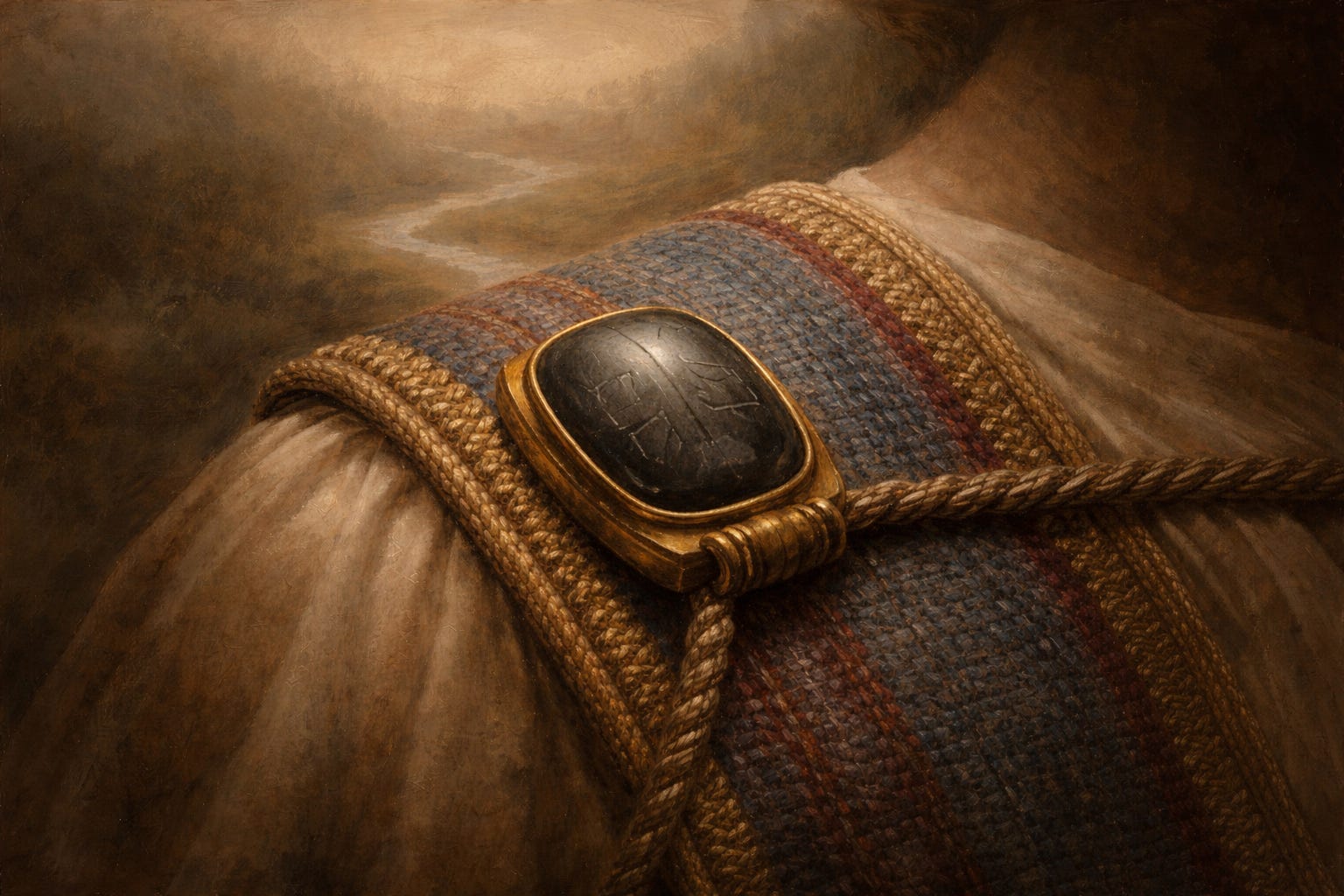
Before I even open the parsha, I already know what I want to explore.
It’s the stones. The precious jewels — or more accurately, the precious rocks.
And it’s their connection to the names of the Shevatim (the twelve tribes). What do the Shevatim have to do with rocks — even precious ones?
And what does any of this have to do with Aharon HaKohein and the Mishkan?
Why stones? Why these stones? Why Aharon HaKohein? Why the Mishkan?
Those are my questions. And I come in without any answers. Not even a clue where to start.
So, I’ll start where I always start — with the verses themselves.
The Clothes and the Kehuna
The section we want begins three pesukim into the parsha — with Aharon and his clothes. The stones aren’t just stones in isolation. They’re part of the clothing. So if we want to understand the stones, we first have to understand the clothing. And if we want to understand the clothing, we have to understand Aharon and the kehuna.
Hakadosh Baruch Hu tells Moshe to bring Aharon close:
וְאַתָּ֡ה הַקְרֵ֣ב אֵלֶ֩יךָ֩ אֶת־אַהֲרֹ֨ן אָחִ֜יךָ וְאֶת־בָּנָ֣יו אִתּ֗וֹ מִתּ֛וֹךְ בְּנֵ֥י יִשְׂרָאֵ֖ל לְכַהֲנוֹ־לִ֑י אַהֲרֹ֕ן נָדָ֧ב וַאֲבִיה֛וּא אֶלְעָזָ֥ר וְאִיתָמָ֖ר בְּנֵ֥י אַהֲרֹֽן׃
“You shall bring forward your brother Aharon, with his sons, from among the children of Yisrael, to serve Me as priests: Aharon, Nadav and Avihu, Elazar and Isamar, the sons of Aharon.” (Shemos 28:1)
הַקְרֵב אֵלֶיךָ (hakrev eilecha). Bring him close. There’s distance here — Aharon and his sons are no different from anybody else in Klal Yisrael right now. But they’re about to be. לְכַהֲנוֹ לִי (l’chahano li) — not to be a Kohen in the abstract, but to do the active work of kehuna.
Aharon has to be transformed into something he isn’t yet. He has to become someone who can bring people closer to Hakadosh Baruch Hu, and Hakadosh Baruch Hu closer to people. That’s the job. And Moshe has to bring him into it.
But how? How do you transform someone into a Kohen?
With clothes.
וְעָשִׂ֥יתָ בִגְדֵי־קֹ֖דֶשׁ לְאַהֲרֹ֣ן אָחִ֑יךָ לְכָב֖וֹד וּלְתִפְאָֽרֶת׃
“Make holy garments for Aharon your brother, for kavod and for tiferes.” (Shemos 28:2)
Clothes! בִּגְדֵי קֹדֶשׁ (bigdei kodesh) — holy garments. Remember our working definition of kedusha: something is קָדוֹשׁ (kadosh) when it leads you to think about and connect to Hakadosh Baruch Hu. A mezuzah, tefillin, Shabbos — these things cry out God. These clothes are going to do that too.
And they’re לְכָבוֹד וּלְתִפְאָרֶת (l’kavod ul’tifares). כָּבוֹד (kavod) comes from כָּבֵד (kaved) — heavy, weighty, a certain gravitas. תִּפְאֶרֶת (tiferes) comes from פְּאֵר (pe’er) — not beauty exactly (we have יֹפִי / yofi for that), but something more like radiance. I don’t have a full handle on kavod and tiferes yet, and I think they’re going to matter more as we go deeper. For now: the clothes carry weight and they carry light.
Now, who makes them?
וְאַתָּ֗ה תְּדַבֵּר֙ אֶל־כׇּל־חַכְמֵי־לֵ֔ב אֲשֶׁ֥ר מִלֵּאתִ֖יו ר֣וּחַ חׇכְמָ֑ה וְעָשׂ֞וּ אֶת־בִּגְדֵ֧י אַהֲרֹ֛ן לְקַדְּשׁ֖וֹ לְכַהֲנוֹ־לִֽי׃
“Speak to all the wise of heart, whom I have filled with a spirit of wisdom, and they shall make the garments of Aharon, to make him holy, to serve Me as a Kohen.” (Shemos 28:3)
חַכְמֵי לֵב (chachmei lev) — wise of heart — filled with רוּחַ חׇכְמָה (ruach chochma). Not just technically skilled — wise in the heart. And God Himself fills them with that wisdom. You can’t make garments that carry kedusha through craftsmanship alone.
And look at what these clothes are for: לְקַדְּשׁוֹ לְכַהֲנוֹ לִי (l’kadsho l’chahano li) — to make him holy, so he can serve as a Kohen.
The clothes are going to make Aharon kadosh. Not just be kadosh themselves — make him kadosh. Make him someone who just by being there puts you in mind of God. That’s what the transformation looks like.
But notice something. The clothes are no longer called בִּגְדֵי קֹדֶשׁ (bigdei kodesh). They’re called בִּגְדֵי אַהֲרֹן (bigdei Aharon) — the garments of Aharon.
Why? I’m not sure. But perhaps the Torah is telling us that the chachmei lev need to understand they’re making Aharon’s clothes. They have to have him in mind.
Now the Torah lists what’s to be made:
וְאֵ֨לֶּה הַבְּגָדִ֜ים אֲשֶׁ֣ר יַעֲשׂ֗וּ חֹ֤שֶׁן וְאֵפוֹד֙ וּמְעִ֔יל וּכְתֹ֥נֶת תַּשְׁבֵּ֖ץ מִצְנֶ֣פֶת וְאַבְנֵ֑ט וְעָשׂ֨וּ בִגְדֵי־קֹ֜דֶשׁ לְאַהֲרֹ֥ן אָחִ֛יךָ וּלְבָנָ֖יו לְכַהֲנוֹ־לִֽי׃
“These are the garments they are to make: a choshen, an eifod, a me’il, a kesones tashbetz, a mitznefes, and an avneit. They shall make these bigdei kodesh for Aharon your brother and for his sons, to serve Me as priests.” (Shemos 28:4)
The first two garments on this list — the choshen and the eifod — carry stones. Stones with names on them. That’s where we’re headed.
The Eifod’s Shoulders
The eifod seems to be some sort of apron-like garment. I want to skip its details and get to what matters for us — its shoulders:
וְלָ֣קַחְתָּ֔ אֶת־שְׁתֵּ֖י אַבְנֵי־שֹׁ֑הַם וּפִתַּחְתָּ֣ עֲלֵיהֶ֔ם שְׁמ֖וֹת בְּנֵ֥י יִשְׂרָאֵֽל׃
“Then take two stones of shoham, and engrave upon them the names of the children of Yisrael.” (Shemos 28:9)
Two stones of shoham. We’ll come back to what shoham is — but mark that word. You’re taking two particular stones. And then: וּפִתַּחְתָּ עֲלֵיהֶם שְׁמוֹת בְּנֵי יִשְׂרָאֵל (u’fitachta aleihem shemos Bnei Yisrael) — you’re going to open up on them the names of Bnei Yisrael. That word — פִּתַּח (pitach). Not “write.” Not “carve.” Open. As if the names are somehow already inside the stone, waiting to be revealed.
שִׁשָּׁה֙ מִשְּׁמֹתָ֔ם עַ֖ל הָאֶ֣בֶן הָאֶחָ֑ת וְאֶת־שְׁמ֞וֹת הַשִּׁשָּׁ֧ה הַנּוֹתָרִ֛ים עַל־הָאֶ֥בֶן הַשֵּׁנִ֖ית כְּתוֹלְדֹתָֽם׃
“Six of their names on the one stone, and the names of the remaining six on the second stone, in the order of their birth.” (Shemos 28:10)
Six names on one stone, six on the other — כְּתוֹלְדֹתָם (k’soledosam), according to their birth order.
And how are we going to open them? The Torah tells us:
מַעֲשֵׂ֣ה חָרַשׁ֮ אֶ֒בֶן֒ פִּתּוּחֵ֣י חֹתָ֗ם תְּפַתַּח֙ אֶת־שְׁתֵּ֣י הָאֲבָנִ֔ים עַל־שְׁמֹ֖ת בְּנֵ֣י יִשְׂרָאֵ֑ל
“The work of a stone engraver, seal engravings — you shall open the two stones with the names of the children of Yisrael.” (Shemos 28:11)
מַעֲשֵׂה חָרַשׁ אֶבֶן (ma’asei charesh even) — the work of a stone engraver. פִּתּוּחֵי חֹתָם (pituchei chosam) — engravings like a seal, like a king’s signet ring. That’s how you open the names onto the stones. And they’re set in מִשְׁבְּצוֹת זָהָב (mishbetzos zahav) — settings of gold.
Now, where do they go?
וְשַׂמְתָּ֞ אֶת־שְׁתֵּ֣י הָאֲבָנִ֗ים עַ֚ל כִּתְפֹ֣ת הָֽאֵפֹ֔ד אַבְנֵ֥י זִכָּרֹ֖ן לִבְנֵ֣י יִשְׂרָאֵ֑ל וְנָשָׂ֨א אַהֲרֹ֧ן אֶת־שְׁמוֹתָ֛ם לִפְנֵ֥י יְהֹוָ֖ה עַל־שְׁתֵּ֥י כְתֵפָ֖יו לְזִכָּרֹֽן׃
“Attach the two stones to the shoulder-pieces of the eifod, as stones of remembrance for the children of Yisrael. And Aharon shall bear their names before Hashem on his two shoulders, for remembrance.” (Shemos 28:12)
On the shoulders. That’s where you carry weight.
אַבְנֵי זִכָּרֹן לִבְנֵי יִשְׂרָאֵל (avnei zikaron l’Vnei Yisrael). Stones of remembrance for Bnei Yisrael — not the shevatim themselves, but their children. All of us. And we need to be remembered.
But who is doing the remembering? Let’s listen to the pasuk carefully.
וְנָשָׂא אַהֲרֹן אֶת שְׁמוֹתָם (v’nasa Aharon es shemosam) — Aharon will bear up their names. לִפְנֵי ה׳ (lifnei Hashem) — before Hashem. עַל שְׁתֵּי כְתֵפָיו (al shtei ketefav) — on his two shoulders. לְזִכָּרֹן (l’zikaron) — for remembrance.
Hashem needs to remember these names — as in וְאֵלֶּה שְׁמוֹת בְּנֵי יִשְׂרָאֵל הַבָּאִים מִצְרָיְמָה (v’eileh shemos Bnei Yisrael haba’im Mitzrayma). Those names which went down to Egypt are now going up to and before Hashem — so that Hashem can remember us.
This is quite an idea. One that needs to be explored from numerous perspectives.
For now, though, I’d like to explore it from the perspective of our working definition of kedusha. Until now, our working definition has been that something is holy when it helps man to remember and be mindful of Hakadosh Baruch Hu.
But I think it’s time for an expansion of our working definition.
It seems to me that something can also be holy if it helps Hakadosh Baruch Hu to remember and be mindful of us. After all, we have just learned that this is one of the central — if not the central — jobs of the eifod.
And we know that the eifod is one of the bigdei kodesh.
So it follows that an item can be holy if it has the quality of helping Hakadosh Baruch Hu to remember us, His people.
What’s in a Name?
But what exactly is Hashem being reminded of? What’s in these names?
I had said in my first article on Sefer Shemos — which is called Shemos, “Names” — that the names themselves carry content, meaning, perspectives. The mothers gave them particular meanings, and we carried those meanings with us into Egypt. But there’s something else in the names too: the people who first bore them. Their stories.
Take Yehuda. On the one hand, you hear the meaning of the name — recognition and thanks to Hashem. But we also remember the man who said מַה בֶּצַע (mah betza) — “What profit do we get if we kill Yosef?” Not Yehuda’s finest moment.
And we remember the same Yehuda who said צָדְקָה מִמֶּנִּי (tzadka mimeni) — who, when he could have protected his reputation at the cost of Tamar’s life, chose instead to protect her life at the cost of his reputation. We remember the man who told Yaakov אָנֹכִי אֶעֶרְבֶנּוּ (anochi e’ervenu) — “I will be the collateral for Binyamin” — and when the moment came, offered himself as a slave in Egypt so that Binyamin could go free.
All of that is in the name. The good and the bad. The growth.
So Aharon is bearing up all of this — all the weight of these names, their meanings and their histories — on his shoulders, before Hakadosh Baruch Hu. That’s not a light load.
And he does so on אַבְנֵי שֹׁהַם (avnei shoham) — stones of shoham.
Back to Gan Eden
We almost forgot about the shoham. We’ve been thinking about the names, the shoulders, the remembrance. But Aharon carries all of that on a particular type of stone. And that name — שֹׁהַם (shoham) — we’ve seen it before.
Which means, once again, we need to go back to Gan Eden. Because that’s where we first encountered it:
וּֽזְהַ֛ב הָאָ֥רֶץ הַהִ֖וא ט֑וֹב שָׁ֥ם הַבְּדֹ֖לַח וְאֶ֥בֶן הַשֹּֽׁהַם׃
“The gold of that land is good; bdellium is there, and the even hashoham — the shoham stone.” (Bereishis 2:12)
But we need to see this verse in context. And that context is the river.
Let me go back to the moment when God plants the garden:
וַיִּטַּ֞ע יְהֹוָ֧ה אֱלֹהִ֛ים גַּן־בְּעֵ֖דֶן מִקֶּ֑דֶם וַיָּ֣שֶׂם שָׁ֔ם אֶת־הָֽאָדָ֖ם אֲשֶׁ֥ר יָצָֽר׃
“Hashem Elokim planted a garden in Eden, in the east, and placed there the man whom He had formed.” (Bereishis 2:8)
God plants a garden in Eden, מִקֶּדֶם (mikedem) — from the east — which seems to imply that the garden is in the eastern part of Eden.
He also places man inside the garden and grows all the trees of the Garden:
וַיַּצְמַ֞ח יְהֹוָ֤ה אֱלֹהִים֙ מִן־הָ֣אֲדָמָ֔ה כׇּל־עֵ֛ץ נֶחְמָ֥ד לְמַרְאֶ֖ה וְט֣וֹב לְמַאֲכָ֑ל וְעֵ֤ץ הַֽחַיִּים֙ בְּת֣וֹךְ הַגָּ֔ן וְעֵ֕ץ הַדַּ֖עַת ט֥וֹב וָרָֽע׃
“From the ground Hashem Elokim caused to grow every tree that is pleasant to look at and good to eat, and the Eitz HaChaim in the midst of the garden, and the Eitz HaDaas Tov v’Ra.” (Bereishis 2:9)
At this point, we would expect the story to continue to tell us about man and his time in the garden. But instead, it goes on a seemingly irrelevant tangent and starts talking about rivers:
וְנָהָר֙ יֹצֵ֣א מֵעֵ֔דֶן לְהַשְׁק֖וֹת אֶת־הַגָּ֑ן וּמִשָּׁם֙ יִפָּרֵ֔ד וְהָיָ֖ה לְאַרְבָּעָ֥ה רָאשִֽׁים׃
“A river goes out from Eden to water the garden, and from there it divides and becomes four heads.” (Bereishis 2:10)
Let’s break this verse down.
There is a river that starts somewhere in Eden. Where, we don’t know. But not inside the garden.
No, it starts outside of the garden.
And this river passes by (or is it through) the garden. Indeed, this is the purpose of this river — to water the garden.
But it doesn’t just water the garden. When it reaches the garden it divides. It splits into four heads — וְהָיָה לְאַרְבָּעָה רָאשִֽׁים (v’hayah l’arba’ah rashim).
And each of those “heads” becomes a separate river in and of itself.
Why do we need to know this? I have no idea. But I’ll venture a less than satisfactory guess.
We have just been told that G-d planted a garden and grew in that garden all varieties of trees.
And we know that trees in particular need a good deal of water to grow — particularly fruit trees.
And so, we are told that G-d provided that water. That would “explain” at least half of this verse — and also “explain” why this verse appears specifically here, right after the verse about all the trees of the garden.
But honestly, this answer is so mundane that it seems impossible to believe. This simply is not the type of information that the Torah is interested in.
There has to be something more. But for now, that’s all we have.
Let’s continue.
One of these four rivers is called Pishon, and we’re told it encircles a land called Chavilah:
שֵׁ֥ם הָֽאֶחָ֖ד פִּישׁ֑וֹן ה֣וּא הַסֹּבֵ֗ב אֵ֚ת כׇּל־אֶ֣רֶץ הַֽחֲוִילָ֔ה אֲשֶׁר־שָׁ֖ם הַזָּהָֽב׃
“The name of the first is Pishon — it is the one that encircles the entire land of Chavilah, where the gold is.” (Bereishis 2:11)
And we are also told that the gold of this land is good.
וּֽזְהַ֛ב הָאָ֥רֶץ הַהִ֖וא ט֑וֹב שָׁ֥ם הַבְּדֹ֖לַח וְאֶ֥בֶן הַשֹּֽׁהַם׃
“The gold of that land is good; bdellium is there, and the shoham stone.” (Bereishis 2:12)
Here we have yet another seemingly mundane and irrelevant piece of information. Honestly, I have never been that interested in the goings on of the land of Chavilah.
And it’s great that they have good gold, but honestly — what does this have to do with Gan Eden and Adam and Chava or anything else that the Torah (and we) are interested in?
Seemingly nothing.
And yet, we pause and think for just one second. Why is it that we are reading this verse again?
Oh yeah, because of the shoham stone. The same shoham stone that Aharon carries on his shoulders into the Kodesh Kedoshim.
Well, it’s in this verse — the one that talks about the land of Chavilah and its high quality gold — that we first encounter the shoham stone.
And it is at this point that we remember that those shoham stones with the names of the Jewish people were set in מִשְׁבְּצוֹת זָהָב (mishbetzos zahav) — settings of gold.
All of a sudden this gold seems a bit more interesting. Here is a land with gold and stones of shoham.
And here is a priestly garment with stones of shoham set in gold.
And these stones, in this gold, are supposed to be carried into the Kodesh Kedoshim — where the Eitz HaChaim (aka the Torah) is housed within the Aron HaKadosh which has on top of it the Keruvim — the guardians of the path to the Eitz HaChaim.
And all of this we are being told right after we are told that G-d caused all the various trees of the Garden to grow — including the Eitz HaChaim.
Now that’s interesting.
What’s more — there are four rivers mentioned. But none of these other rivers get nearly the amount of attention and detail that Pishon does.
Only Pishon gets a description of its land — the gold, the bedolach, the shoham. Gichon encircles Cush — similar language, but no details about what’s there. Chidekel goes east of Ashur, but again no details.
And Pras? Just its name. Nothing else.
The Torah is pointing us somewhere — at that first river and its land, where our shoham (and gold) comes from.
And no sooner is our interest finally piqued that the Torah drops the entire subject of these rivers and returns to the story of the garden:
וַיִּקַּ֛ח יְהֹוָ֥ה אֱלֹהִ֖ים אֶת־הָֽאָדָ֑ם וַיַּנִּחֵ֣הוּ בְגַן־עֵ֔דֶן לְעׇבְדָ֖הּ וּלְשׇׁמְרָֽהּ׃
“Hashem Elokim took the man and placed him in Gan Eden, to work it and to guard it.” (Bereishis 2:15)
When all is said and done, all I have left from these stories is some curiosity and some questions.
Why is the Torah telling us about the rivers at all? This is a story about God placing man in Gan Eden, about man’s relationship with God and God’s relationship with man.
Why do I need to know about any of these rivers — even the river that watered the garden, let alone the rivers that didn’t?
Why do I need to know about the gold and jewels found in the land of Chavilah?
What do they have to do with the story of Gan Eden?
Once again, I have no idea.
And we won’t have any idea, until we get a bit more wisdom.
Nothing Like Wisdom
Chapter 28 in Sefer Iyov is an interesting chapter (although, truth be told, every chapter in Sefer Iyov is an interesting one).
The chapter begins discussing silver and gold.
Gold — sounds familiar.
Later on, though, it turns to the subject of חׇכְמָה (chochma) — wisdom.
And then, just a little bit further, it starts to compare chochma to gold.
But not just any gold, fine gold. The best gold. The type of gold you would find in the land of Chavilah.
But not just to fine gold. Also to the shoham stone:
לֹא־יִתֵּ֣ן סְג֣וֹר תַּחְתֶּ֑יהָ וְלֹ֥א יִ֝שָּׁקֵ֗ל כֶּ֣סֶף מְחִירָֽהּ׃ לֹֽא־תְ֭סֻלֶּה בְּכֶ֣תֶם אוֹפִ֑יר בְּשֹׁ֖הַם יָקָ֣ר וְסַפִּֽיר׃
“It [chochma] cannot be bought with fine gold, and silver cannot be weighed as its price. It cannot be praised against the gold of Ophir, or against precious shoham and sapphire.” (Iyov 28:15–16)
What an interesting combination. High quality gold and the shoham stone.
Haven’t we seen that duo before?
Now, for those of you who read Hebrew, you may be wondering — where did I get this translation of “fine gold”. The original Hebrew is סגור.
Well, let’s take a look at Rashi:
״זָהָב סָגוּר״ (מלכים א ו:כ) זֶהוּ זָהָב טוֹב, שֶׁבְּשָׁעָה שֶׁנִּפְתָּח, כָּל חֲנֻיּוֹת שֶׁל זָהָב נִסְגָּרוֹת:
“Gold of Segor (I Melachim 1:20) — this is good gold (זהב טוב), that when it is opened, all the shops of gold are closed.” (Rashi on Iyov 28:15)
Now, in case you are still not convinced, let us look just two verses later:
לֹא־יַעַרְכֶ֣נָּה זָ֭הָב וּזְכוֹכִ֑ית וּתְמ֖וּרָתָ֣הּ כְּלִי־פָֽז
“It cannot be valued with gold and glass, and its exchange is not vessels of fine gold.”
Either way, wisdom is being compared to gold and to precious shoham stones.
And we are being told that when you do compare them, there really is no comparison.
To compare gold to wisdom is like comparing a hot dog to a filet mignon or a can of coke to a glass of fine wine. They’re not even in the same category. They’re not even close.
Wisdom is simply in a category all of its own.
That, for any and all who think about it, is obviously true. But that is the point — you have to think about it.
What happens, though, if you do not think about it? What do you spend more time chasing — wisdom or gold?
Given a choice, most people would choose the gold. Gold and precious jewels have an immediate appeal that wisdom does not.
And so we need to be reminded. If we have to choose, what we really want is wisdom, not gold.
But we need to be reminded. And we need to choose.
Upstream and Downstream
Let us go back to those rivers.
The river goes out from Eden to water the garden. That’s its purpose — לְהַשְׁקוֹת אֶת הַגָּן (l’hashkos es hagan).
And then, when it reaches the garden, it splits — and it continues.
And when it splits, and when it continues — it reaches a land and produces gold.
Well, “produces” is not quite the right word. The river doesn’t create the gold. But it contains it — gathers it together, concentrates it, makes it accessible to man. The same may be true of the shoham stone.
Think about that.
The same water. Upstream, it nourishes the garden. Downstream, after it leaves the garden, it deposits material wealth.
So up above, life. Indeed, the עֵץ הַחַיִּים (Eitz HaChaim) — the Tree of Life. Which is the Torah. Which is wisdom (see last week’s dvar Torah).
And down below.
Gold. And precious stones — including the Shoham stone.
That is not to say that there was no gold or precious stones in the Garden of Eden. But they weren’t the essence or the focus.
But in Chavilah. That was the essence. That is what that land was known for.
And they are all connected by the same river. That one, singular river which starts not in the garden, but in Eden.
Eden.
We haven’t paid enough attention to Eden. We’ve been focused on gardens and rivers and gold and jewels.
But honestly, Eden deserves some attention now.
Note the name. Eden (עֵדֶן). What does it mean?
Pleasure. Delight.
This river flows not just from a place, but from a state of being. Pleasure itself is flowing. And that pleasure, that joy — first and foremost it is there to nurture the garden.
It wants to nurture life and growth and wisdom. There is a joy in wisdom — if only you take the time to notice it and choose it.
It is a taste that perhaps needs to be developed (like fine wine). But once you taste it, nothing compares.
But there are other pleasures in life. They are, of course, downstream from wisdom. But they are there.
One such pleasure is found in gold and precious jewels. Don’t believe me.
Let’s try a little experiment. Buy your wife a diamond necklace and tell me whether or not a smile comes across her face.
Tell a man that he won the lottery and see whether or not he jumps up and down with joy.
Walk into Fort Knox and tell me whether or not you are in awe of all that gold.
So there is a river which flows out of pleasure itself. And once it nourishes life and wisdom, it splits and nourishes all sorts of other types of joys.
You see, it’s not a tangent at all. The Torah tells us that G-d planted various trees in the garden. Some were pleasant to behold. Some were beneficial to consume. And, of course, there was the Eitz HaChaim and the Eitz HaDaas of good and evil.
But these trees are more than trees. They are the good things of life — pleasant to behold, good to consume, and they give us life. Yes, there is danger within the good. The Eitz HaDaas is also there. But in essence, these are the sources of meaning and depth and wisdom.
And they need to be nourished. If there is no joy in the process, no pleasure in the pursuit, we won’t do it. But when you find that joy — nothing can stop you.
And so, there is a flow — from that state of pleasure which nourishes all that is good in this world. We take joy in our families. Joy in our studies. Joy in our work.
But it doesn’t stop there. That same flow, that same river, divides and drives so many other types of pleasures — money, power, and more.
Of course, this isn’t the literal meaning of the verse. But I think it’s hiding right behind the surface. The essence is the garden and all that it contains. But that nurturing water doesn’t stop at the garden. It continues on and nourishes other places, other pleasures — including the pleasure of gold and precious jewels.
And yet, for some reason, it is that gold and those jewels which end up on the shoulders of the Kohen Gadol, when he carries our names in front of G-d in the Holy of Holies.
And it is there, in that seemingly paradoxical place, that everything starts to come together.
The Reversal
Let us return yet once again to our working (and newly expanded) definition of the word Kedushah. Something is kadosh — it is holy — if it reminds us of God or God of us.
And yet, the Mishkan, which is known as a mikdash, a place of holiness, is filled with gold and with precious stones.
How can that be if gold and stones are downstream from the garden? After all, aren’t we reproducing the garden — not the actual place, but the actual experience, the actual connection? The Mishkan is the place where God and man meet. And the stones are downstream!
Or are they?
In Sefer Yechezkel, we find an interesting dirge in “honor” of the king of Tyre. In there, Hakadosh Baruch Hu mourns the loss of wisdom and beauty that the king of Tyre once had:
בֶּן־אָדָ֕ם שָׂ֥א קִינָ֖ה עַל־מֶ֣לֶךְ צ֑וֹר וְאָמַ֣רְתָּ לּ֗וֹ כֹּ֤ה אָמַר֙ אֲדֹנָ֣י יֱהֹוִ֔ה אַתָּה֙ חוֹתֵ֣ם תׇּכְנִ֔ית מָלֵ֥א חׇכְמָ֖ה וּכְלִ֥יל יֹֽפִי׃
Son of man take up a dirge over the king of Tyre and say to him, “Thus said My L-rd, Hashem: ‘You were a seal of perfection, full of wisdom and perfect in beauty’.
Wisdom and beauty. Where did he have this wisdom and beauty? In Gan Eden:
בְּעֵ֨דֶן גַּן־אֱלֹהִ֜ים הָיִ֗יתָ כׇּל־אֶ֨בֶן יְקָרָ֤ה מְסֻכָתֶ֙ךָ֙ אֹ֣דֶם פִּטְדָ֞ה וְיָהֲלֹ֗ם תַּרְשִׁ֥ישׁ שֹׁ֙הַם֙ וְיָ֣שְׁפֵ֔ה סַפִּ֣יר נֹ֔פֶךְ וּבָרְקַ֖ת וְזָהָ֑ב
In the garden of Elokim you were, every precious stone was your covering: Odem, pithdah, yahalom, tarshish, shoham, yishpeh, sapir, nofech, bareket and zahav. The workmanship of your settings and sockets was in you...
Did you see that list?
Does that list look familiar? If we read a little further on in our Parsha, it will become more familiar.
There are nine precious stones and gold. And those nine precious stones are nine of the twelve stones found in the Choshen Mishpat, which we will discuss soon enough.
But which nine?
All three stones from the first row of the Choshen are here. All three from the second row. All three from the fourth row. But the entire third row — לֶשֶׁם, שְׁבוֹ, אַחְלָמָה (leshem, shvo, achlamah) — is completely absent. Nine of twelve, and the three missing ones are all from the same row.
Why is that row absent? I have the beginning of a hunch. The Malbim has a fully worked out theory (you can read it in his commentary on Yechezkel).
But whether it is hunches or fully worked out theories — our point is that these stones (including the shoham) and the gold were all found in Gan Eden.
It’s not that in Gan Eden there was only wisdom and life and all the “good things” of life. There was also gold and precious stones.
But they were not the focus.
The focus was the trees and their fruit. The same river that nourished the trees also contained the gold and the precious stones. They just weren’t the essence.
But in Chavilah, that changed. Chavilah was known for its gold and precious jewels — and only for its gold and precious jewels.
The flow of pleasure continued beyond Gan Eden, but it was a lower form of pleasure. A pleasure solely of material wealth.
And that perspective took off — particularly after the sin and the exile from the garden.
But now, with the building of the Mishkan, came time for the reversal.
Yes, there is an abundance of gold and precious stones in the Mishkan. But they are not there for their own sake. They are there — at least in the case of Aharon HaKohein — for לְכָבוֹד וּלְתִפְאָרֶת (l’kavod ul’tifares), for honor and radiance.
But this is not for Aharon’s honor and beauty. This is not an act of self-aggrandizement.
No, we are turning Aharon HaKohein into a holy man. A man who, when you see him, reminds you of Hakadosh Baruch Hu — and who reminds HaKadosh Baruch Hu of us.
And the gold and precious jewels help with that. They still draw our attention, but they then take that attention and direct it to Hakadosh Baruch Hu.
It’s not gold and jewels for their own sake or for the sake of wealth, but because of the experience that they create — and the ability to channel that experience to help connect us to our Creator and our Creator to us.
That is why the clothes are holy. But even moreso, that is why Aharon HaKohein is holy. Because he is able to bear up those items which most naturally draw our attention away from G-d and use them to draw it towards G-d.
The Rest of the Stones
Of course, we have not yet covered all the stones. Until now, most of our focus has been on the shoham stone.
But there are many more stones in the bigdei kodesh. In particular, the Choshen Mishpat with its four rows of precious jewels — each jewel unique in its own precious way.
Twelve stones in all, each one with a name of one of the twelve tribes.
And I wonder about these twelve stones. I understand why we have gold and jewels in the Mishkan. They create an atmosphere, an impression, which, when used properly, can be quite holy.
But what about the names? We have the names on these stones, and as prominent as they are on the avnei shoham, they’re even more so on the Choshen Mishpat, where each tribe gets its own unique stone. What is the connection between the stones and the names?
So I have an idea, which seems to be true, but I don’t have a source for it.
Imagine you are looking at a diamond. Can you see the colors? Can you see that almost magical display of light that is unique to diamonds? The diamond doesn’t create that light — but it does reveal an otherwise hidden aspect of light.
So it is (I imagine) with every precious stone. Each one has its own unique property which makes it one of a kind.
And all in all, there are twelve of them. Which means twelve unique qualities and properties.
That’s what the twelve tribes are.
Each shevet sees and reflects the divine light differently. Yehuda sees it one way. Binyamin another. Yissachar yet another.
Twelve facets of the same infinite light.
And there’s a midrash that brings this home — one that we touched upon before.
When Yaakov laid down at Beis El, he placed stones around his head — some say twelve stones. And the stones argued with one another:
“On me this tzaddik will rest his head!” “No, on me.”
Each one insisted it was the right one. Not out of arrogance — each had a real claim. Each “rock” was aware of its unique quality and property.
And then Hakadosh Baruch Hu unified them into a single stone. Twelve became one.
Now, until now, I always thought of these rocks as the regular old, “boring” rocks that we find strewn around the natural world.
A regular old rock.
But no more. I now think of these twelve rocks as twelve precious stones. Each one with its own unique quality and property. Each one with its own unique way of reflecting the divine light.
It was these precious rocks (aka precious stones) that were fighting with each other. After all, in Hebrew it is the same word — אֶבֶן.
And when and how did HaKadosh Baruch Hu unify these rocks? In the Choshen Mishpat. There, on the heart of Aharon HaKohein, they found their unification and essentially became one rock.
A singular rock that can help us better see and understand HaKadosh Baruch Hu. A singular rock that can help HaKadosh Baruch Hu better see and understand us.
And one that can help HaKadosh Baruch Hu see and remember us.
Further Questions
What is the Choshen Mishpat and how does it function? Why is it called mishpat — judgment?
How do the twelve individual stones on the Choshen relate to their specific tribes?
What is the relationship between the six-and-six names on the shoulders and the twelve names on the heart?
The four rivers of Gan Eden, the four rows of the Choshen, the four camps of the degalim — is this a pattern?
Why is the entire third row of the Choshen missing from Yechezkel 28? Is the Malbim’s explanation the whole story?
The full context of Yechezkel 28 — what does the Gan Eden imagery in the prophecy against Tyre mean, and how do the mefarshim understand it?
What does tiferes really mean in the context of the bigdei kodesh?
Wonderful connections - reminded me of Shir HaShirim 8:6 Set me as a seal upon your heart. All the beautiful elements the river carries to us can be used for good and evil, but what we need to desire and realise is totally precious is the source of the river - Hashem, from whom life, holiness and everything precious flows to us.